
Raja Ampat is undoubtedly one of the most beautiful places I have ever visited, but it’s also one of the most remote. And even with quite a bit of travel experience under my belt, I have to admit that during my first trip there in 2025, I wasn’t quite prepared for what travelling to such a remote destination would entail. So, when it was time for my second trip, I added a few extra essentials to my packing list that made the whole experience run much more smoothly.
When you travel somewhere as remote as Raja Ampat, you can’t simply pop into a shop to pick up something you’ve forgotten at home. Unless you’re used to travelling to destinations like this, your usual packing list probably won’t cut it.
Tip: If you plan to visit local villages or schools, consider packing small gifts such as balls, notebooks and pens for the children. They are very much appreciated.
That’s exactly why I put together this Raja Ampat packing list: to help you prepare for the realities of travelling to one of Indonesia’s most remote and breathtaking destinations, so you can spend less time worrying about what you’ve forgotten and more time enjoying this incredible corner of the world. Among all the items, I’ve highlighted in yellow the 20 essential things I think you shouldn’t leave at home.
Free printable
Raja Ampat Packing List
All 20 essentials from this guide in one checklist, ready to print and tick off before you fly.
Download the packing list (PDF)
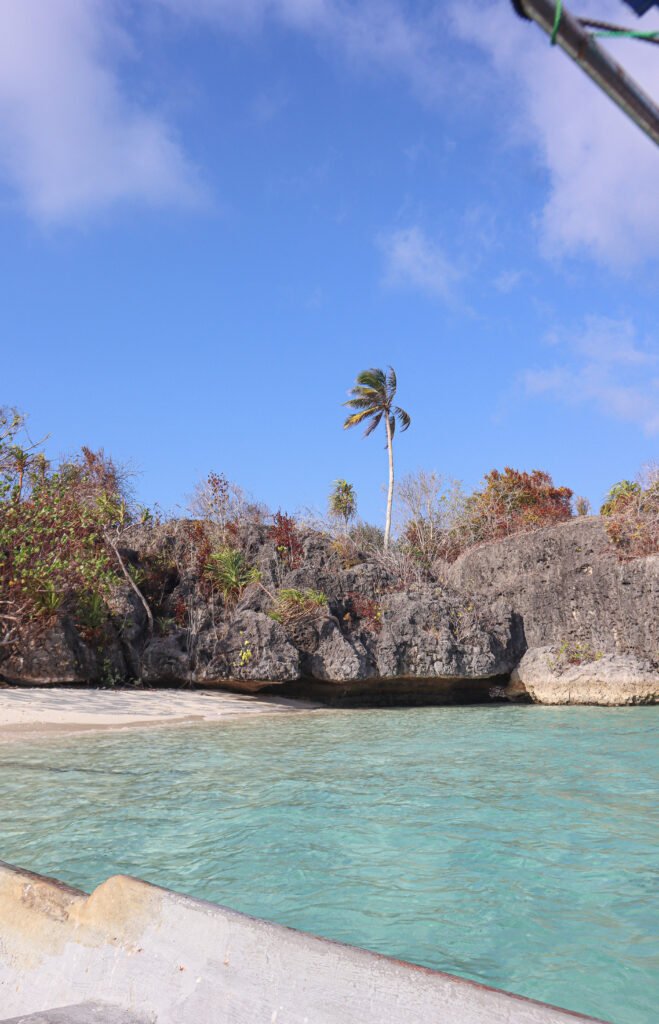
and not many convenience stores around
Free printable
Raja Ampat Packing List
Everything from this guide in one checklist, ready to print and tick off before you fly.
Download the packing list (PDF)Health, First Aid and Mosquito Protection
One of the biggest challenges of travelling somewhere as remote as Raja Ampat is the limited access to medical care. Even in places like Waisai or Arborek, where there are basic medical facilities, healthcare options are limited compared with what you might be used to at home, and if you are staying on a more remote island, even just reaching a pharmacy could mean arranging a speedboat transfer that takes hours, costs a considerable amount of money and is far from ideal when you are already feeling unwell.
My advice is to come prepared and bring everything you are likely to need for the duration of your trip. You don’t want a minor problem to ruin your holiday simply because you cannot find the right medication.
Bring your regular medication and personal essentials
This might sound obvious, but it is surprisingly easy to forget something you use regularly. Here are a few things to think about:
- Prescription medication: bring enough for your entire stay, plus a little extra if possible, in the original packaging
- Contraception: birth control, condoms and all the rest
- Menstrual products: tampons and menstrual pads are difficult or impossible to find after Waisai. If you are buying menstrual pads in Indonesia, check the packaging carefully and don’t buy the ones with ‘fresh’ written on them. Trust me on this one.

Prepare a well-stocked first-aid kit
- Waterproof plasters or band-aids.
- Sterile gauze pads and medical tape, which are useful for covering larger cuts that waterproof plasters cannot protect.
- Antiseptic wipes or another wound-cleaning solution.
- Small tweezers and scissors.
- There are sprays you can find online that you put on if you get stung by a jellyfish, and they stop the burning. I wish I had one during my first trip, when I emerged in a huge pod of jellyfish after my dive.
Tip: Be especially careful with cuts, because in this climate they can get infected very quickly, especially if you cut yourself on coral.
- Medication for heartburn, probiotics, Imodium, activated charcoal tablets or similar. Meals can also be quite oily, and with the long boat rides it’s not a place where you want to have stomach issues.
- Broad-spectrum antibiotics.
- A thermometer. This is especially useful given the risk of malaria. I highly suggest you speak with a doctor before you leave about this, but one way of understanding whether you might have it is a cyclical fever pattern. Hopefully you won’t get malaria, but bring the normal fever medicine you usually take.
- Painkillers.
- Medicine for cold symptoms and sore throat. I don’t know why, but the air conditioning on internal flights is always so strong.
- Antihistamines, if you might need them.
- Ear drops, especially if you know you will spend a lot of time in the water. Trust me, an ear infection is not pleasant, and you don’t want your first one to be here.
Mosquito protection
As mentioned above regarding the thermometer, there is still malaria in some parts of Raja Ampat, despite what some sources (and many local people) will tell you, and there are also other diseases transmitted by mosquitoes. The risk depends on where you go. At homestays on Mansuar, Kri, Gam and Arborek it’s relatively low, because there aren’t large numbers of human carriers and, in most places, the mosquito population is surprisingly low. I haven’t seen many mosquitoes during my time in Raja Ampat, but bring a few things to help you, such as mosquito repellent (go to the pharmacy and ask for the STRONG one) and some long-sleeved clothing for the evenings.
Your doctor may also recommend antimalarial medication, but it’s quite a personal choice, as these can be heavy medications, so consult a professional and decide. I personally didn’t take them, and I don’t know anyone who did.
Staying hydrated
Heat, humidity and long days in the water can leave you feeling exhausted. Bring electrolyte sachets and oral rehydration salts. You can buy them on Amazon or find them in any sports store.
Don’t overlook travel insurance and emergency evacuation: travel insurance is especially important in Raja Ampat, because reaching appropriate medical care from a remote island can be complicated and expensive. If you plan to scuba dive, check that your policy explicitly covers it, or get an extra policy such as DAN.
Clothes and Footwear
You don’t need a large wardrobe for Raja Ampat. Lightweight, breathable clothing that dries quickly is usually the most practical choice. Let’s be honest, I was living in a bikini 80% of the time, but there are a few things you don’t want to forget.
- A light rain jacket that also protects you from wind.
- A buff or scarf for windy boat rides.
- A few modest outfits for villages and visits to local communities, especially if you want to attend Sunday mass.
- Proper shoes for walking up to the viewpoints. The paths are in very poor condition, and you don’t want to climb up in Birkenstocks. Trust me, I did it and regretted it.
- Water shoes. There can be stonefish and other hazards, and there are little pieces of dead coral around that you don’t want to cut yourself on.
- A warmer change of clothes. It can get chilly in the evenings, and the ferries at times have far too much air conditioning.
Tip: Consider bringing a small amount of laundry detergent or a compact travel laundry bag.
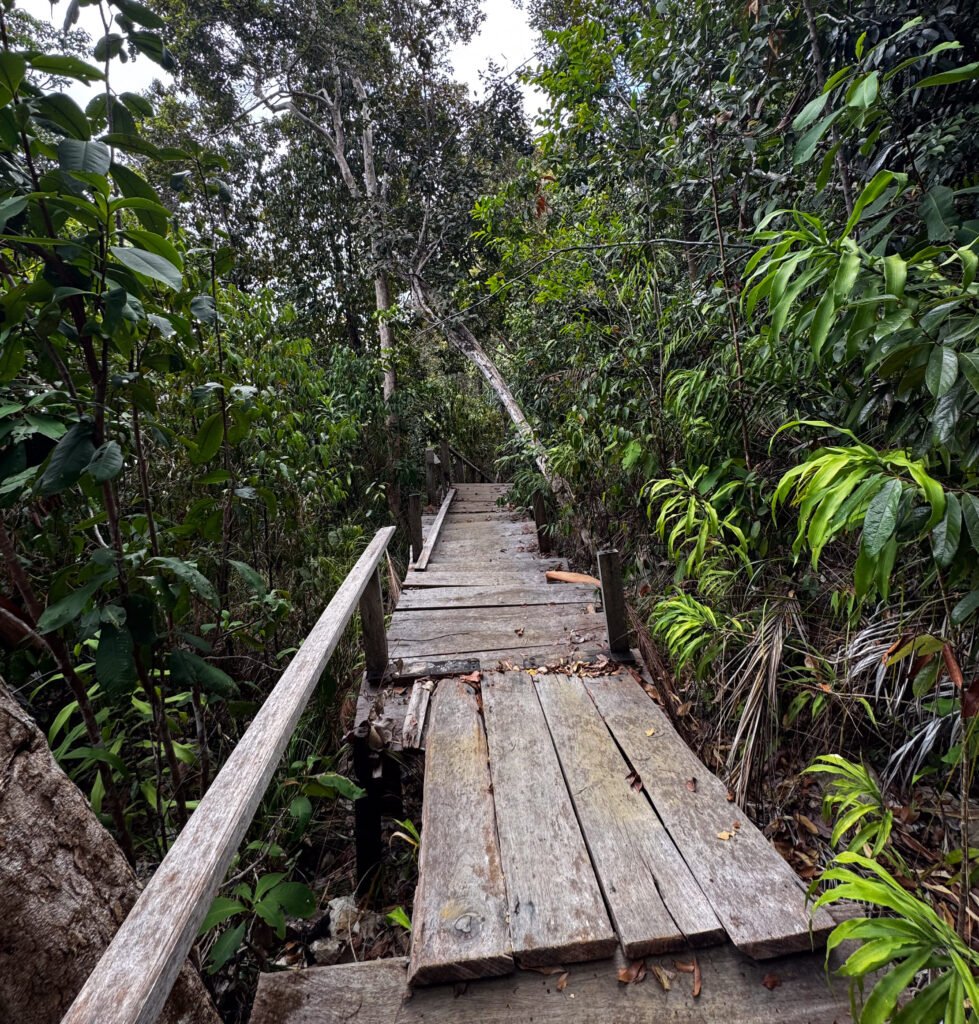
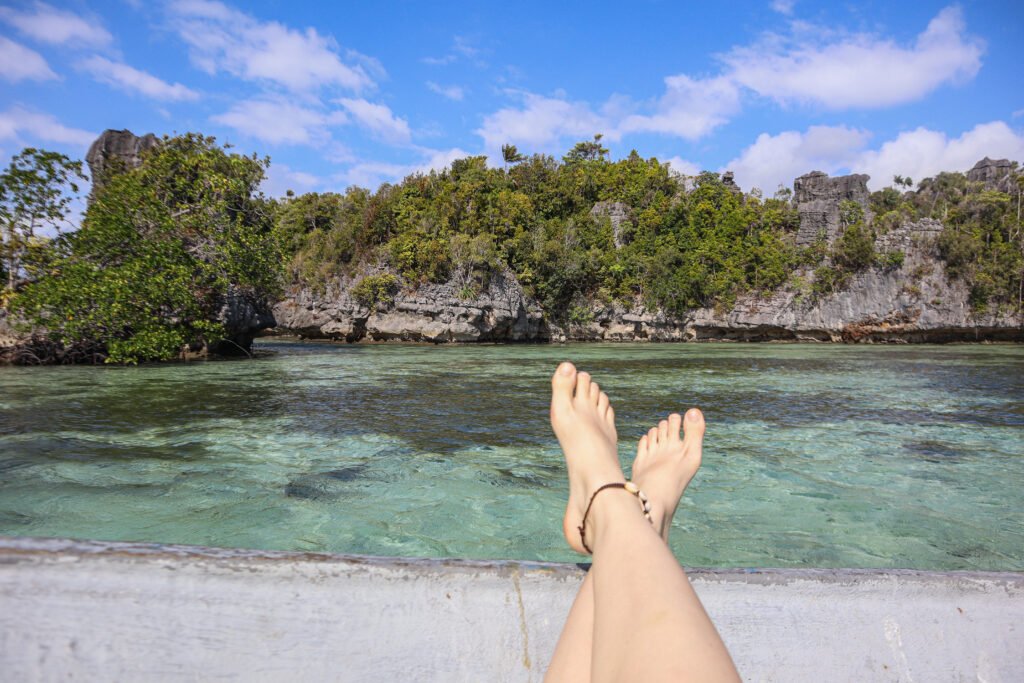
to the viewpoints look like this
Toiletries and Homestay Essentials
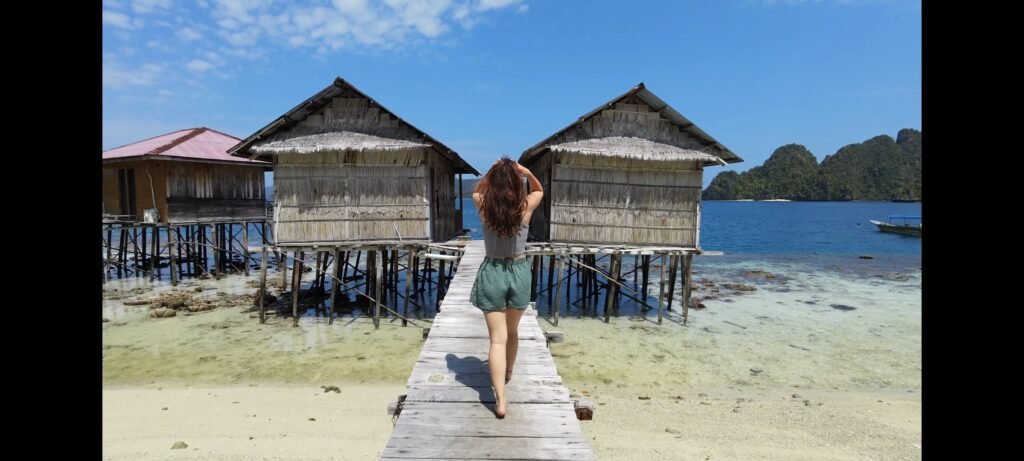
Staying in a local homestay is a wonderful way to experience Raja Ampat, but the facilities can be basic. Don’t expect every room to have the same amenities as a hotel.
Tip: If you stay in a resort, some of the items in the homestay section won’t be needed.
Personal care
- Toothpaste, body wash or soap, shampoo and conditioner. Raja Ampat already has many problems with plastic, so either bring back your plastic or buy these in solid form. Don’t expect them to be recycled properly if you throw them away on the islands. If you have long hair and spend a lot of time in the water, pack some coconut oil and put it in your hair before jumping in. It helps.
- Deodorant and any personal hygiene products you use regularly.
- A quick-drying towel.
- Hair ties and a hairbrush. If you are like me and keep losing them, bring plenty, because they aren’t easy to find, and you don’t want to be snorkelling with your hair in front of your face.
- A small mirror, if it’s useful to you.
- And now hear me out: bring toilet paper. The toilets here are typical Indonesian toilets without toilet paper, and a roll is very useful for drying things or using as tissues.
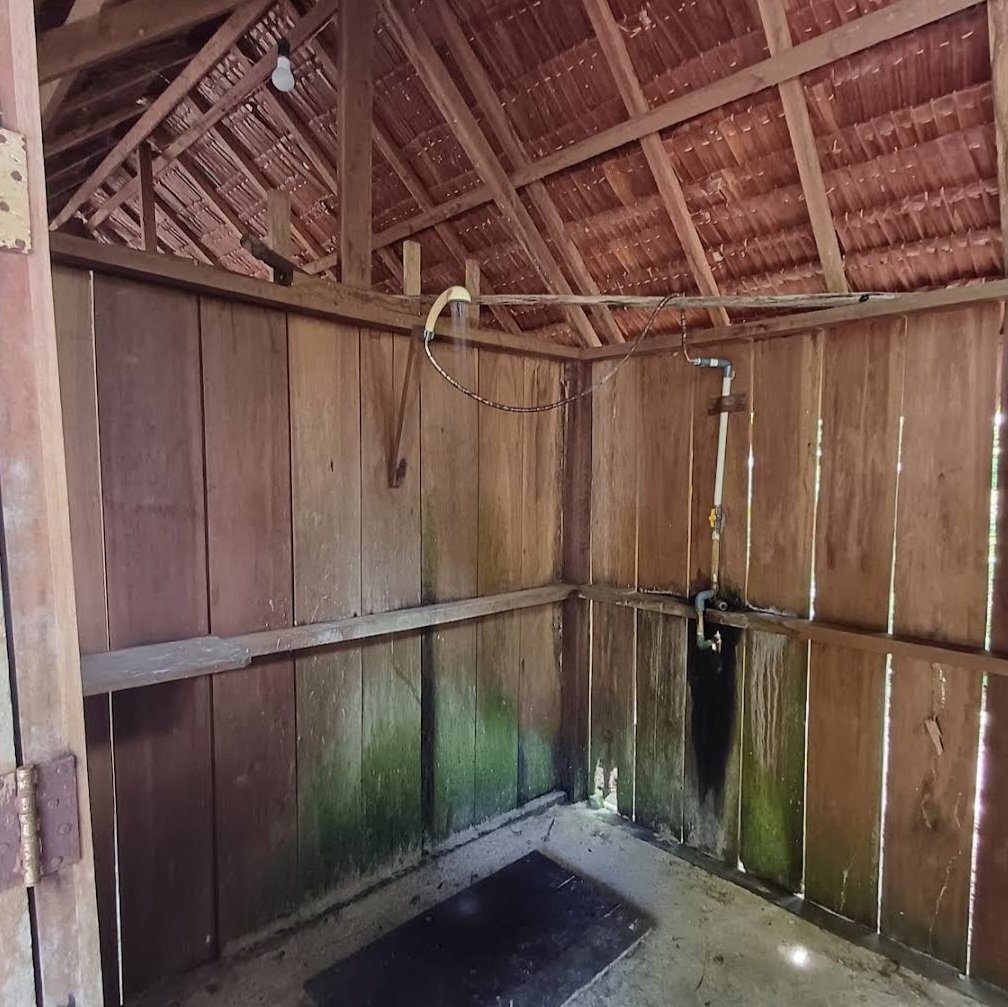
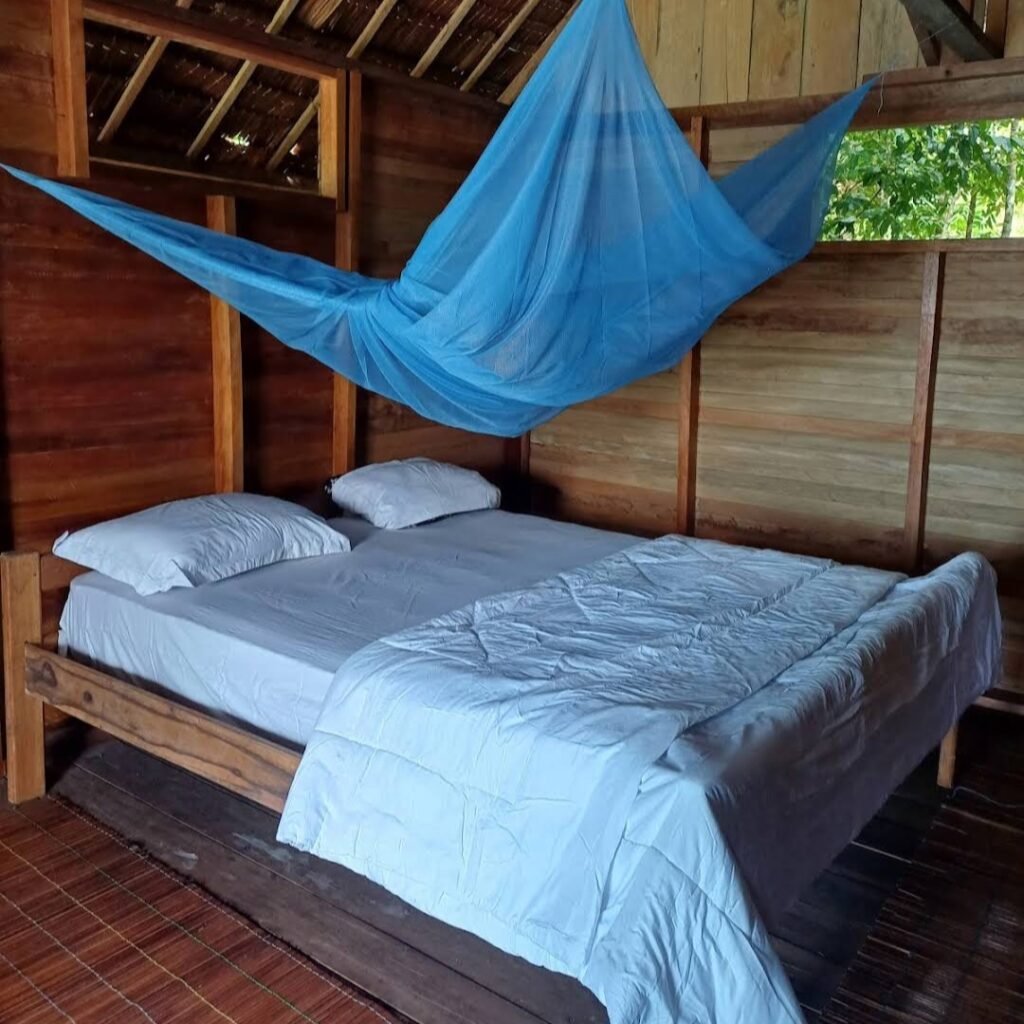
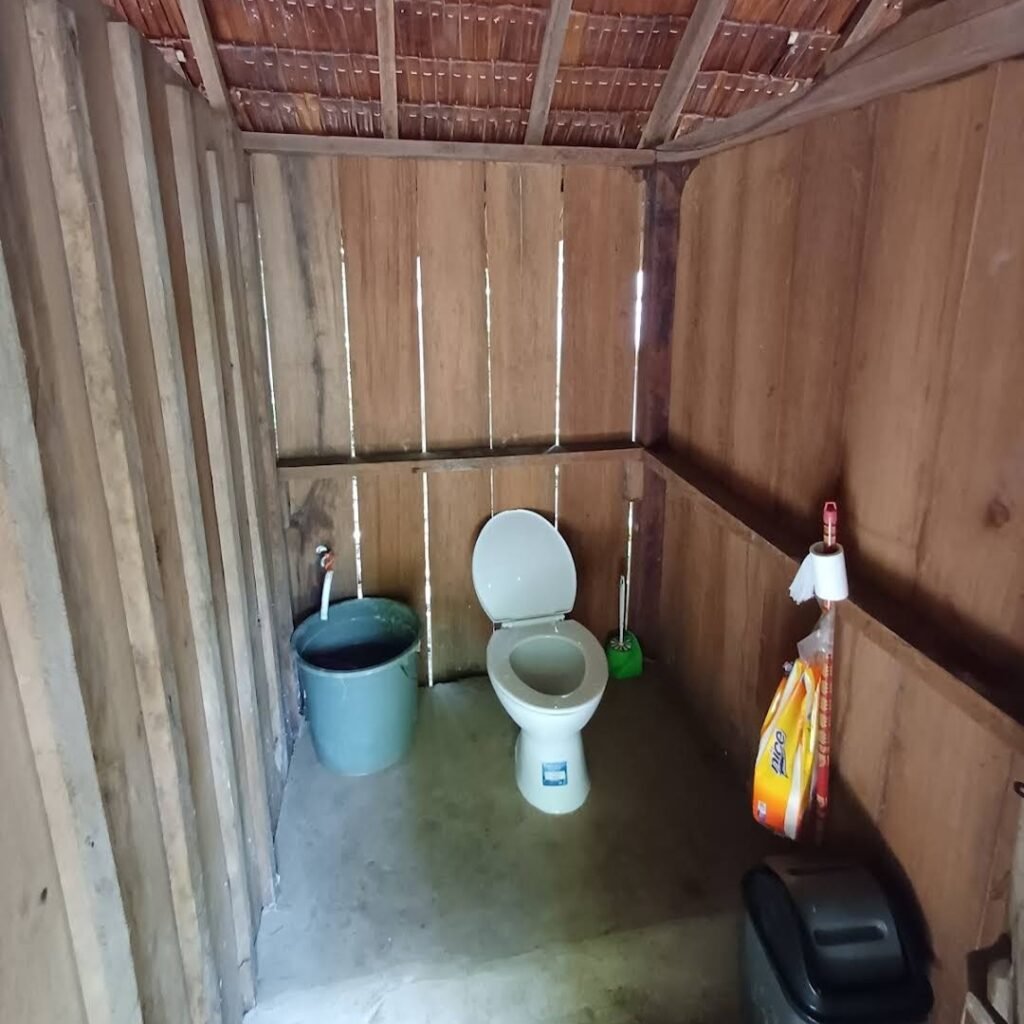
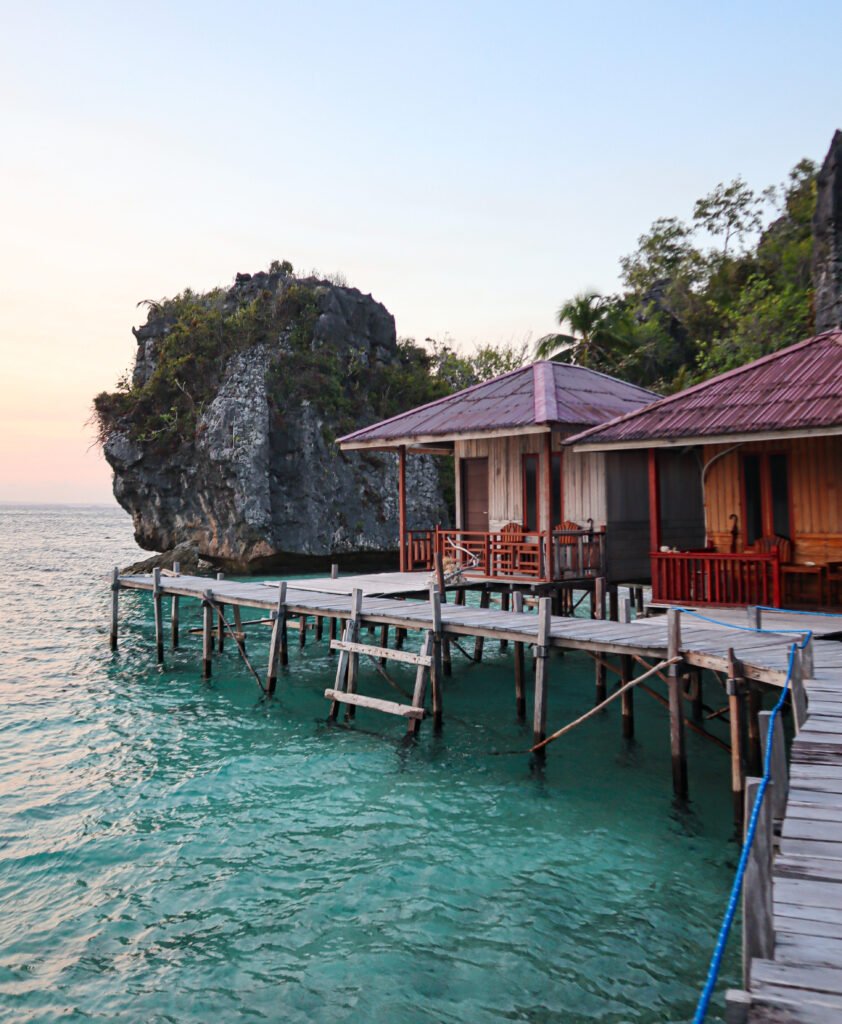
These are the kind of rooms you will be dealing with
Room essentials
- A wet bag for damp swimwear.
- A small daypack for excursions.
- A reusable water bottle.
- Well-sealed bags for storing snacks. Be careful about insects and mice, because it’s still a jungle after all.
- Earplugs and a sleep mask, if you are sensitive to light or noise. The bungalows aren’t properly closed at the roof, and some homestays have a real passion for karaoke.
- A headlamp or torch for walking to shared bathrooms after dark. At homestays, electricity is usually available from 6pm to 6am.
- A compact multiplug and multiple charging cables if you need to charge several devices, as electricity sockets are limited. Trust me, you don’t want to wake up at 3am to swap a device that’s charging, as I had to do the first time. Bring long cables too, as some sockets are in very awkward positions.
- A powerful power bank in case the generator fails and you are left without electricity, which is not nice, especially on your first day before you need to go to the airport.
Feeling overwhelmed by this packing list? Read my guide on accommodation in Raja Ampat to find out whether a homestay is right for you. If not, here are three of the cheapest resorts I can recommend:
★ Quick picks
Andau Dive Resort
Fam Islands · the cheapest, with the best value
Raja Ampat Dive Lodge
Mansuar · close to all the classic day trips
Wai Resort
Pulau Wai · its own little island near Batanta
All offer trips, excursions and diving on site
Keep your bungalow clean and comfortable
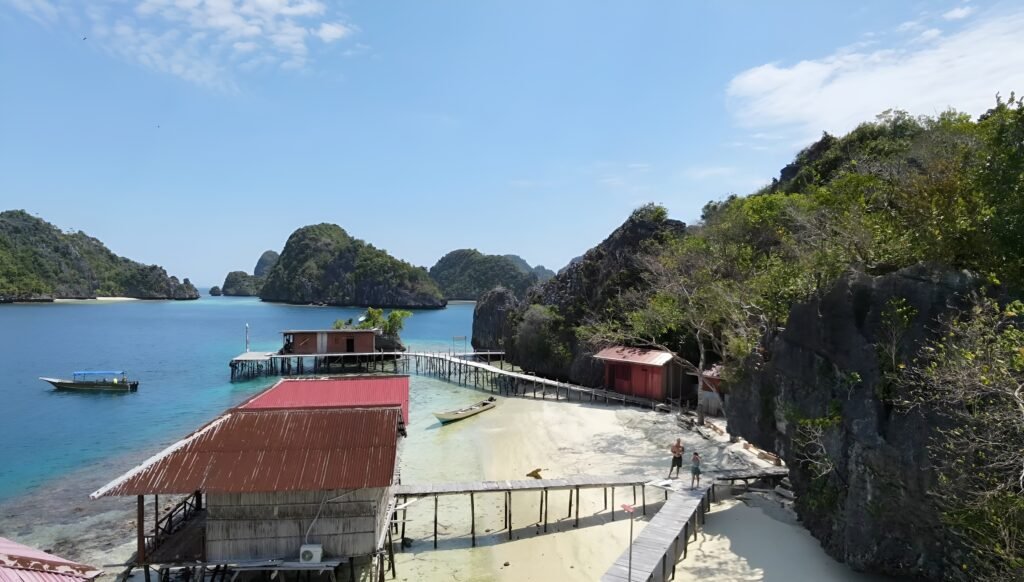
Most homestays provide a bucket of water for washing the sand off your feet before entering your room. I highly recommend using it, because after a few days there was almost more sand on the bungalow than on the beach, and sleeping in a sandy bed isn’t exactly nice.
Snorkeling and Reef Essentials
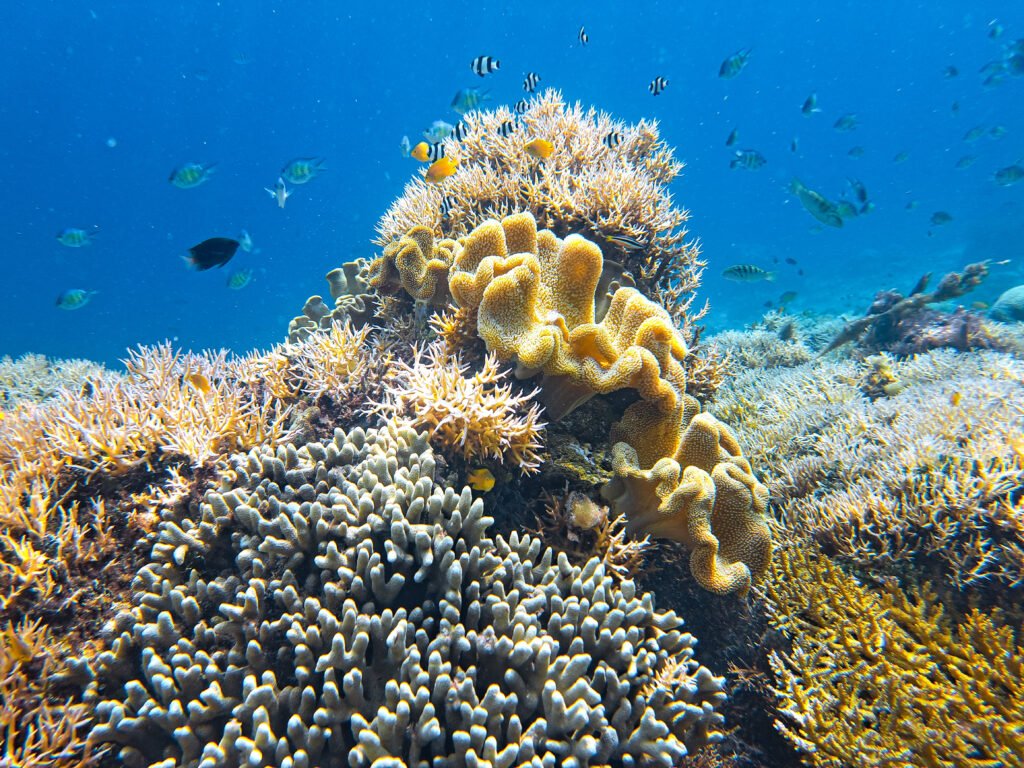
If you are coming all the way to Raja Ampat, you will probably spend a good amount of time in the water (as you should). There are a few things to keep in mind:
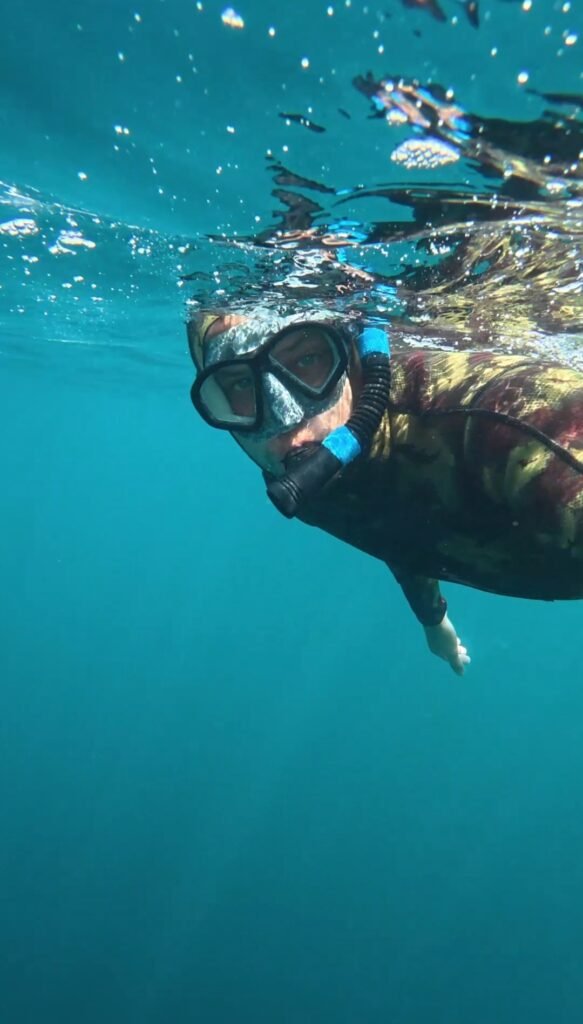
- Bring your own mask and snorkel. Many homestays don’t provide snorkelling equipment for guests. Having your own means you can snorkel whenever you want, and you won’t have to put up with masks that don’t fit well (especially if you have a small face like mine). Snorkelling equipment is easy to find, but buy it in person rather than online so you can try it on.
- Fins: the same applies to fins. Homestays won’t have them to give you, but you do want some, because the current can be quite strong at times. Buy a decent size, not the mini ones sold by Decathlon.
- Fin socks or regular socks: if you aren’t used to wearing fins for long periods, I highly recommend ordering a pair of socks to wear with them. They usually cost 6-7 euros and will help you avoid blisters and cuts that could keep you out of the water.
- A rash guard and possibly trousers to wear while snorkelling: the sun is strong here. Unless you travel with reef-safe sunscreen, I would encourage you to cover up as much as you can and use as little sunscreen as possible.
- Reef-safe sunscreen: the reefs in Raja Ampat are already quite damaged. Reef-safe sunscreen is easy to order on Amazon.
- Waterproof dry bag: useful for keeping valuables and anything that needs to stay dry during boat trips and transfers, as boats don’t offer much protection in case of rain. If you want to make sure there is no moisture inside, drop a little rice in the bottom.
Tip: If you are buying your first mask, know two things. 1) To check the fit, put the mask on your face without the strap behind your head, inhale, then pull the strap. The more resistance you feel, the less likely water is to get inside while you snorkel. 2) You need to clear the lenses with a lighter and toothpaste. Watch a YouTube video on how to do it. Spitting is probably the easiest way to clear the lenses before you jump in, unless you have dishwasher liquid.
Divers Essentials
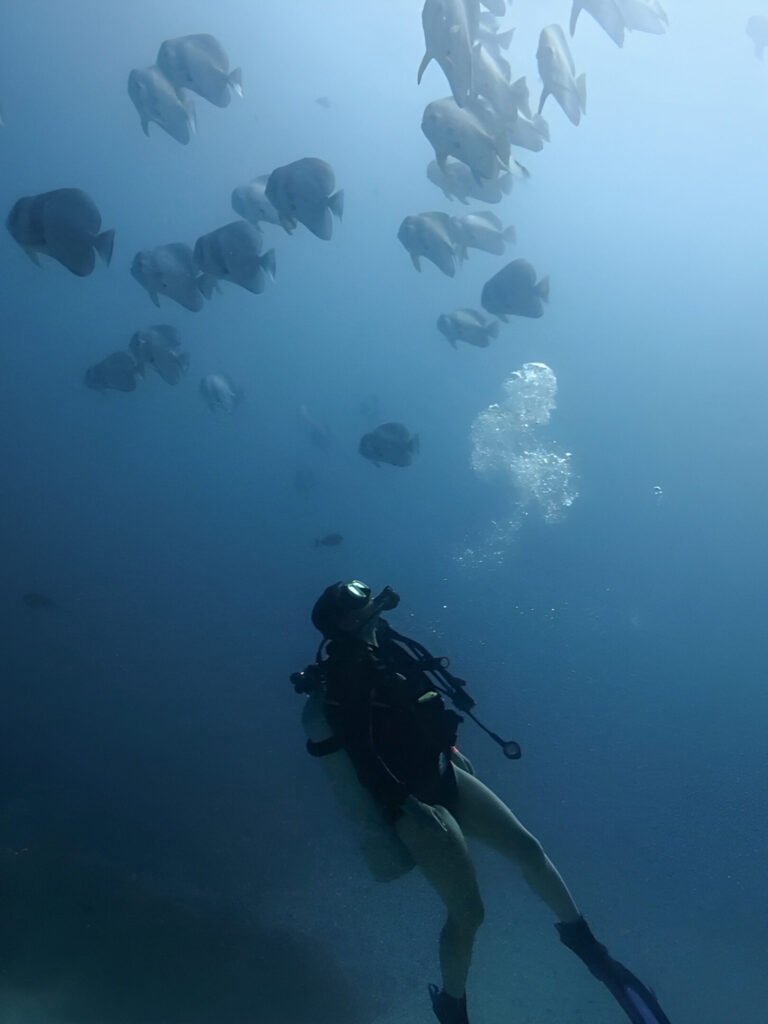
If you’re planning a dive trip to Raja Ampat, you probably already have a fair number of dives under your belt, so treat this as the things I enjoyed having and wish I’d had. If you dive with one of the main dive centres, they will have all the equipment you need, and it’s usually in good condition, so you don’t need to bring it. If you dive with a homestay, bring at least your own mask.
- Full-length wetsuit: either bring your own or rent one from the dive school. Go with a full length. I am, and always will be, a shorty fan, and the water temperature in the Dampier Strait allows for one, but after my first diving day I had my legs covered in fire coral scratches and jellyfish stings.
- Dive computer: you know it’s useful and I know you do, so let’s not debate the cost. Homestays won’t have one to lend you, and dive schools have only a limited number. If there’s a place where you don’t want to get decompression sickness, it’s Raja Ampat. Read my diving guide to find out what happened to me while I was there.
- Quick-drying towel poncho: convenient for changing between dives and keeping warm after getting out of the water. Dive boats don’t offer much protection from the wind, and there isn’t always a proper place to change.
- Luggage tracker: this one is for people who travel with their own equipment. Put a tracker in your luggage. When they lost our dive bag at Makassar airport, the stress was impossible to describe, and without a tracker I’m not sure it would have made its way back to us. Raja Ampat often involves many transfers through small airports, and losing luggage happens. A tracker lets you show people where your bag is so they can look for it. Also take a photo of your luggage.
- Dive insurance: not a packing item as such, but double-check that your insurance covers diving, or get separate dive insurance. If something goes wrong here, you could be in a lot of trouble.
Food & Drinks
There are a few other things worth adding to your packing list:
- Snacks: Bring your favourite snacks, as options are limited and you usually won’t find shops near your homestay. If you know you’ll want something to munch on during the day, pack it in advance (and make sure food bags are properly sealed!).
- Alcohol: You won’t find much alcohol on the islands, so if you want something other than beer, ask your taxi driver to stop at a liquor store in Sorong before heading to the harbour.
- Protein-rich snacks: If you don’t eat meat, like me, you may find some tempeh and eggs, but the options can be quite limited. Next time, I’d definitely bring protein powder or protein bars to make sure I’m getting enough protein throughout the trip.
Free printable
Raja Ampat Packing List
All 20 essentials from this guide in one checklist, ready to print and tick off before you fly.
Download the packing list (PDF)Raja Ampat Packing List: FAQ
Is It Worth Bringing a Wetsuit to Raja Ampat?
Yes. The water in the Dampier Strait is warm enough that you could wear a shorty, but fire coral and jellyfish can scratch and sting your legs, so a full-length wetsuit offers better protection – even if you only plan to snorkel!
What Should I Pack for a Dive Trip to Raja Ampat?
Essential: your own mask, snorkel and dive insurance that covers diving. Nice to have: your own fins, a full-length wetsuit or shorty, and a dive computer. A quick-drying towel and a luggage tracker are also useful.
Do I Need to Bring My Own Dive Gear?
If you dive with one of the main dive centres, they’ll provide most of the equipment. If you dive with a homestay, bring at least your own mask. If you have a dive computer, it’s worth bringing either way (and worth buying one if you don’t have one yet), since dive centres don’t have many spares and homestays won’t have any.
Is Dive Insurance Necessary for Raja Ampat?
Yes, if you plan to dive. Check that your travel insurance covers diving, or get a separate policy such as DAN. Evacuation from the islands can be complicated and expensive.
What Should I Pack for Snorkelling Between Dives?
Bring a rash guard, fin socks and reef-safe sunscreen. Snorkelling is easy in Raja Ampat, so your own mask and snorkel will get plenty of use.
Can I Buy Dive Gear in Raja Ampat?
Generally, you won’t find it in Raja Ampat, so bring your own mask, fins and wetsuit.
Final Thoughts
Raja Ampat rewards travellers who come prepared, and this packing list should have you covered. For the other parts of your trip, check out my homestays guide, my diving guide, my cost guide and my best time to visit guide.
Free printable
Raja Ampat Packing List
Everything from this guide in one checklist, ready to print and tick off before you fly.
Download the packing list (PDF)Check out my pictures and stories on Instagram for some inspo: