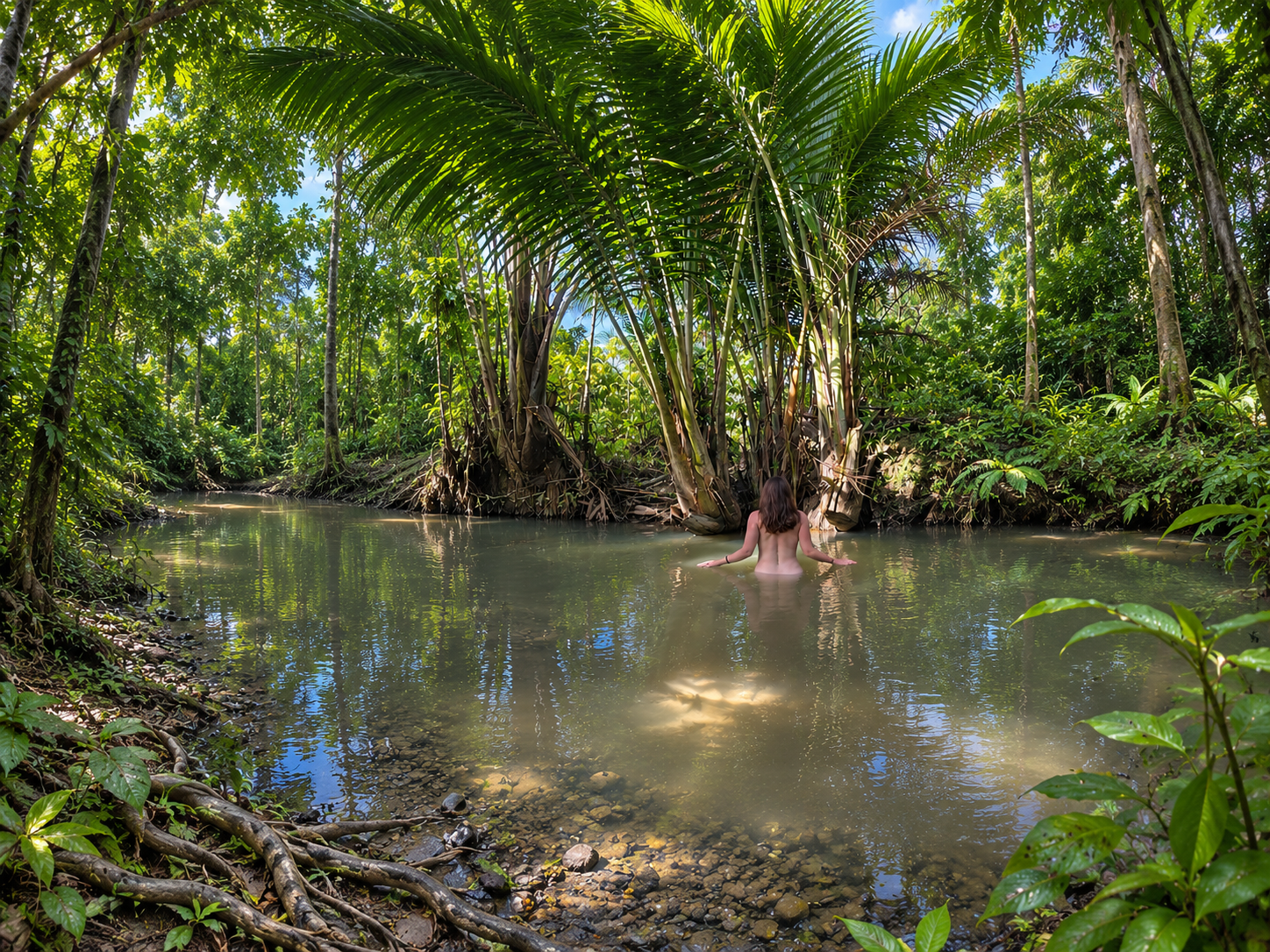
Before arriving in Siberut, I had a few (and honestly quite confused) ideas about what to expect from this experience, which was mainly based on the reels I had seen on Instagram and the videos of people staying with the Mentawai tribes that I had watched on YouTube.
But as we all know, and still tend to forget, social media often gives us a glorified version of reality, showing only the highlights rather than giving us a true picture of what the entire experience is actually like.
So, after spending 4 days in the jungle staying with Mentawai tribes, I decided to write this guide to share what the experience was really like: I’ll walk you through each phase of the stay, sharing what you can realistically expect, what surprised me along the way, and my personal tips to help you make the most of your time with the Mentawai people and arrive well-prepared!
If you’re still in the planning phase, wondering how to choose a guide, how to reach Siberut, or how to organize all the logistics, I’ve covered all of that separately in my main guide to visiting the Mentawai tribes and my guide on how to get to the Mentawai Islands.
Is Staying With a Mentawai Tribe Right for You?
Before diving into my experience, let me start with a little disclaimer: this adventure is definitely not for everyone, and there’s no point pretending otherwise.
For some, staying with Mentawai tribes could be one of the most incredible and unforgettable experiences of their lives while for others, it could turn into a nightmare they’ll remember as the worst part of their trip. Honestly, it all comes down to your expectations and what kind of traveller you are.
So, before sharing all the details of my four days in the Mentawai jungle, here’s a quick breakdown of who I would recommend this experience to and who might be better off choosing a different adventure.
🌿 This experience is for you if:
- You don’t mind stepping out of your comfort zone and being uncomfortable for a few days.
- You value genuine human connections and cultural exchanges more than having a packed schedule of activities.
- You’re perfectly fine with showering in nature and living without a proper toilet.
- You can happily disconnect from electricity, Wi-Fi, and the outside world.
- You’re adaptable and ready to embrace a completely different way of life, even when things get challenging.
🚫 This experience might NOT be for you if:
- You need your own bedroom and a comfortable space to relax after a long day of exploring.
- The thought of trekking through the jungle for hours, in pouring rain with mud up to your knees, sounds like your worst nightmare.
- The idea of sleeping on a wooden floor in a house with pigs living right underneath genuinely horrifies you.
- You struggle with the idea of giving up basic comforts, privacy, and your usual daily routines.
At the end of the day, there’s no right or wrong choice. It’s all about knowing yourself, understanding what you’re signing up for, and choosing an adventure that truly suits you.
If after reading this you are still convinced, keep reading about the booking and planning process or skip directly to Day 1.

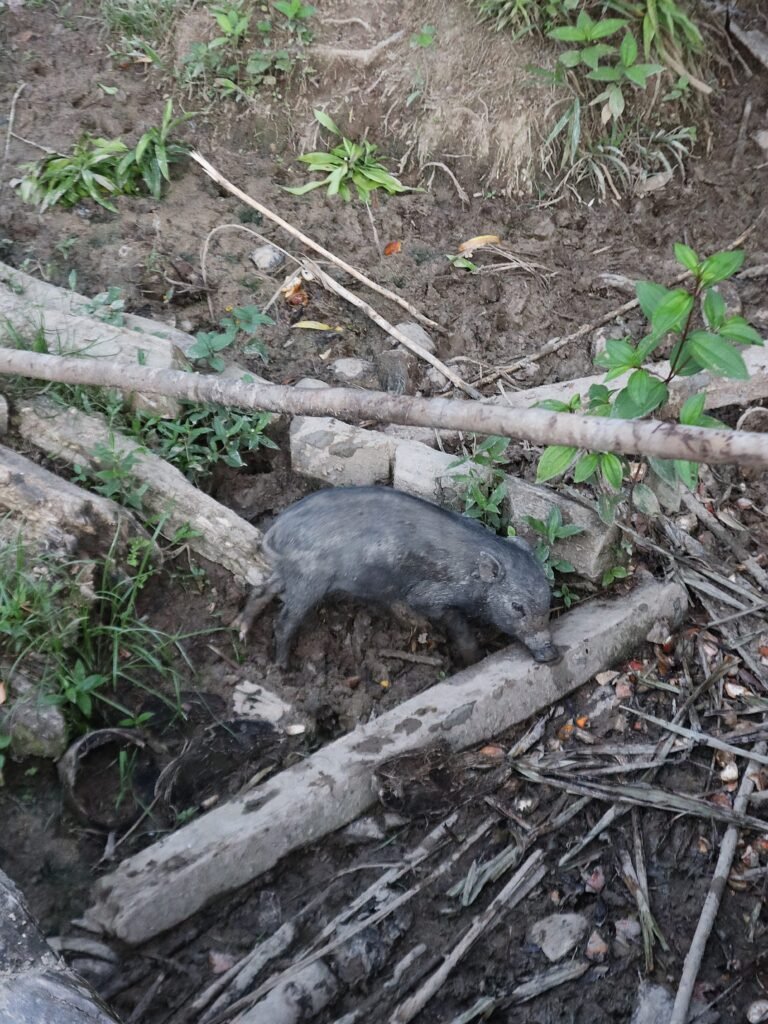
Remember, though, that if you strip away all the cultural significance of this experience, you’ll be sleeping on a wooden floor in the middle of the jungle, with pigs living right beneath you and no bathroom in sight. Not exactly the kind of holiday you might have had in mind!
Booking and Planning Your Stay With Mentawai Tribes
After comparing the offers I received from more than 6 different guides, I decided to book my tour with Levi, a local guide from Siberut who takes visitors to stay with Mentawai tribes in the uma of his family.
I paid IDR 4,200,000 for the 4 days/3 nights experience (one person, prices of November 2026). The price included the transport from Siberut port, all the meals, the accommodation, the Mentawai travel permit, the boots and a guide who speaks English and Mentawai.
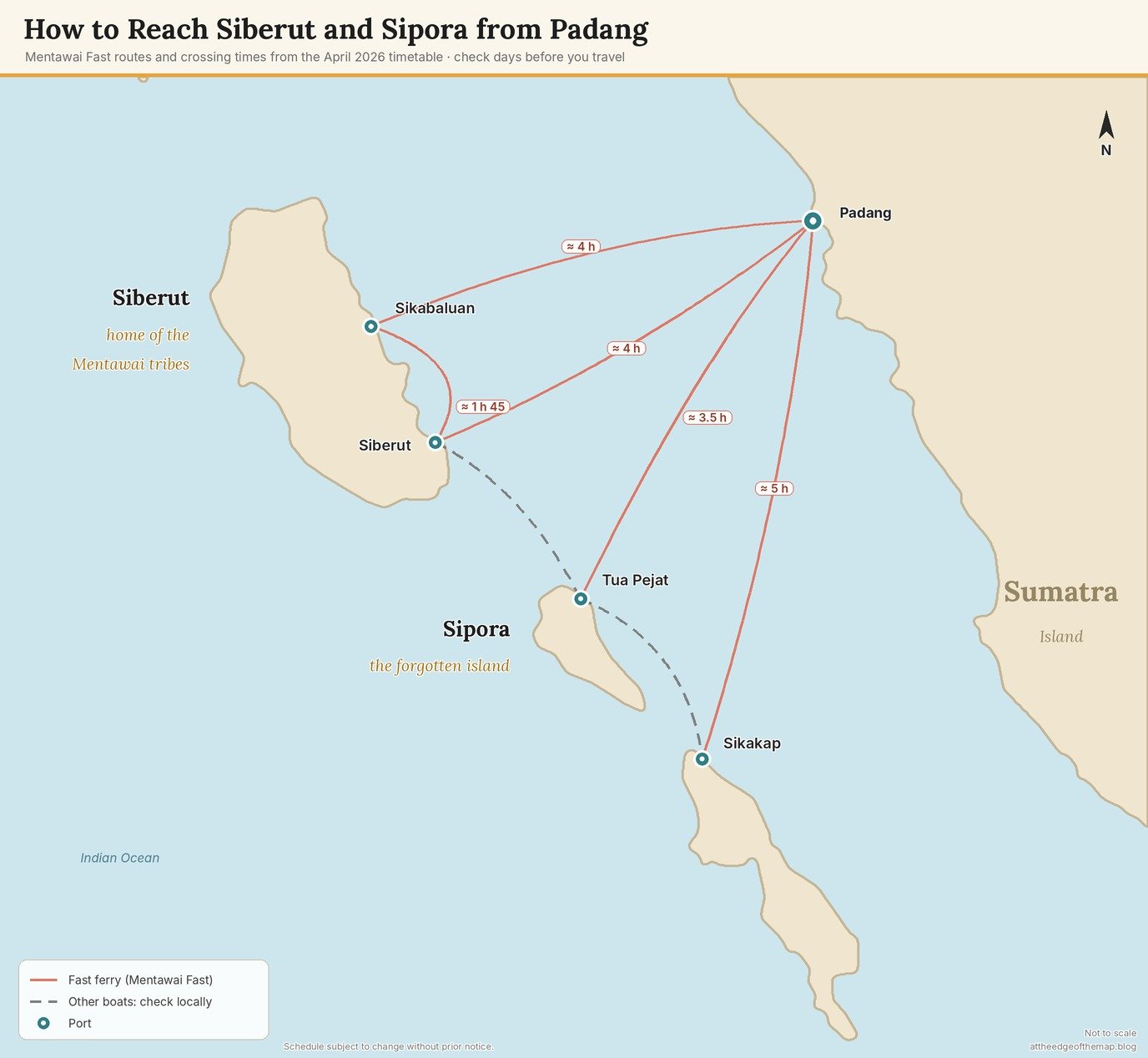
Good to know: the ferry between Padang and Siberut (the island where the Mentawai tribes live) doesn’t run every day. If you want to do the 4 days/3 nights tour going straight from Padang and back without spending time in Sipora (which would be a huge mistake!), you will need to take the ferry that arrives on Saturday and go back on Tuesday.
When you book the experience you will be asked to pay the full amount in advance: It might seem a bit suspicious, but it’s quite normal for this kind of stay, and that’s also why it’s important to know how to choose a guide you can trust.
If you want to compare prices and see how to choose a guide, read my guide on how to stay with Mentawai tribes, and in my guide on how to reach the Mentawai islands you can see the entire schedule of the fast ferry to get there.
Day 1 – Ferry, Jungle Trek and First Night in the Uma
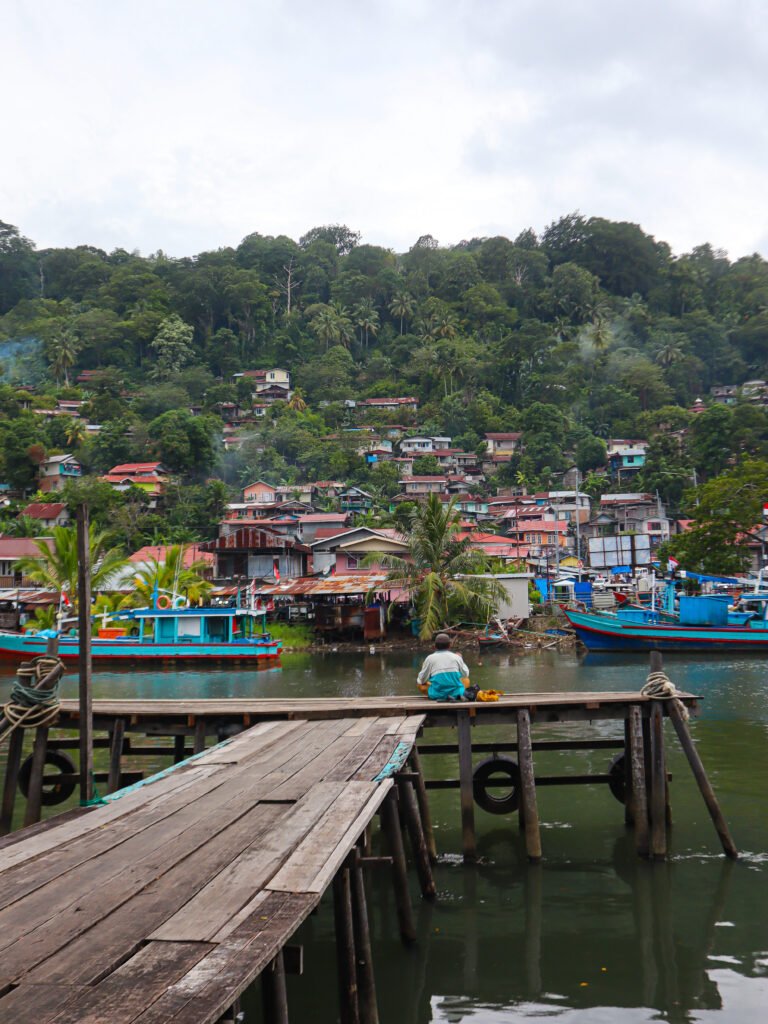
After spending the previous night in Padang, you’ll have an early wake-up call, as the ferry to Siberut leaves at 7 am from the port: the crossing can be quite rough and windy, so if you suffer seasickness I recommend taking your medication sooner rather than later. Once you arrive at the ferry port, show your ticket (which you should have booked the day before), hand over your luggage to be stored in the hold, and get on board.
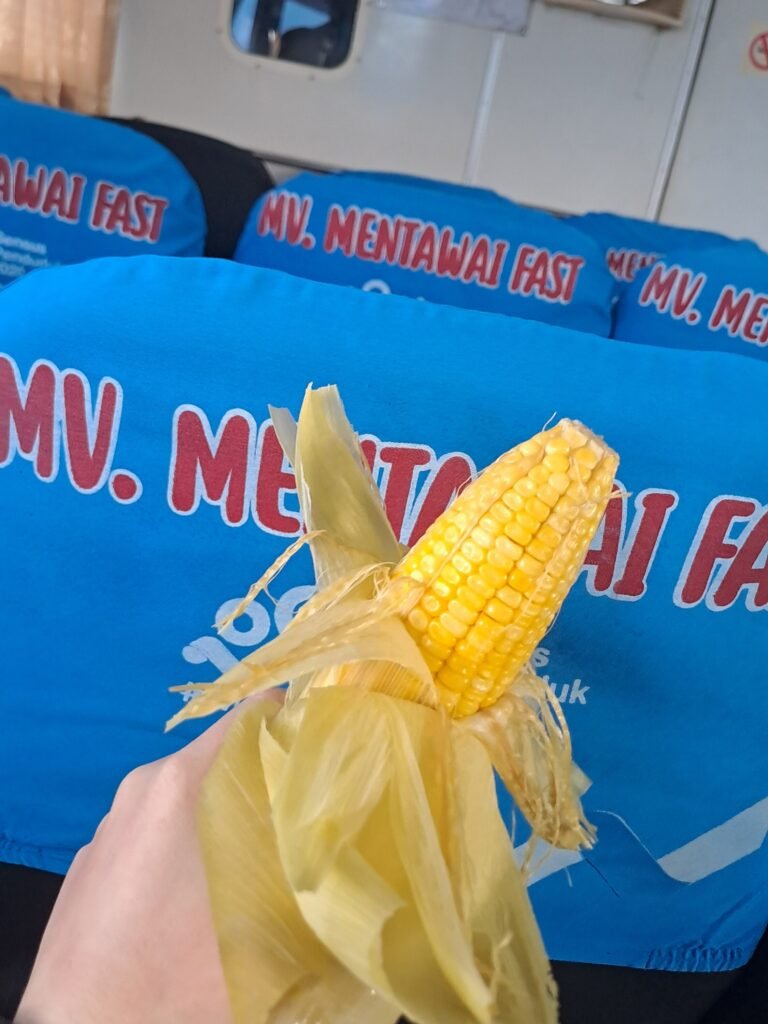
One small warning: they sometimes go a bit overboard with the air conditioning, so make sure to bring a sweater or something warm to wear during the crossing. You can also buy snacks and chips on board if you didn’t get anything at the café at the ferry port before boarding – sometimes they even sell corn, which, to be honest, I quite appreciated!
A quick note about my guide: I booked with Levi, but he had a last-minute issue during those days, so I ended up visiting the Mentawai tribes with another guide who works with him and I have to say I was more than happy with how things turned out and had an amazing experience!
Arriving in Siberut and getting ready for the jungle
Once you arrive in Siberut, your guide will be waiting for you at the port and if you’re hungry, he’ll first take you to a restaurant for lunch before heading to Levi’s house to get everything ready for the trip.
At the house, his wife has a huge collection of rubber boots, so you’ll be able to try different pairs until you find your size (she’ll also offer you some tea and sweets while you get ready, which never hurts). This is also where you can leave your bigger luggage while you do the tour in the jungle so that you don’t need to bring all your luggage with you.
My tip: separate the things you want to bring into the jungle in advance! I hadn’t done this, so I ended up opening my entire suitcase at Levi’s house and leaving half of my things there – having a small backpack already packed will make things much easier.
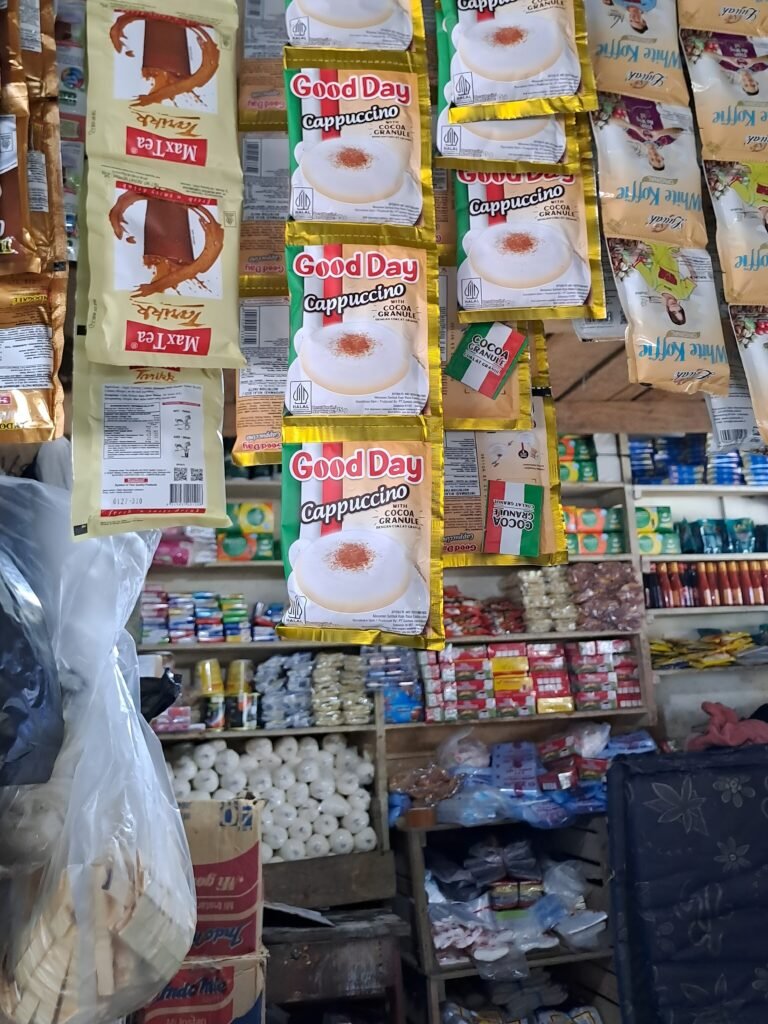
Once you’re ready, you’ll head to the local market with Levi or the guide who will accompany you into the jungle to buy supplies for the next few days. I honestly really enjoyed this part of the day: it’s a nice opportunity to walk around the town a little, see the local market, and get a first glimpse of everyday life in Siberut.
Your guide will usually ask what you prefer to eat while buying groceries, so don’t hesitate to tell him if you have any preferences: mine bought me a bunch of tempeh after I told him how much I like it, which made me very happy!
There’s also a school near the market, and the kids often come out to play with visitors and practise their English, which was another really nice moment.
Before leaving town, you’ll also stop to buy some gifts for the family you’ll be staying with, mainly cigarettes and a few useful items such as soap or basic food supplies (this is a traditional gesture when visiting local families, and it usually costs just a few dollars).
The canoe ride into the jungle
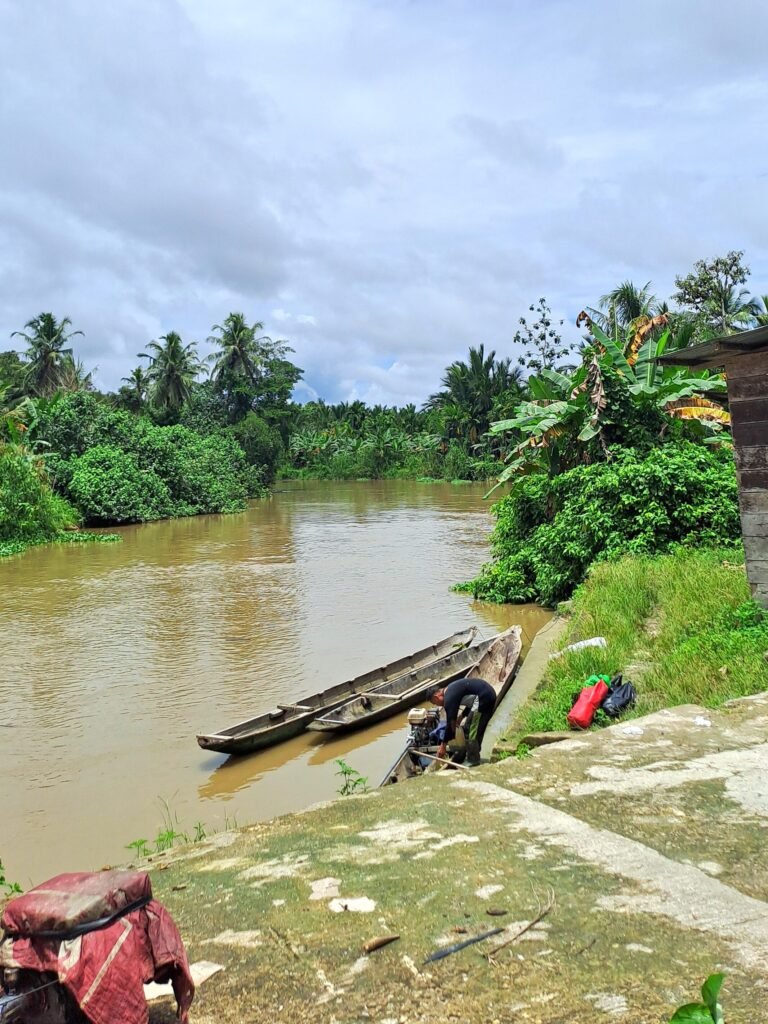
After finishing the shopping, you’ll head back to Levi’s house, collect your backpack, and get into a car or onto a motorbike to reach the small dock where your journey into the jungle really begins. From here, you’ll board a motorised wooden canoe and travel along the river for around 2 hours: this is where the surroundings start to change completely and you will start to be surrounded just by dense vegetation and another motorized canoe that passes by every now and then.
My tip: bring a light windbreaker for the canoe ride as the boat isn’t covered and it will help protect you from both the wind and the sun – I’d also recommend keeping your valuables in a waterproof bag, just in case it rains (spoiler: it did)
The jungle trek to the uma (and my muddy adventure)
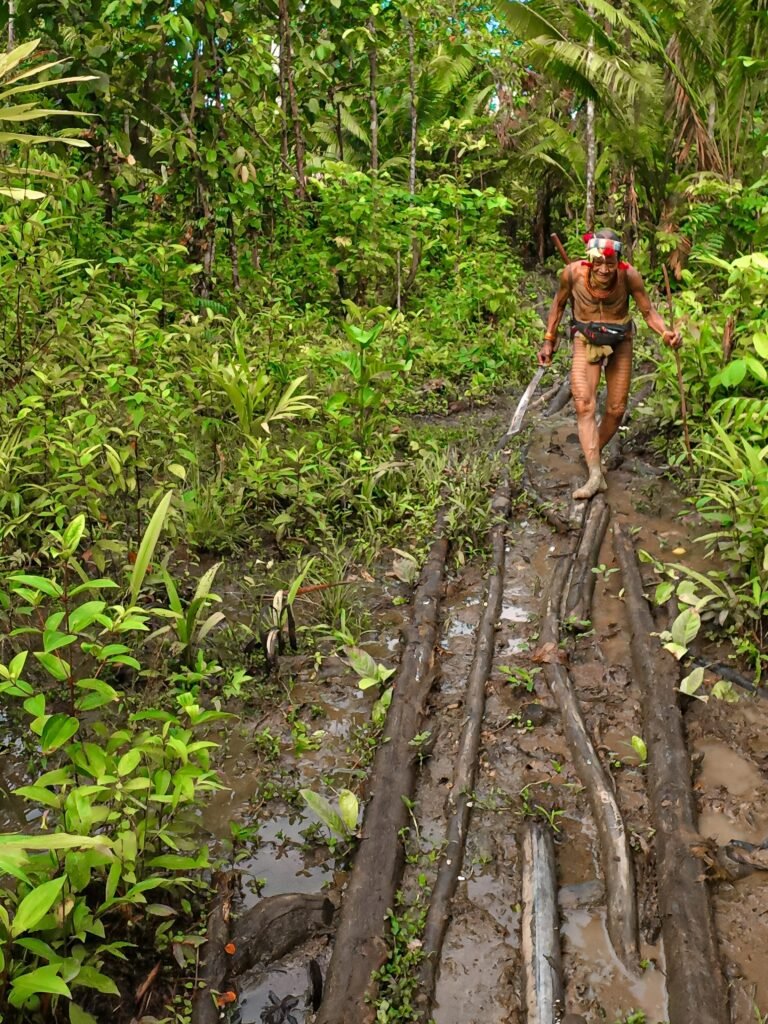
Once you get off the canoe, there’s still one last part of the journey before reaching the family: around an hour of trekking through the jungle.
And this is where things got interesting for me – while we were walking to reach the uma it started raining and the jungle basically turned into a muddy nightmare. Keep in mind that there aren’t proper trails and you’ll often find yourself walking along large tree branches and logs laid on the ground to create a sort of path through the mud. I was honestly surprised by the incredible balance the local people have while walking on them (even considering that they usually walk around barefoot) or, to put it better, by how terrible mine was!
Also the branches are quite narrow, it’s very easy to slip off them, and when you do, you quickly discover just how deep the mud can be in certain places (I’m talking about sinking almost up to your knees!). To make things even more entertaining, I have very small feet, and even the smallest boots available at Levi’s house were a little too big for me, so every time I got stuck in the mud, one of my boots would slip off my foot and stay buried there.
Let’s just say that the trek took us quite a bit longer than expected, and the way back wasn’t exactly easy either! But despite all the slipping, sinking, and trying to rescue my boots from the mud, it was definitely one of those moments that made the whole adventure memorable.
My tip: don’t underestimate this part of the journey, especially if you’re travelling during the rainy season. Wear the rubber boots provided by your guide, avoid bringing a heavy backpack, and make sure anything that shouldn’t get wet is protected. And don’t worry too much about getting dirty: it’s almost impossible to avoid!
Arriving at the uma and meeting the family
After the trek, you’ll finally arrive at the uma, the traditional Mentawai house where you’ll be staying for the next few days. Once you arrive, you’ll be introduced to the different members of the family, and your guide will explain how things work around the house: you’ll be shown where you’ll sleep, the part of the river where people usually wash, and how the bathroom situation works (spoiler: the bathroom is basically anywhere outside the house!)
While your sleeping area is being prepared, the family will usually start getting dinner ready, and you’ll have some time to settle in, look around, and start getting to know everyone. After such a long day of travelling, this is also when you’ll finally get a chance to relax and take in where you are.
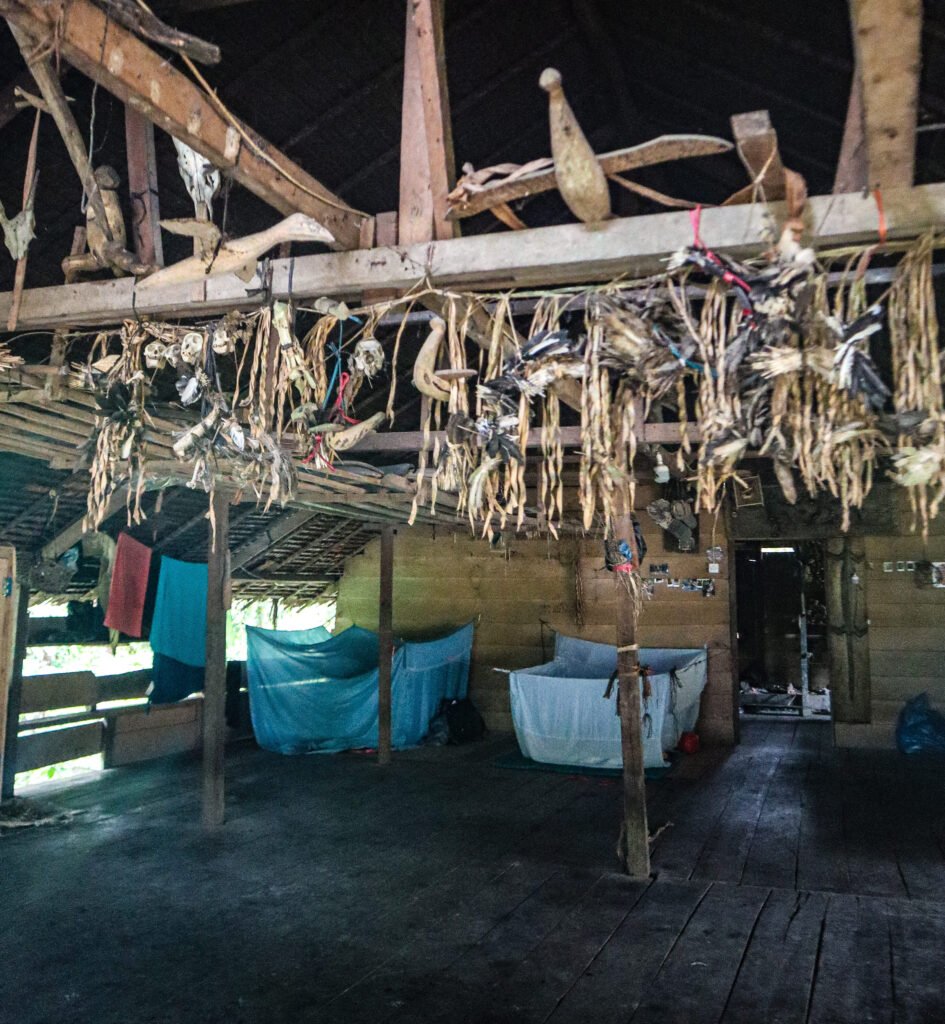
Animal skulls: One thing you’ll immediately notice when entering an uma is the large number of animal skulls hanging inside the house, particularly those of monkeys and pigs. These are connected to successful hunts and ceremonial sacrifices, and are considered very important in the spiritual traditions in Mentawai culture. The shaman explained that monkeys used to be hunted more frequently, but nowadays they are much harder to find, and hunters often have to venture much deeper into the jungle.
What is sleeping in an uma actually like?
The uma is essentially one big communal space that serves as both a living room and a bedroom: this is where you’ll sleep, eat your meals, and spend most of your time hanging out with the family.
Remember that your bed will consists of a mat placed directly on the wooden floor, with a mosquito net above it, which doesn’t just keep mosquitoes away but it also has the very useful second purpose of keeping the chickens out, as they tend to wander freely around the house! You’ll also get a pillow and a small sheet, and I have to admit that I don’t know if it was due to the physical exhaustion or what, but the bed felt incredibly cozy.
Of course, don’t expect complete silence at night as there are pigs living around and underneath the uma, and you’ll definitely hear them moving around, along with the other sounds of the jungle. Still, considering the very basic sleeping conditions, I personally found it more comfortable than I had expected.
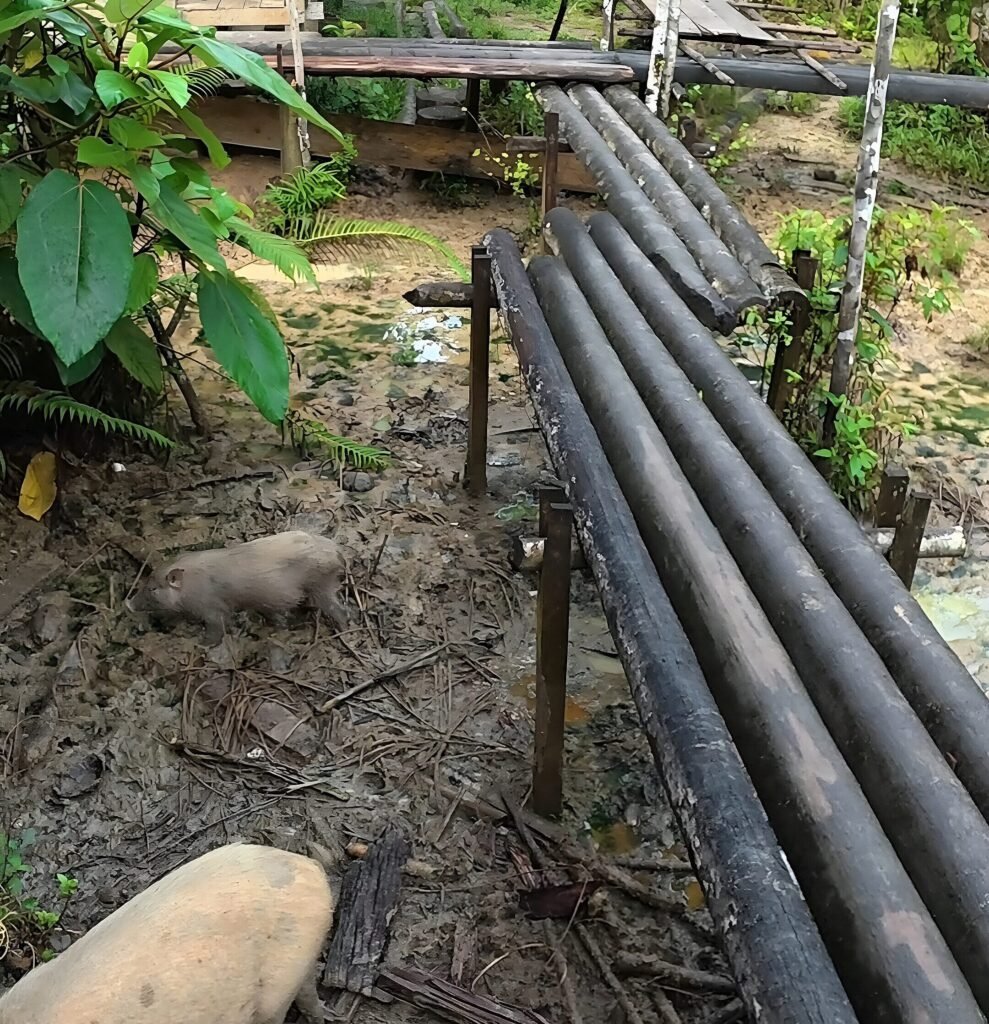
This is certainly not the kind of accommodation most of us are used to, but that’s also part of what makes staying with Mentawai tribes such a different and memorable experience.
Day 2 – Sago, Medicinal Plants and the Mentawai Shaman
This is your first full day of activities in the jungle with the Mentawai tribes! As I mentioned before, what you do can vary depending on the family’s daily routine, but there’s usually a general pattern to how the day unfolds.
Morning: Exploring the jungle with the Mentawai shaman
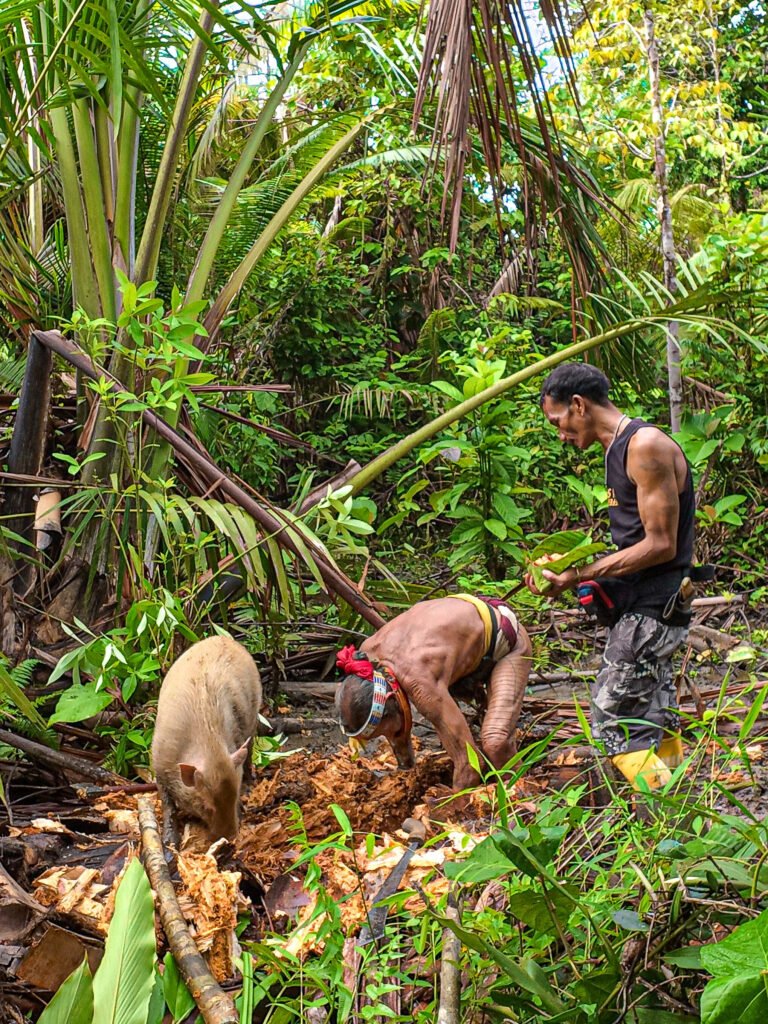
After breakfast, you’ll meet the Mentawai shaman and head into the jungle with him and your guide to discover some of the medicinal plants traditionally used by the Mentawai people and learn how they collect sago, one of their main sources of food.
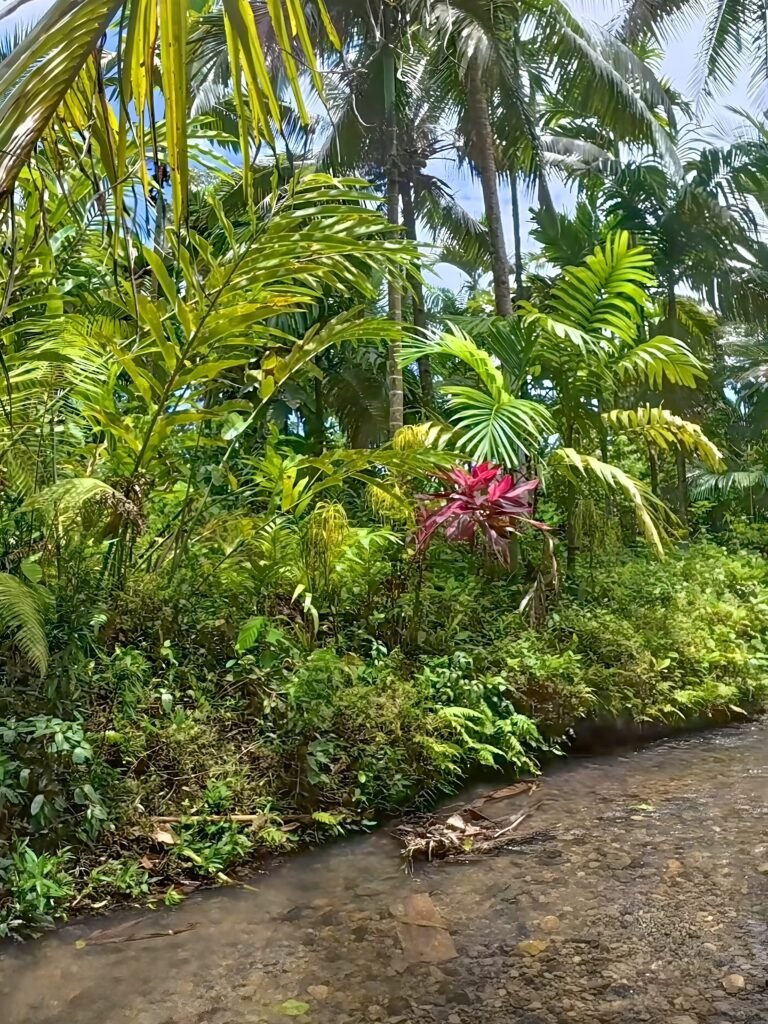
Along the way, the shaman will show you different plants and their uses, and you might even get to taste some fruits he picks for you. I found this part particularly interesting, as you start to realise just how much knowledge the Mentawai people have of the jungle and everything it provides.
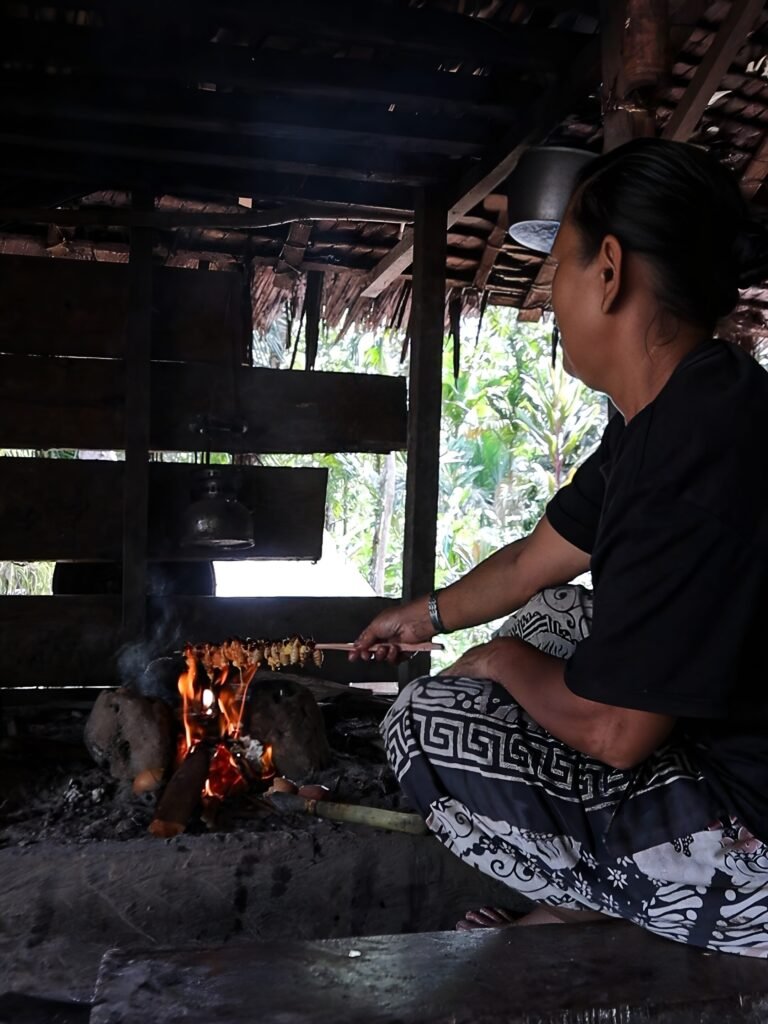
Eventually, you’ll reach a sago palm, where you’ll see how they cut it down and extract the soft inner part of the trunk, which will later be processed into flour, and while working on the sago, they might also collect sago larvae, which are considered a traditional food and can be eaten raw or cooked. And yes, I tried them! But… I went for the cooked version, and I have to admit that, honestly, they tasted surprisingly similar to eggs – if I hadn’t known what I was eating, I might even have said they were good!
Of course, you don’t have to try them if you don’t want to. Nobody expects you to eat anything you’re uncomfortable with, so don’t feel pressured. It’s entirely up to you.
Back at the uma: Cooking, sago and traditional crafts
After spending the morning in the jungle, you’ll head back to the uma, where you’ll see how the sago collected earlier is processed and turned into food: the soft material from inside the trunk is worked to extract the starch, which is then prepared into what I would describe as a kind of rather tasteless bread. If you’ve travelled to other remote parts of Indonesia, especially Raja Ampat, you might have come across sago before, as it’s a traditional staple in several regions of the country. Personally, I’m not a huge fan – it gets slightly better with some sauce on top, but I have to admit that sago was probably the only food I didn’t enjoy during my stay!
And that’s saying something, because I was genuinely surprised by how good the food was overall – one other thing I really liked was being able to watch how the family prepared meals using ingredients collected from the jungle or bought at the market before our arrival.
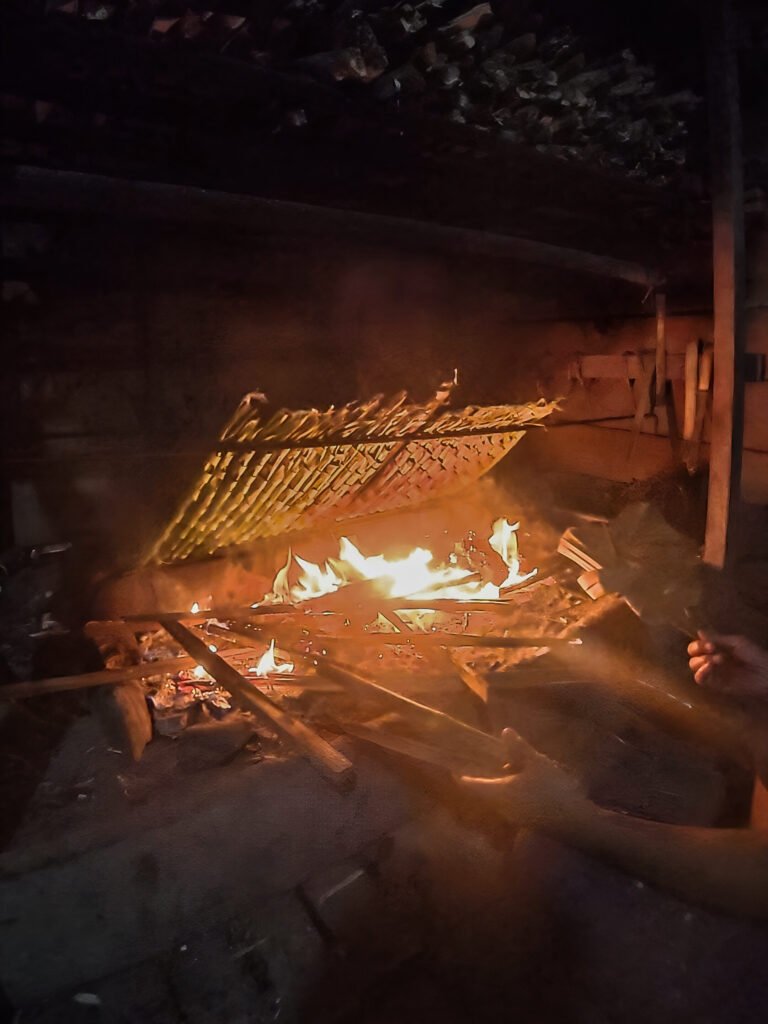
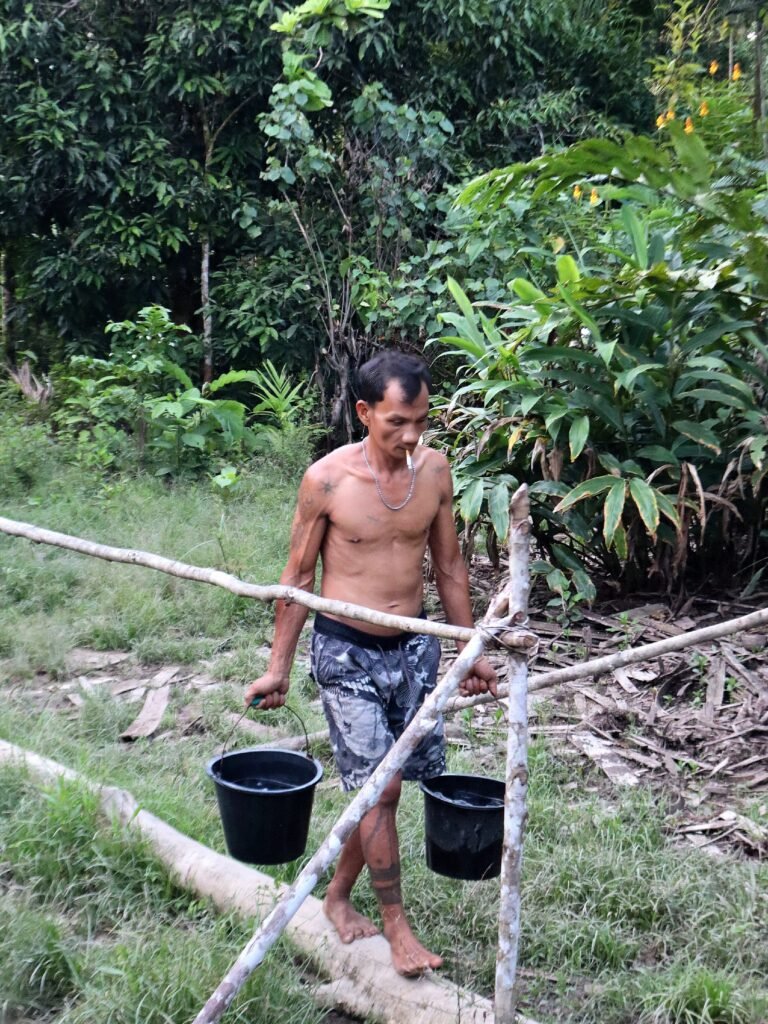
During the day you’ll also have the chance to see how some traditional crafts are made, such as weaving baskets and making the poisoned arrows used for hunting: it’s incredibly fascinating to see how much skill and knowledge goes into making these everyday objects.

Afternoon: Swimming in the river and spending time with the family
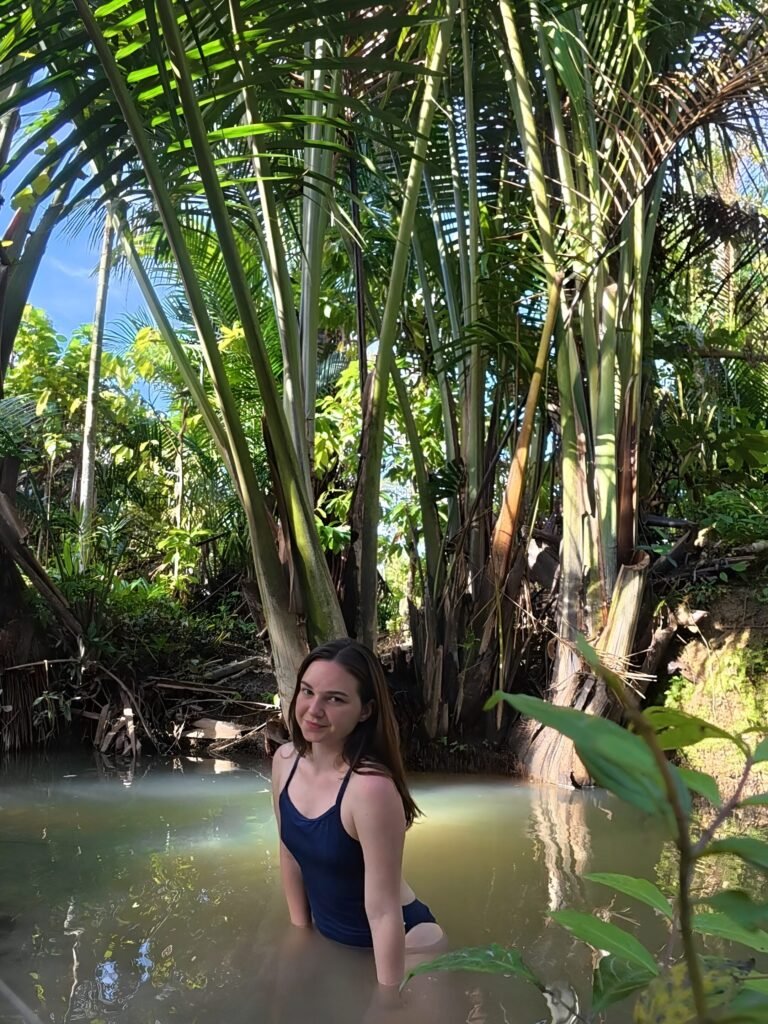
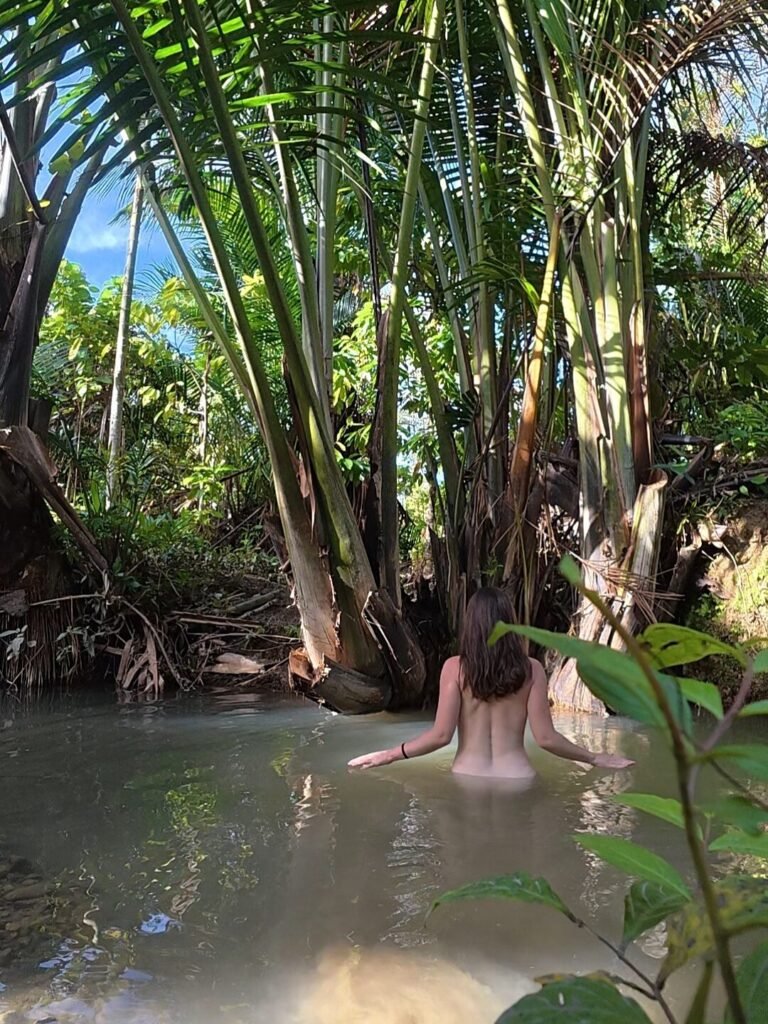
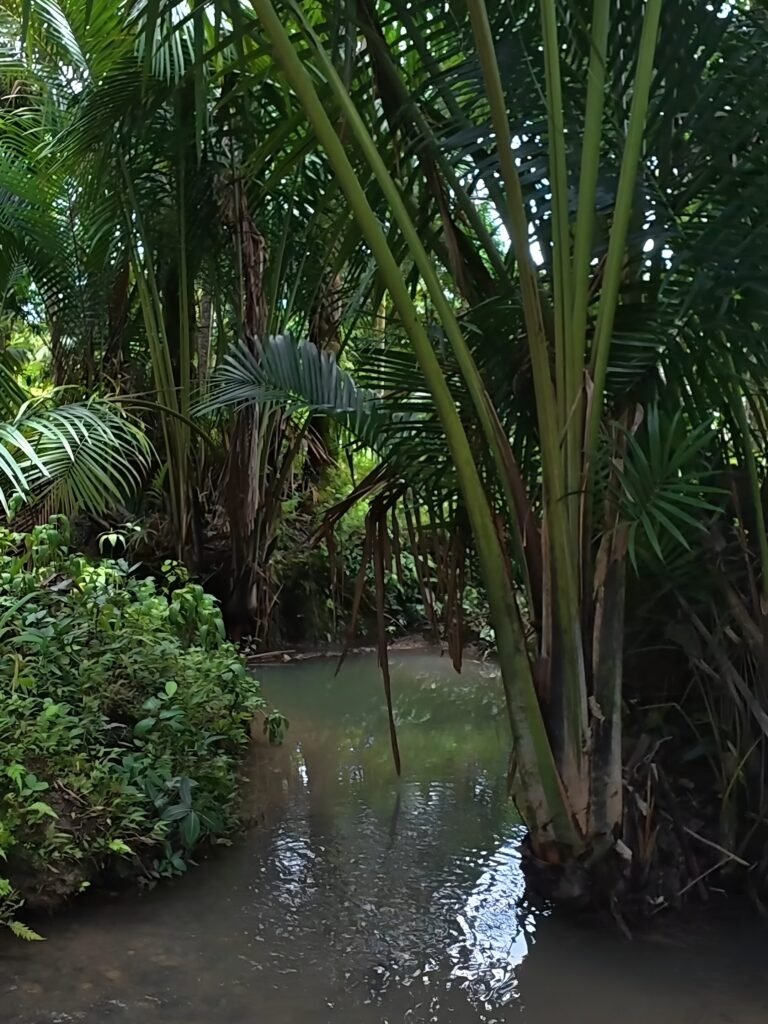
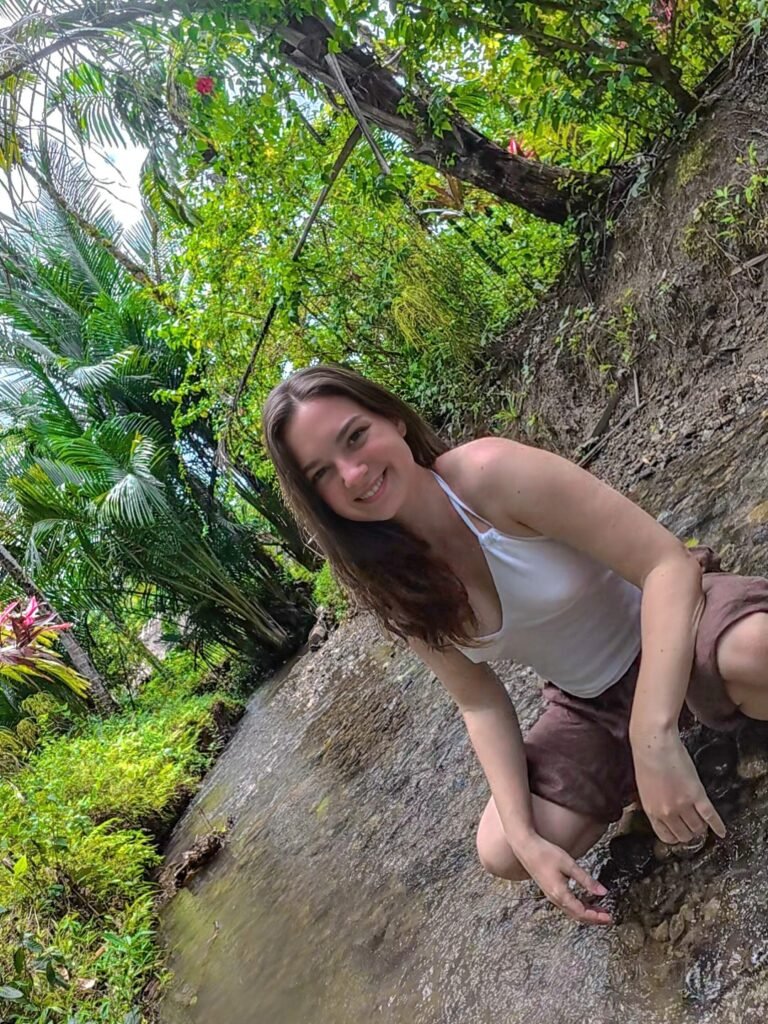
In the afternoon, I used to spend quite some time at the river, which is also where you’ll usually go to wash. I have to admit that before arriving, I was a little concerned about the idea of having to shower in a river for several days, but it turned out to be one of my favourite parts of the stay! The water was so refreshing, and I often stayed longer just to swim, enjoy the sun, and relax surrounded by the jungle (I was also plesently surprised by the very low number of insects I saw).
Later that day, I spent some more time with the Mentawai shaman: he doesn’t speak English, but your guide will be there to translate, so you’ll still have the chance to ask questions and learn more about his life and traditions – he will also teach you how to make a bracelet using fibres from a tree, which was such a nice little moment.
After dinner, I would usually sit outside to watch the stars, and let me tell you, if the sky is clear, being in the middle of the jungle with almost no artificial light means you can see an incredible number of them!

Learning about Mentawai culture and traditions
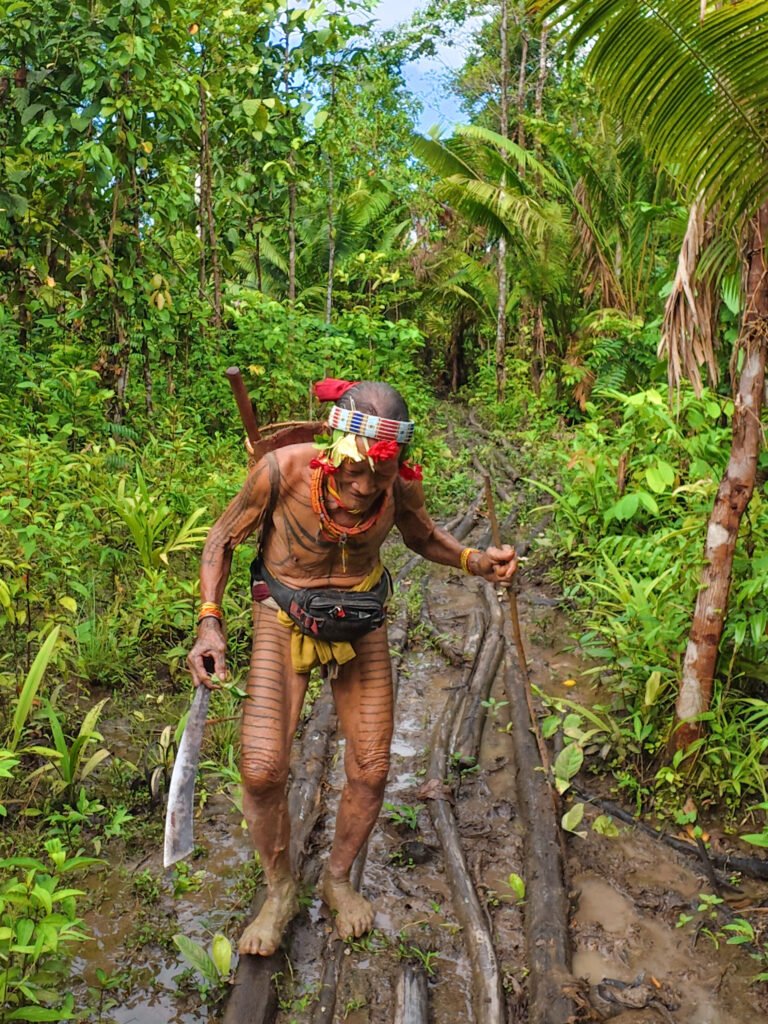
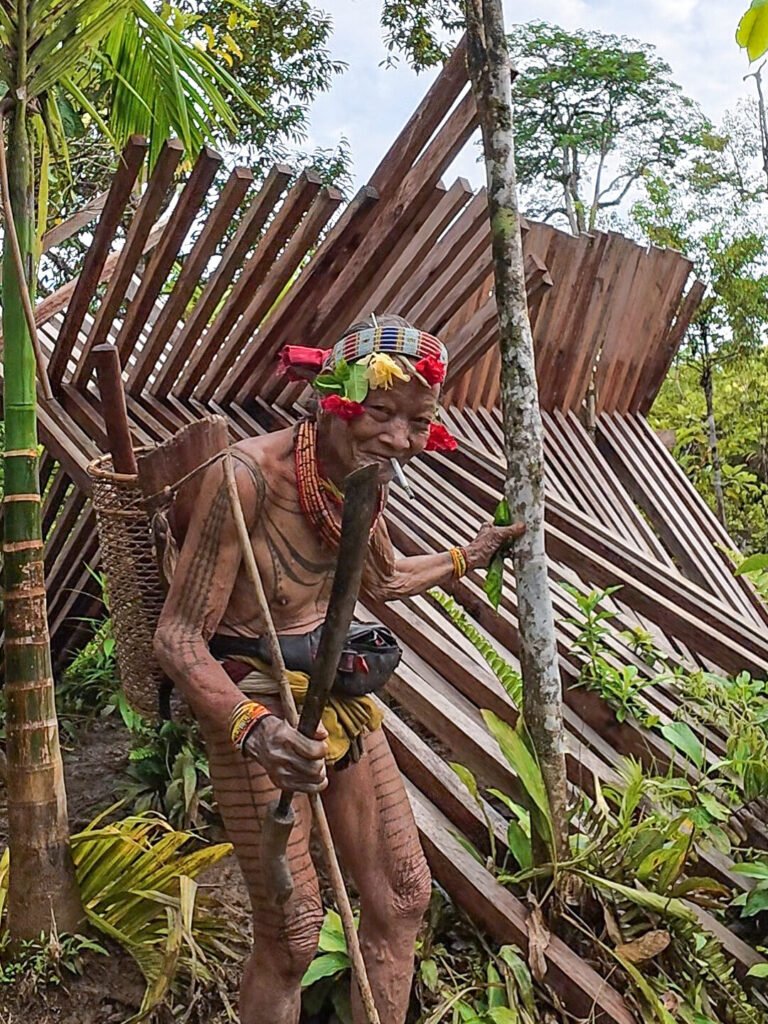
One of the most interesting parts of the second day for me was getting to know the Mentawai shaman and learning more about the culture of the Mentawai tribes. Nobody seemed to know exactly how old he was, but what really fascinated me was the amount of knowledge he carried with him: in traditional Mentawai communities, shamans, known as sikerei, play an important role in spiritual life, healing practices, and passing down traditional knowledge.
You can ask him lots of questions about the things you are most interested in knowing but here are the topics I found the most fascinating:
- The traditional religion, Arat Sabulungan: it’s based on the belief that everything in nature, from people and animals to trees and stones, has a spirit that must be respected.
- The difficult history of the Mentawai people and their relationship with the Indonesian government: starting in the 1950s, traditional religious practices were restricted in the country and the Mentawai were pressured to adopt one of the officially recognised religions, while also being encouraged or forced to leave their traditional uma and move into villages closer to the coast. These changes had a major impact on their way of life and help explain why relatively few families still live according to the traditional customs today.
Hearing all these stories and explanations was incredibly interesting, especially because it wasn’t something I was learning from a museum or a documentary, but directly from someone who is carring the living memory of these tribes. Staying with the Mentawai people it’s not just about seeing how they live, but having the opportunity to understand a little more about the beliefs, history, and traditions behind their way of life.
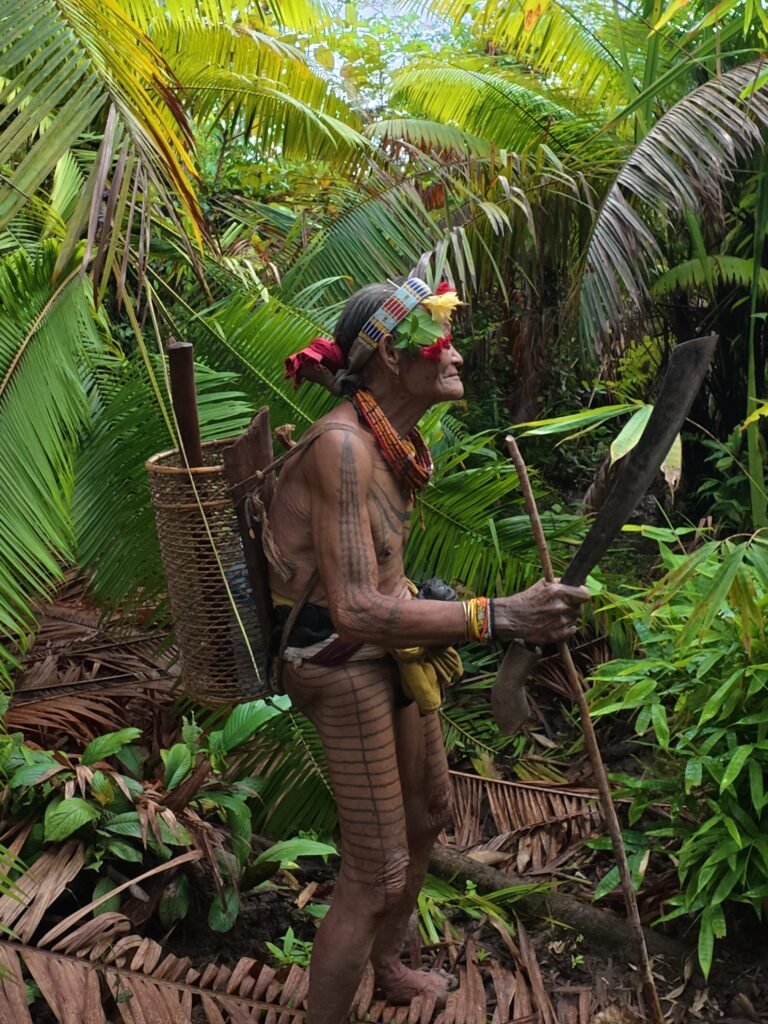
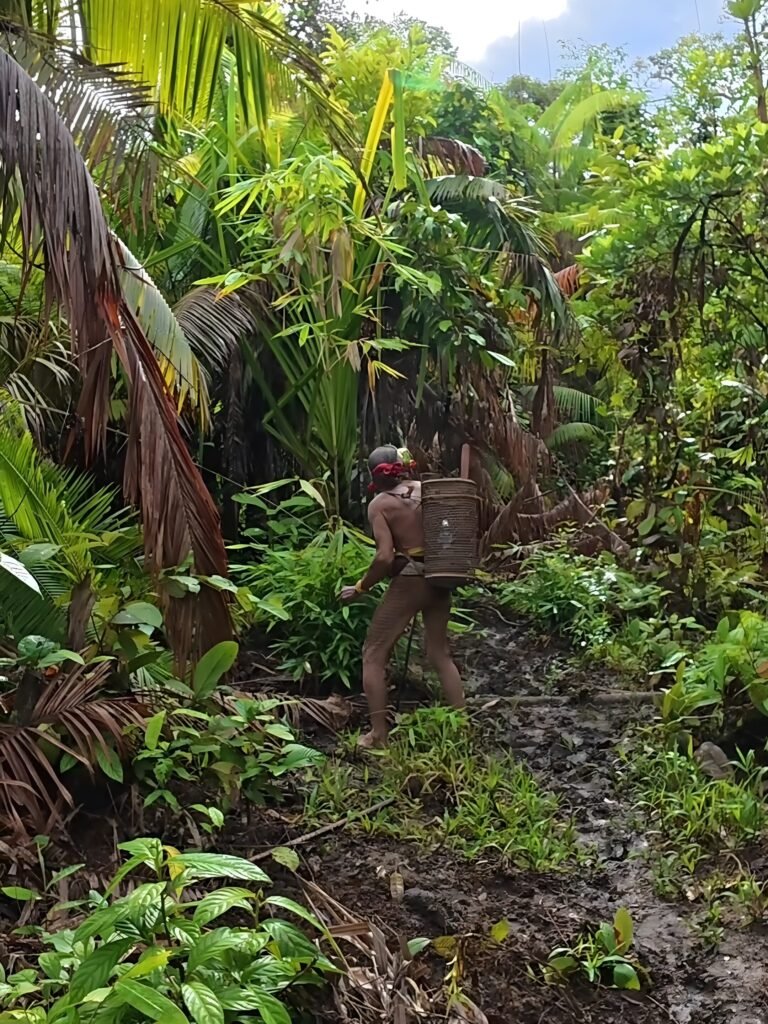
Did you know why the Mentawai are called the “Flower Men”? Because they like to decorate their head ornaments with fresh flowers and their traditional tattoos often feature nature-inspired patterns. And don’t worry you won’t be left out! The Sikei will help you find flowers in the jungle and decorate your hair in the same way!
Day 3 – Fishing With the Women and Visiting Other Umas
On my second full day in the jungle with the Mentawai tribes, I have to admit I slept in way longer than I was expecting. Partly because my phone had gotten wet during the trek to the uma, and with no electricity or internet connection, I had absolutely no idea what time it was anymore!
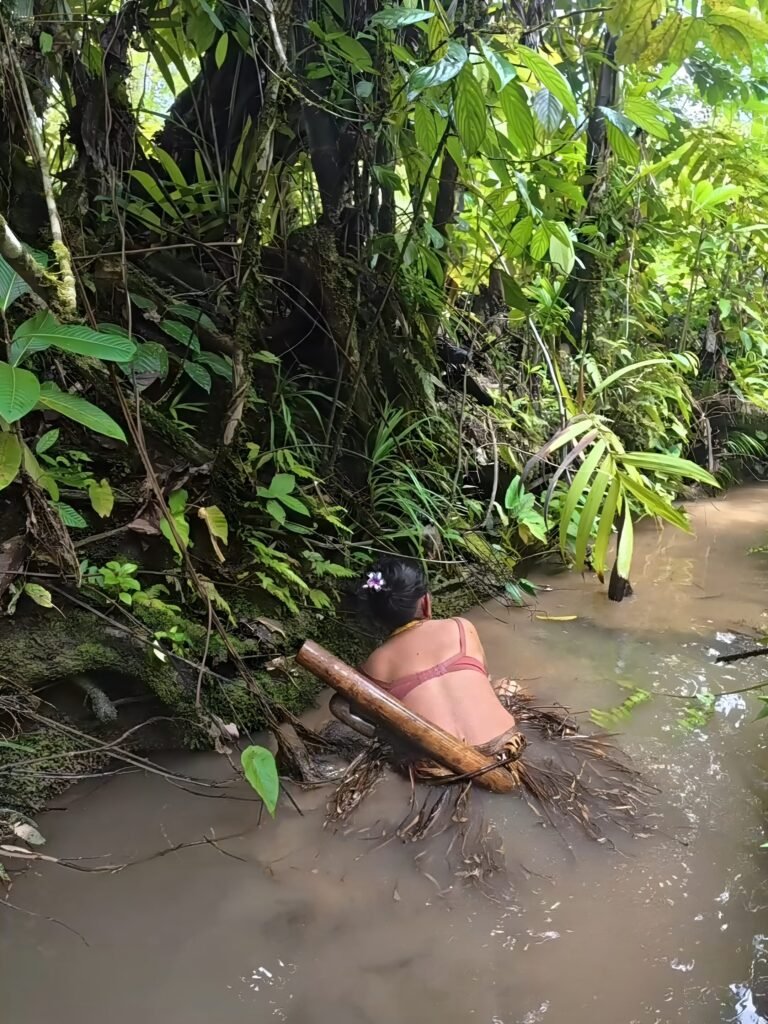
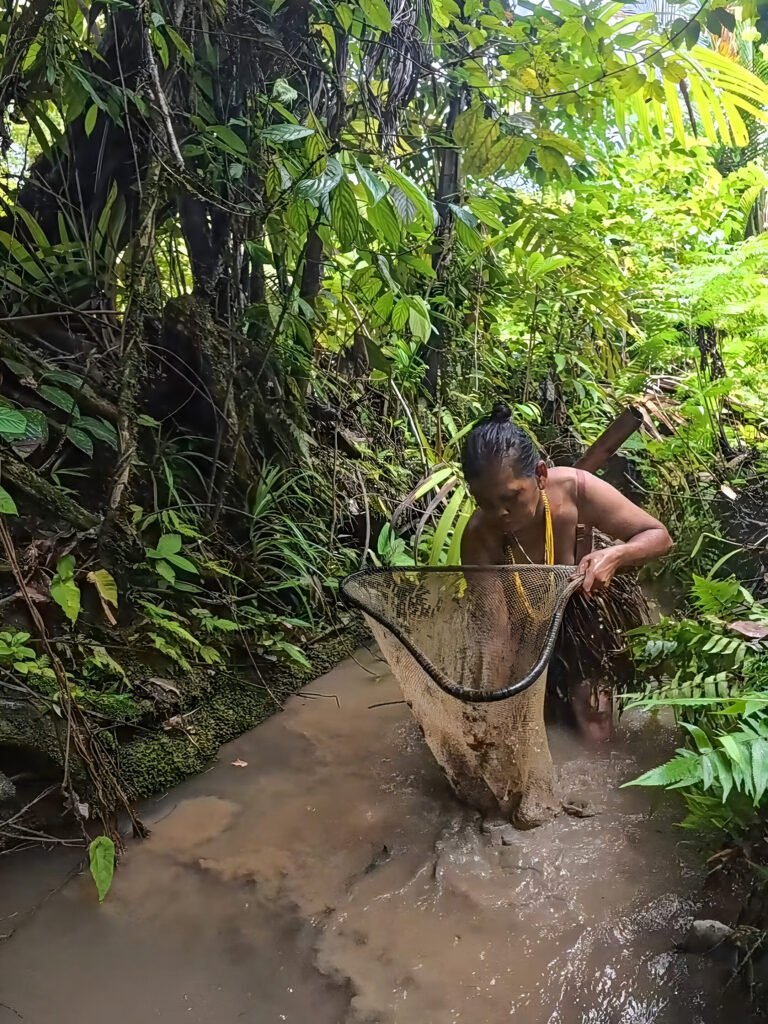
After breakfast, I went back to the river for a swim, and then one of the women of the family helped me dress in traditional Mentawai clothes before we headed into the jungle to go fishing together. And honestly, this was probably one of the most challenging parts of the entire experience!
Traditionally, fishing is an activity done by Mentawai women, while the men usually go hunting – and you can definitely tell they’re used to it! The woman I went with had completely mastered the art of walking barefoot through the muddy jungle until the main river (while I was struggling to keep my balance even with my rubber boots on) and at soon as we arrived she jumped in ready to catch something for lunch.
She was carrying a large fishing net and a long wooden cylinder where she would put the fish she caught: she tried to show me how to catch fish hiding underneath the riverbanks and after watching her for a while, I tried to imitate what she was doing and, to my surprise, I actually managed to catch a couple of small fishes! I was ridiculously excited about it, and her expression when she saw how happy I was was absolutely hilarious. Luckily, she was much better at fishing than I was and caught plenty more fish (and even a turtle, although I preferred not to find out what happened to that one).
Once we had finished, we made our way back through the jungle to the uma. By that point, I was completely covered in mud again, so I headed straight to the river for my second shower of the day before joining the family to enjoy the results of our fishing trip. Or, to be more accurate, mostly her fishing trip!
Afternoon: Visiting Other Umas and Meeting More Families
In the afternoon, we headed back into the jungle to visit some of the other umas in the surrounding area and meet more Mentawai families and shamans. This was a really interesting opportunity to see how different families live and how their houses are organised: we even visited a huge, very old uma that was home to several families.
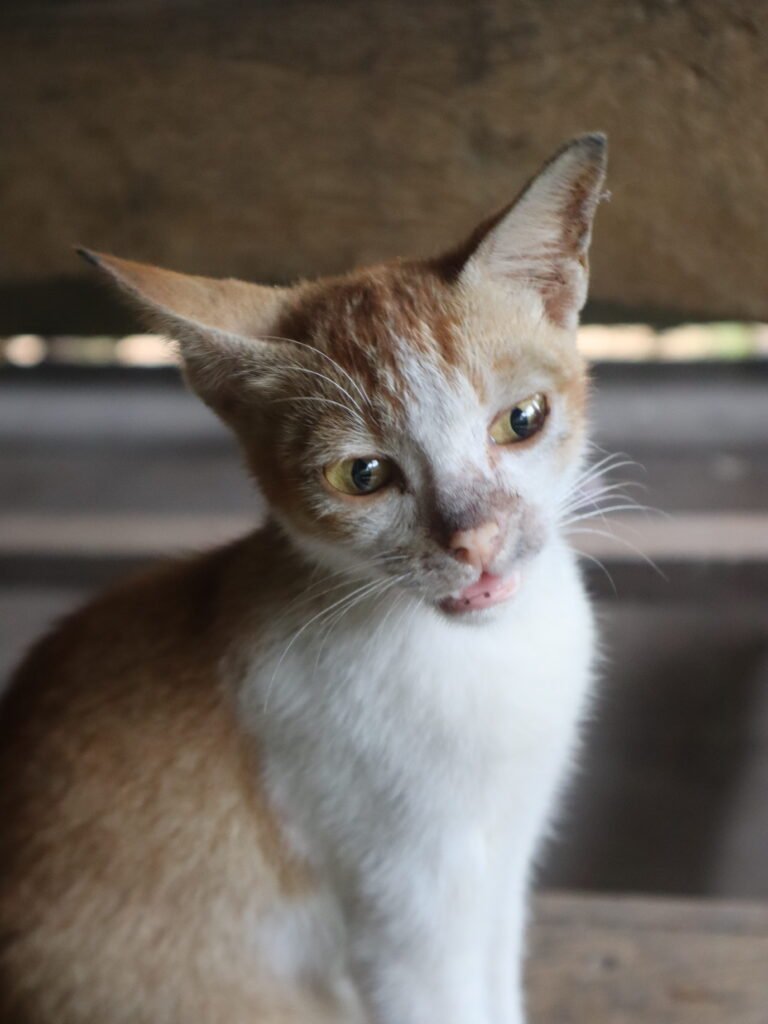
One thing I quickly noticed is that every time you visit an uma, the family proudly shows you their pigs! And there’s actually a very important reason for this: in traditional Mentawai culture, pigs are much more than just animals raised for food, they’re a symbol of a family’s wealth and play an essential role in ceremonies, rituals, and social life. Of course, you’ll also get to meet the other animals living around the umas: mentawai families often have dogs, which are also used for hunting, as well as a few cats wandering around the houses.
One thing I found particularly funny was that cats seemed to simply be called “mushi” (which literally means cat), while some dogs actually had their own names. The second family we visited had a big white dog that the kids had, of course, named “Bule” (which is a word that people in Asia use to refer to Western people).
The Last Full Day in the Jungle
After visiting the other families, we made our way back to our uma to spend the rest of the day together. Looking back, I think this was probably the day when I felt most comfortable with the rhythm of life in the jungle: by then, I had gotten used to washing in the river, walking around in muddy boots, sharing meals with the family, and having absolutely no idea what time it was.
And that’s something I hadn’t really expected before coming here. When you see videos of people visiting the Mentawai tribes, you mostly see the exciting activities: fishing, hunting, exploring the jungle, and meeting the shamans, but what you don’t see as much are all the quieter moments in between, which are just as much a part of the stay.
By the end of the third day, I realised that what made this experience special wasn’t just the activities themselves, but also getting used to a completely different daily routine and spending time with the family.
Day 4 – Goodbye to the Uma and Back to Padang
The last day starts early! After breakfast with the family, it’s time to say goodbye and begin the journey back to Padang, following the same route you took on the way there, just in reverse. Thankfully, it wasn’t raining that morning, so the trek through the jungle was much easier than on the first day (after all my struggles with the mud on the way there, I was definitely relieved!).
Once you reach the river, you’ll take the motorised canoe back to Siberut, where you’ll stop at Levi’s house to return your rubber boots and collect the luggage you left there before heading into the jungle. From there, your guide will take you to the ferry port, where you’ll catch the boat back to Padang, bringing your four-day adventure with the Mentawai tribes to an end.
What Was Hard About Staying With Mentawai Tribes
Now, a little bit of honesty: as much as I enjoyed this experience, there were definitely some challenging parts.
- The trek and the living conditions: the trek to reach the uma can be quite difficult, especially if you’re doing it in the rain and the sleeping conditions aren’t exactly ideal either (especially if you suffer back pain), and just because I loved swimming and washing in the river doesn’t mean everyone will feel the same way. As for using the nature surrounding the uma as a bathroom… well, let’s just say that I’m not a big fan!
- Going alone: this was actually one of those rare moments during my travels when I really wished I’d had someone with me. Even though the guide was always there to translate, there were quite a few moments when I felt a little like an intruder in someone else’s family life, and I think having another traveller to share the experience with would have made those moments easier and probably more enjoyable. That’s also why going solo is the only situation in which I’d recommend considering a 2-night stay instead of 3, especially if you’re not particularly comfortable with a lot of downtime.
Would I Do It Again? What I Took Home
While I would go back to the Mentawai Islands in a heartbeat (especially to Sipora, my favourite island!), I think I’d only stay with the Mentawai tribes again if I were sharing the experience with someone else. As interesting as it was, I feel that doing it a second time on my own wouldn’t be all that different from the first.
I think staying with a Mentawai family gives you a unique opportunity to discover a completely different culture, not just by observing it, but by being part of their daily life for a few days – and that’s something truly special about this experience.
Another thing I particularly appreciated (even if it took me a little while to get used to) was being completely disconnected from the internet and electricity. Without constantly checking my phone or worrying about the time, I found myself slowing down and following a much more natural rhythm, shaped by daylight, meals, and whatever was happening around me rather than by the clock which I think will be one of the things I’ll remember most about my time there.
Of course, it wasn’t always comfortable or easy, and there were moments when I questioned what I had gotten myself into. But looking back, staying with the Mentawai tribes was definitely one of the most fascinating experiences I’ve had during my travels, and one that I’m really glad I decided to have.
FAQ: Staying With Mentawai Tribes
Is staying with Mentawai tribes authentic?
In my experience, yes: you stay in a family’s real uma, eat what they eat and follow their daily rhythm, from fishing to preparing sago. Nothing felt staged for tourists, and the time with the family and the Mentawai shaman felt genuine. Choosing a guide you trust makes a big difference, and I explain how in my guide to staying with Mentawai tribes.
Is it safe to stay with Mentawai tribes, even as a solo woman?
Yes. I travelled solo as a woman and felt safe the whole time, and I had no problems with snakes or leeches. The risk of malaria is low, but talk to your doctor before you come. Keep in mind that the closest reliable medical help is in Padang, so you would need to go back there if something happened.
How uncomfortable is it?
More than a hotel, less than I feared. You sleep on a mat on a wooden floor under a mosquito net, with pigs and chickens around the uma, and you wash in the river. The hardest part for me was the muddy trek, especially in the rain.
How fit do I need to be?
If you can walk for about an hour on uneven, unpaved terrain, you will be fine. The trek to the uma is muddy and slippery, especially in the rain, so just take your time.
Are there toilets and showers?
No. You wash in the river, and the bathroom is basically anywhere in the nature around the uma. I loved the river, but the bathroom situation was a challenge for me.
Is there electricity or internet?
No electricity and no internet in the uma, so there is nowhere to charge your phone or camera: charge everything before you leave Siberut. You will quickly lose track of time, which I ended up enjoying.
How long does it take to reach the uma?
After the ferry, you take a motorised canoe for around 2 hours and then trek about an hour through the jungle. My trek took longer than expected because of the rain and the mud.
How much does a stay with Mentawai tribes cost?
I paid IDR 4,200,000 for 4 days/3 nights (one person, November 2026). It included the transport from Siberut port, all the meals, the accommodation, the Mentawai travel permit, the boots and a guide who speaks English and Mentawai. For a full price breakdown and how to compare guides, see my main guide.
Do I have to eat the sago larvae?
No. You can try them, raw or cooked, but nobody expects you to eat anything you are not comfortable with.
Is it a good idea to go alone?
I would still do it, but it is the one situation where I’d think about a 2-night stay instead of 3. Your guide translates, but at times I felt like an intruder in the family’s life, and I think a travel companion would have made those moments easier.
What do you actually do during the day?
It depends on the family’s routine, but in my case: a walk with the shaman to discover medicinal plants and collect sago, watching how food and crafts are made, swimming in the river, fishing with one of the women and visiting other umas. Many of the best moments are the quiet ones in between.
What is the food like?
Better than I expected. The family cooks with ingredients from the jungle and the market, and my guide even bought me tempeh because I love it. The only thing I did not enjoy was the sago, which is a rather tasteless bread.
Planning Your Stay With the Mentawai Tribes
If this story made you want to meet the Mentawai people yourself, the rest of the planning is covered in my other guides. For how to choose a guide you can trust, what a stay costs and what is included, read my complete guide to staying with Mentawai tribes, and for the logistics of reaching Siberut, the ferries and which island to visit, my guide on how to get to the Mentawai Islands.
Not sure what to put in your backpack for the jungle? I wrote a Mentawai packing list with everything I was glad to have (and what I would leave at home). And if you have time to spare, don’t skip Sipora: it was my favourite island, and you can find everything you need to visit it in my Sipora travel guide.
If you have any questions about staying with the Mentawai tribes, leave a comment below. I’m always happy to help you plan your trip!
Check out my pictures and stories on Instagram for some inspo: