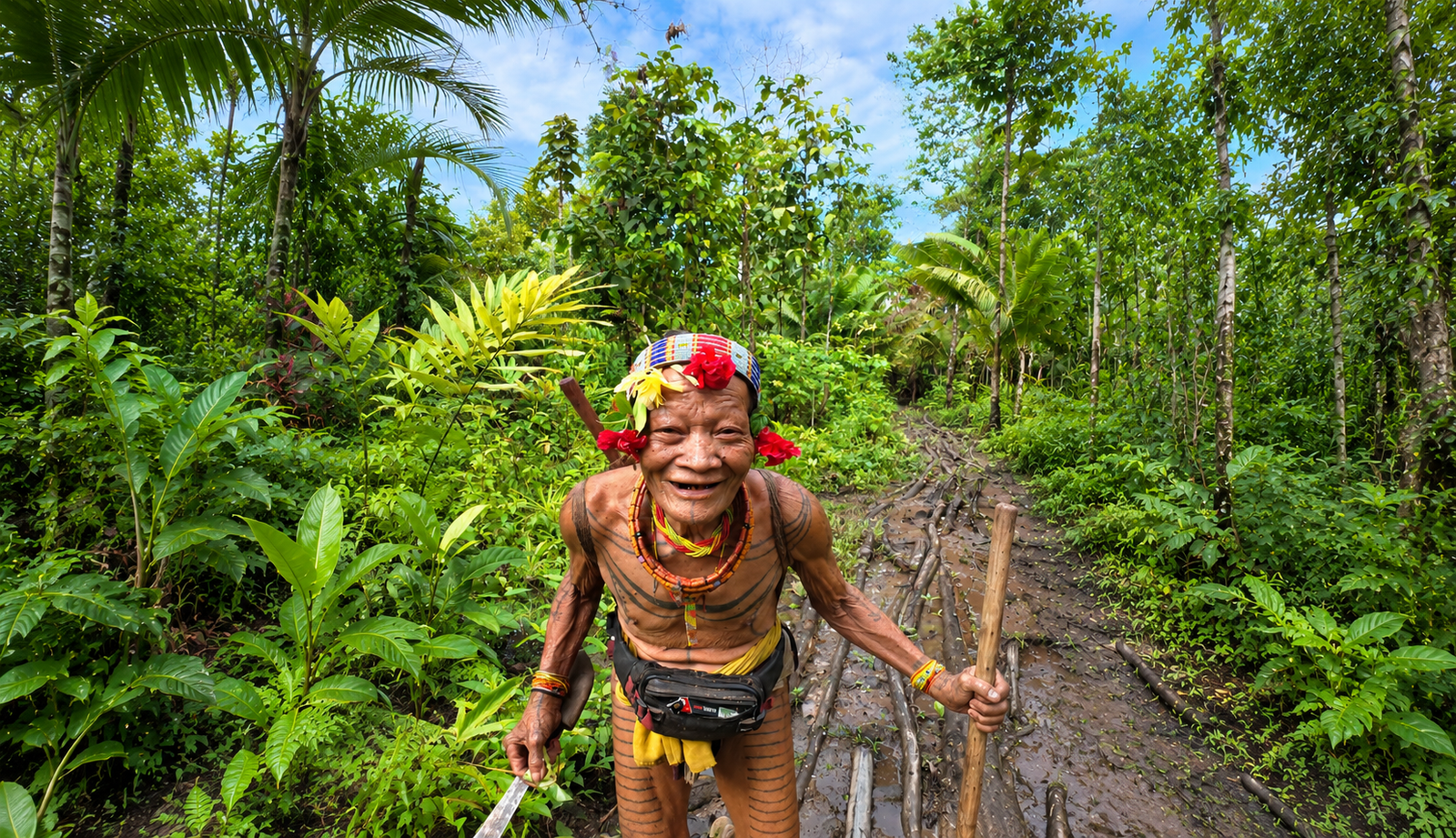
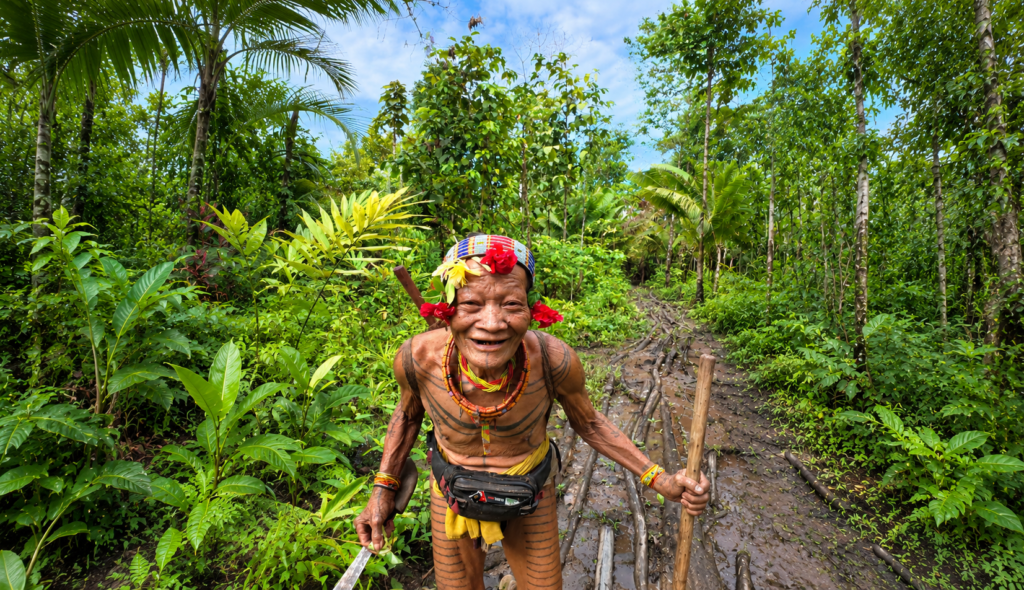
The first time I heard about the Mentawai Islands and the Indigenous communities living there was during my first trip to Indonesia in 2023, when I met two travellers at my accommodation who had just returned from spending time with the Mentawai tribe, also known as the “Flower Men.” After hearing their stories about ancient traditions and experiencing a completely different way of life deep in the jungle on a remote island off the coast of Sumatra, there was only one thought running through my mind: I had to go there.
The problem was that, back then, Instagram wasn’t yet full of videos of travellers staying with Mentawai families, and I had absolutely no idea how to organise such an experience or what to expect so it took me a few years to finally make it happen, but in 2025 I decided it was time to include Sumatra in my adventures and experience it for myself!
The funny thing is that, even though videos of people visiting Mentawai communities have become increasingly popular on social media, actually organising a stay with them hasn’t necessarily become any easier: finding a reliable guide, understanding the different options, and figuring out what a fair price looks like can still be surprisingly complicated, especially since many organisers ask for payment in advance, making it difficult to know who you can trust.
That’s exactly why I decided to put together the guide I wish I’d had when I first started planning my trip. Here, I’ll share who I travelled with, how much I paid, the different itinerary options, all the practical details you need to organise your own stay with a Mentawai tribe and at the end, I’ll also share my thoughts on going solo and explain how to find an alternative guide if the one I’ve recommended isn’t available.
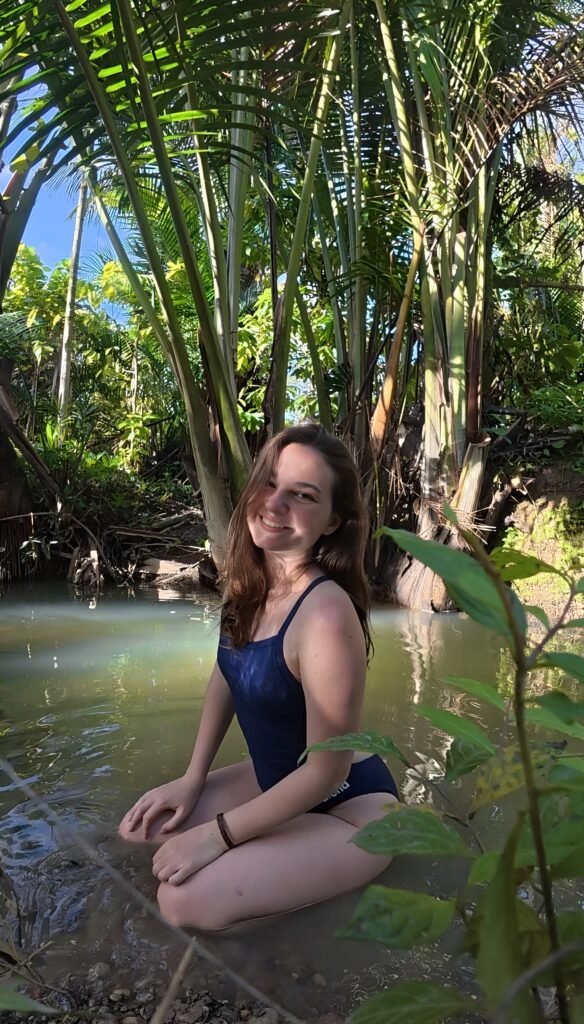
Staying with the Mentawai tribe could be one of the best experiences of your life… or an absolute nightmare! It all depends on your expectations and what you’re willing to embrace. I spent 4 days living with them deep in the jungle, and you can read about my experience to find out what it’s really like and whether this adventure is right for you!
Who are the Mentawai people and where do they live?
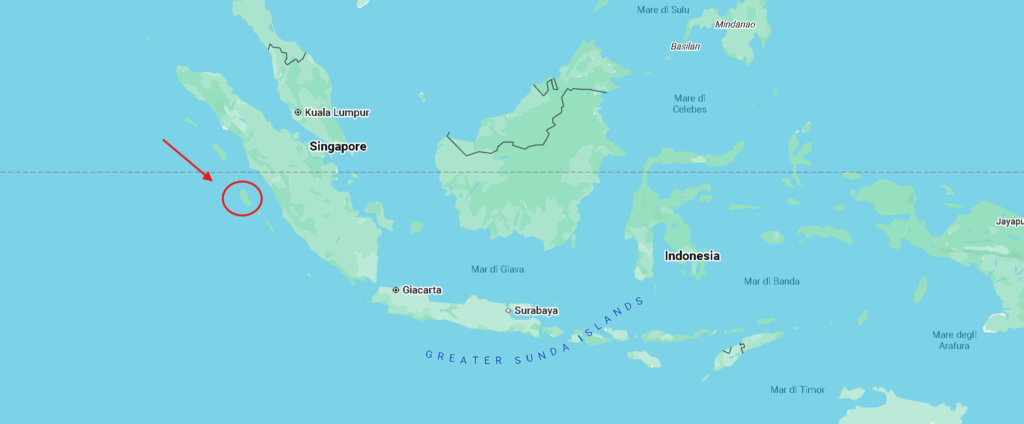
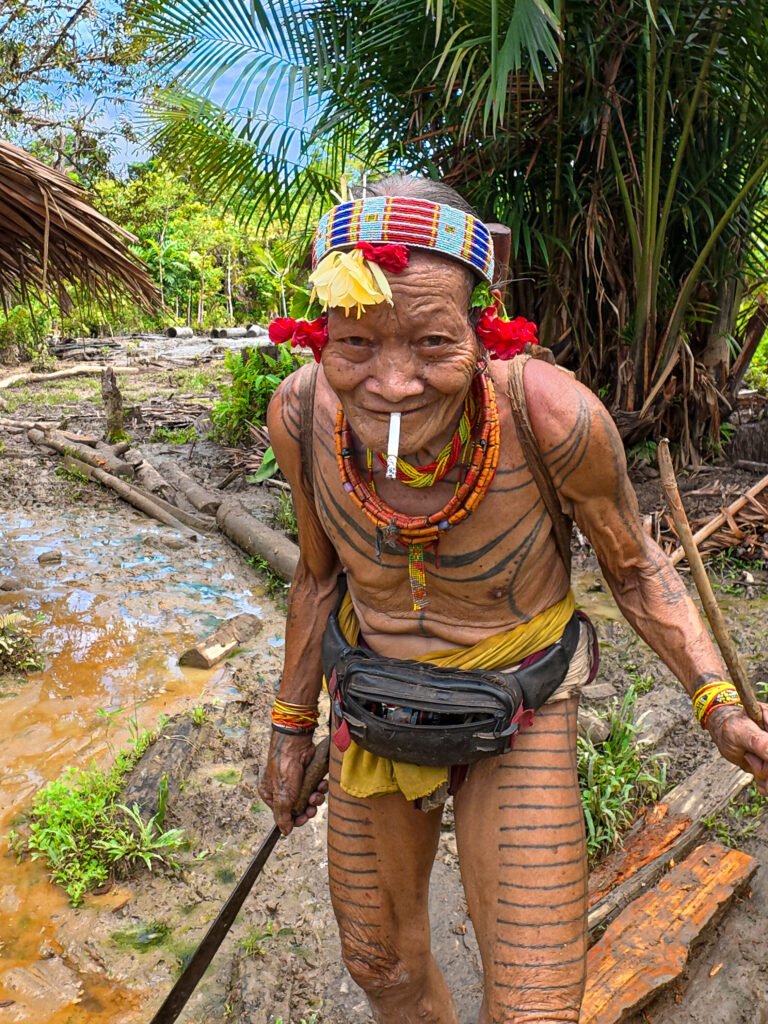
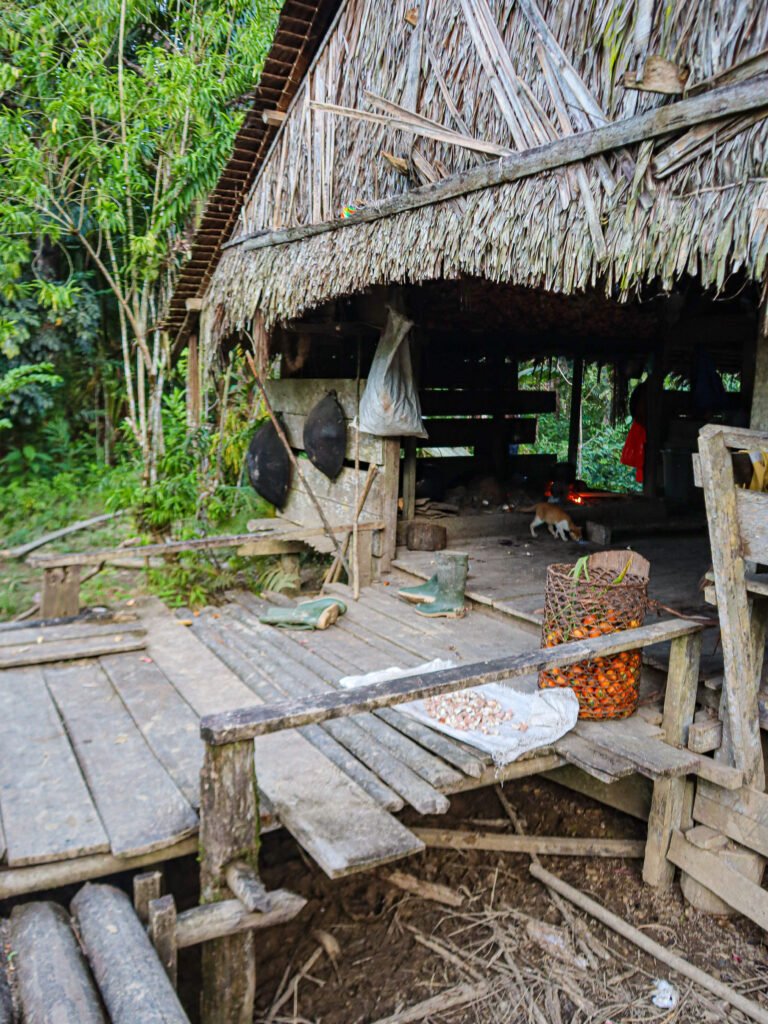
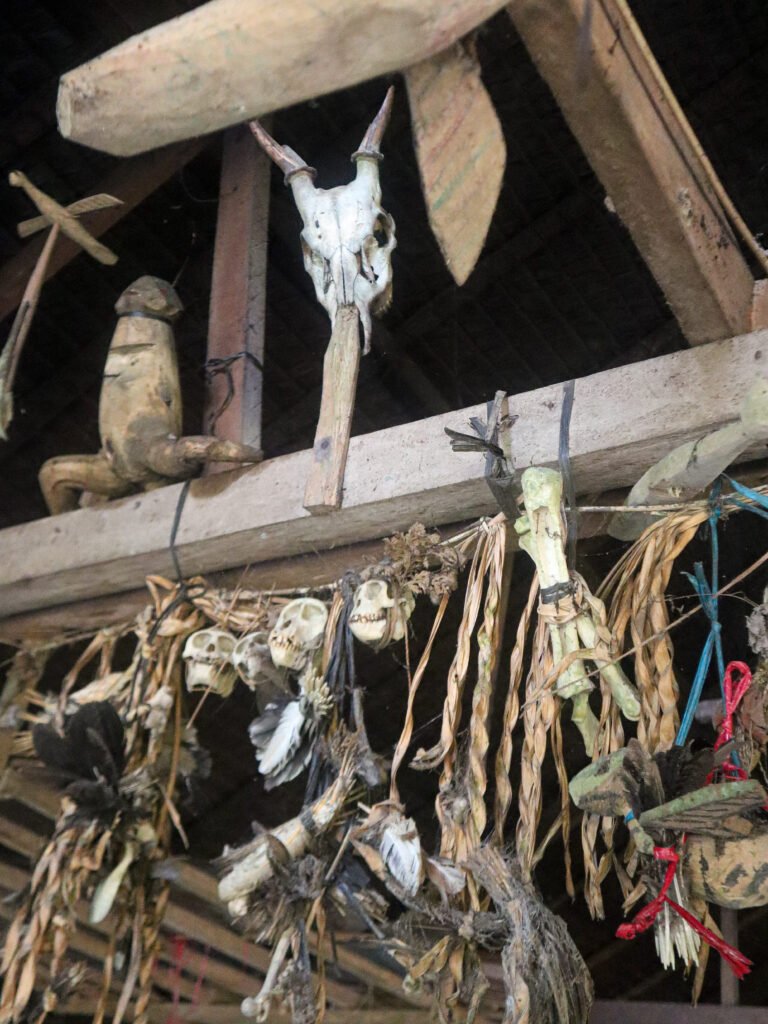
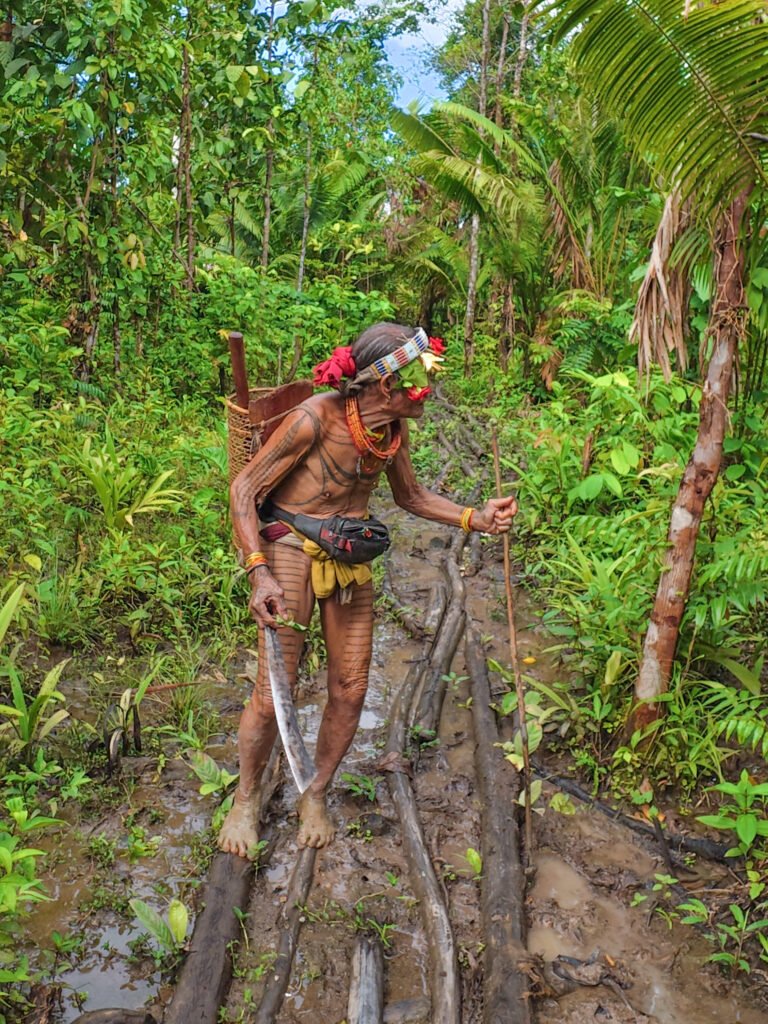
The Mentawai are an Indigenous people from the Mentawai Islands, a remote archipelago off the western coast of Sumatra, Indonesia. While many Mentawai now live in coastal villages, where access to work, education, and healthcare is easier, on Siberut Island it’s still possible to meet families who continue to follow their ancestral way of life, living deep in the jungle in large traditional wooden houses called uma, where shamans known as sikerei remain central figures in the community, acting as healers and spiritual guides. Today, it’s often said that only around 1% of the Mentawai population still lives according to these ancestral traditions, which are sadly slowly disappearing.
I explain it step by step in a section below
Interestingly, tourism has become one of the ways some Mentawai communities are trying to preserve their traditional way of life, as welcoming travellers into their uma deep in the jungle allows families to earn an income without having to abandon their traditional way of living and, at the same time, it offers visitors an incredibly unique cultural exchange.
What to expect from a Mentawai tribe tour
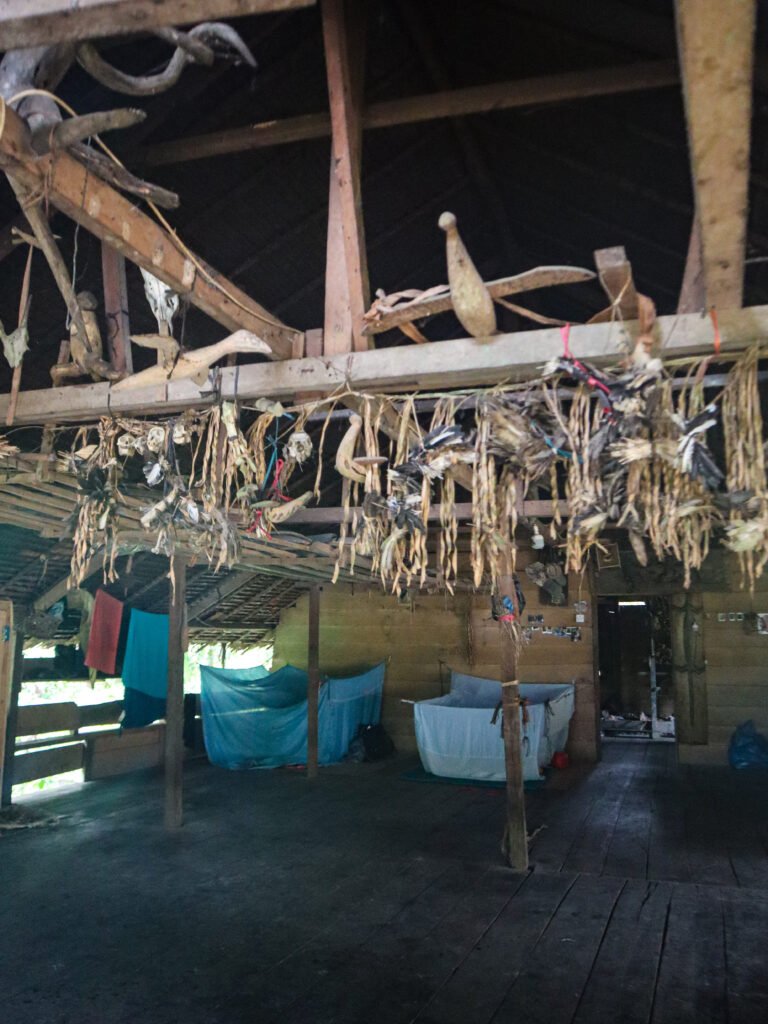
The experience consists of a multi-day trip into the jungle with a local guide, where you’ll stay with a Mentawai family in their traditional house, called an uma, and get the chance to experience their daily life firsthand.
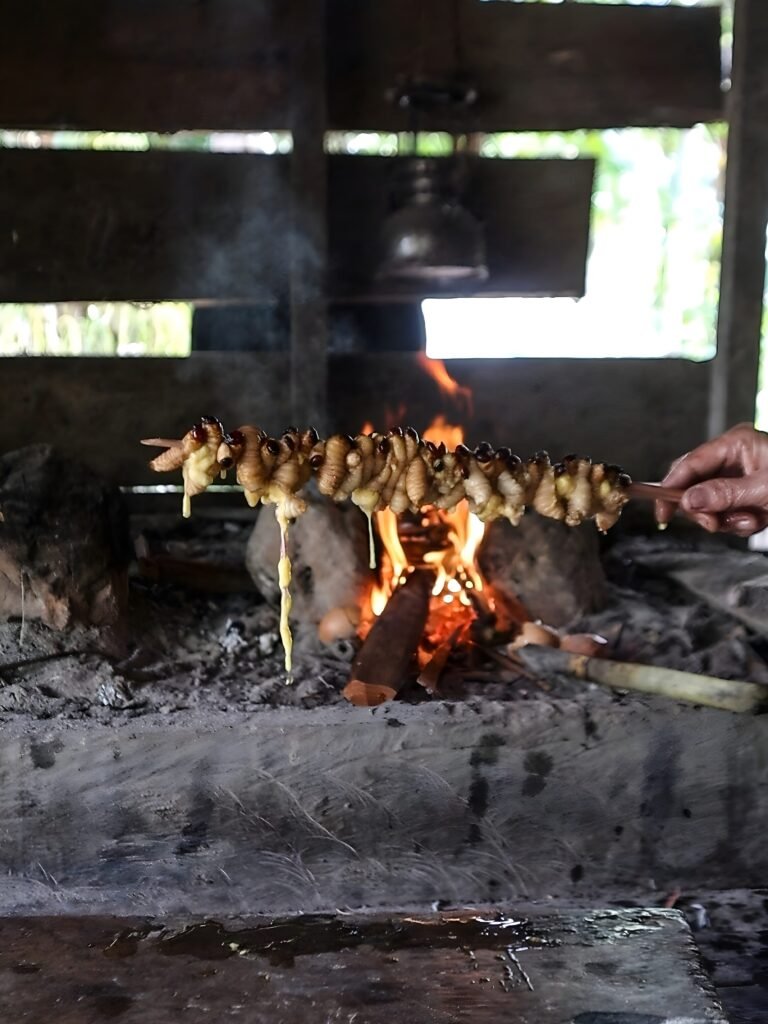
During your stay, the family will involve you in some of their everyday activities, such as fishing for shrimp with Mentawai women in the river, learning how they make their traditional clothing using materials found in nature, preparing sago (a traditional food commonly eaten in remote parts of Indonesia), building traps in the jungle with the sikerei, and even learning how they prepare the poison used for hunting (here you can read more about my personal experience of staying with the tribe).
Since these are activities that are part of the family’s everyday life, there isn’t a fixed schedule or a strict itinerary to follow and you also don’t have to participate in everything either: you can simply discuss with your guide what interests you most and decide which activities you’d like to experience. My favourite part? Walking through the jungle with a Sikei, discovering the incredible variety of medicinal plants and wild food sources hidden in the forests of Siberut.
What about getting a traditional Mentawai tattoo?
Traditional Mentawai tattoos have become increasingly popular on social media in recent years, and getting one is an option during your visit. If you’re interested, you can choose to get tattooed by a sikerei (shaman) in the jungle, using traditional methods, or ask your guide to recommend a Mentawai tattoo artist in Siberut who works in a dedicated tattoo studio.
Personally, I’m not a big fan of needles, and although the experience sounded fascinating, I decided to skip it. However, I met several travellers during my time in Mentawai who decided to get tattooed, and they were all really happy with both the experience and the results.
Best time to visit the Mentawai tribes in Siberut
The best time to stay with a Mentawai tribe in Siberut is from April to September, when it’s relatively dry and good for trekking (the walk to the uma is a 1-hour trek in the jungle and, if you have already read about my experience with the Mentawai tribe, you know it can get quite muddy), while the worst time is November–January, when it’s wetter, with muddy trails and potential boat disruptions. I personally went in the first half of October and, although it rained during the first day, I had great weather for the rest of my time there.
How much does a Mentawai tribe tour cost?
The price depends on the number of days you decide to spend in the jungle, on whether the ferry tickets from Padang are included or not (if they aren’t, don’t worry: they are relatively cheap and I will explain how to book them), and often on the number of people joining your tour. The main difference in the quotes you’ll receive comes down to who you organise your experience with: an agency that acts as a middleman and takes a cut of the price, or a local guide, who ensures that the money you pay goes directly to the local family hosting you.
Good to know: I went with a local guide and paid IDR 4,200,000 for a 4 days/3 nights tour for one person in October 2025, and this is still the price in November 2026. I paid the full sum when booking, through Wise (more on this in Step 3). Asking for the full payment in advance seems to be a common practice, and that’s why it’s even more important to be sure about the guide you are booking.
How to organize your stay with a Mentawai tribe: Step by Step
Step 1: Choosing a guide
I booked my tour with Levi, a local guide from Siberut. During the trip I was accompanied by one of the other local guides who works with him, as he had an issue and couldn’t bring me himself on the days I was there, but I was still very happy with the experience and with how he had organised it. Levi was not only one of the cheapest options but also the one with the best reviews among the people I had met (I later recommended him to other people and they had an amazing experience as well), also there isn’t an agency in between: Levi brings you to visit the uma of his family in the jungle and the money goes directly to him and his family.
★ My guide
Book directly with Levi
No agency in between: the money goes straight to him and his family. Check the reviews first, then message him on WhatsApp or Instagram.
⭐ Reviews · 💬 WhatsApp · 📸 Instagram
Do you prefer to save his WhatsApp number? Here you have it: +6281371160095
If you want to read about my full experience with Levi, check out my stay with a Mentawai tribe, where I share all the details. At the end of this guide you’ll also find my tips on how to find another guide if, for any reason, you can’t book through Levi.
Step 2: Choosing the length of your tour
Technically speaking, you can book a tour for as many days as you want, but the most common options are 4 days/3 nights or 3 days/2 nights.
Let me be honest: getting to the uma takes quite some time and effort, which is why, unless you’re going solo (in that case, read my section below), I would recommend the 3-night option. This way, you’ll have 2 full days to spend with the family, without counting the journey to the uma and the return trip to the port of Siberut.
But what if you’re considering a shorter or longer stay?
- Does a 2-night stay mean I’ll miss out on some experiences? Not necessarily! You can coordinate with your guide in advance to make sure you take part in the activities you’re most interested in.
- Can I do a 1-night stay? Technically yes, but I honestly don’t think it’s worth it. You would spend most of your time getting there and back, leaving very little time to enjoy the activities at the uma.
- Should I stay longer than 3 nights? Personally, I don’t think it’s necessary to fully enjoy the experience. And since it’s not exactly a comfortable stay, I would only recommend adding extra days if you’re sure you’ll enjoy this kind of setting.
One important thing to consider: the ferry schedule
How long you can stay will also depend on the ferries connecting Padang to Siberut, as they don’t operate every day.
If you want to do the 3-night experience without visiting any other places in the Mentawai Islands (which would mean skipping my favourite place in Indonesia!), you’ll need to take the ferry from Padang on Saturday and return on Tuesday. For the 2-night option, you can arrive on either Tuesday or Thursday.
You can find all the information about ferry schedules and departure times in my guide on how to get to the Mentawai Islands, where I’ve also included the inter-island ferry timetables. Alternatively, you can check out my Mentawai Islands itineraries, where I’ve already figured out how to combine the different ferries and in which order to visit the islands, so you can make the most of your time in the Mentawais, no matter which day you arrive.
Step 3: Confirm with Levi and Plan Your Journey to Siberut
Now that you have chosen your guide and the length of your tour, it’s time to confirm everything with Levi: message him on WhatsApp with your dates and the number of people, check that he is available and agree on the details. As I mentioned, most guides ask for the full payment in advance, so make sure you have everything clear before you pay.
I paid through Wise, the app I usually use when travelling, not just in Asia but pretty much everywhere, both to make payments and transfer money. I’d recommend creating an account before you leave, even if you think you won’t need it: Siberut is quite remote, and you shouldn’t count on finding a working ATM there, so if something goes wrong and you run out of cash, you can always try transferring money to someone locally in exchange for cash.
Wise Pay and move your money while you travel with a Wise account
This is also the moment to decide whether you want to visit other islands in the Mentawai, because it changes your dates and the ferries you need to take. In my guide on which islands to visit I explain the different islands and how to combine them, and if you are thinking of adding Sipora (which I absolutely recommend) you can read about what the island has to offer, with some sample itineraries to connect the two places, in my Sipora guide.
Once the dates are set, you can plan your journey. No matter which island you decide to start with, every journey to the Mentawai Islands starts in Padang: from abroad you will find plenty of connecting flights through Kuala Lumpur, while if you are already in Sumatra you can fly or take a shuttle. You will need to spend a night in Padang before taking the ferry to Siberut the next morning, and in my guide on how to get to the Mentawai Islands you can read my recommendations on where to stay, how to get from the airport to the city, where to buy the ferry ticket (with the exact pin of the port) and the ferry timetable.
Good to know: my main advice is to buy the ferry ticket as soon as you arrive in Padang. It doesn’t happen often, but while I was there they ran out of tickets, and the people who went to buy them right before departure couldn’t get on the boat.
How to visit a Mentawai tribe ethically
When planning your stay with a Mentawai tribe, there’s one important thing to keep in mind: this is not a tour in the traditional sense you might be used to. You’ll be staying with a real family who will involve you in their daily activities, nothing they do is staged just because you’re there or performed for tourists: this means you should approach your visit with different expectations from those you’d have when joining a typical tourist tour.
Pictures: You can take pictures, and the family generally won’t have a problem with it. The sikerei will probably even have fun posing with you, asking to see the photos afterwards, and laughing at them! Still, always remember to ask before taking pictures or filming, and be respectful of the fact that this is real people’s everyday life, not something they’re putting on display for you.
Gifts: Before heading into the jungle, your guide will take you to buy some gifts for the family, which will mainly consist of cigarettes. It might seem a bit strange, considering you’re already paying for the visit, but bringing gifts is part of the tradition of visiting local families in Indonesia and is a way of showing appreciation for their hospitality.
Tip: There will likely be children in the family, and while you might be tempted to bring sweets or candies, I’d strongly recommend against it: access to dental care is often limited in remote communities, so sugary treats can do more harm than good. Instead, consider bringing notebooks, pencils, or colouring books.
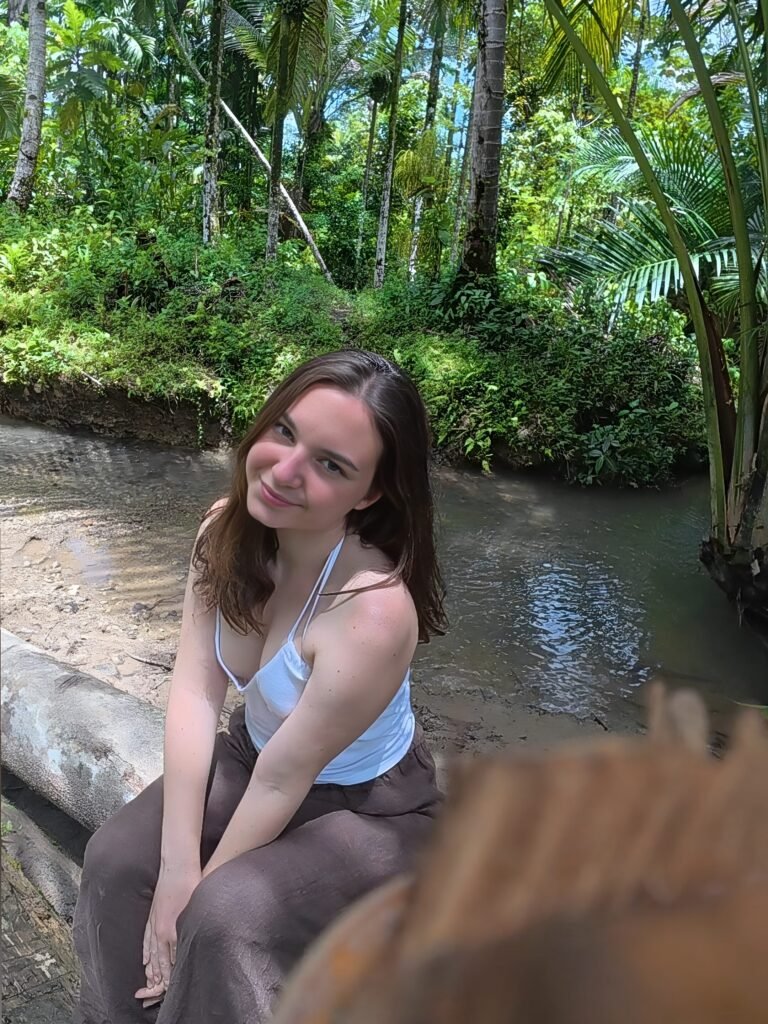
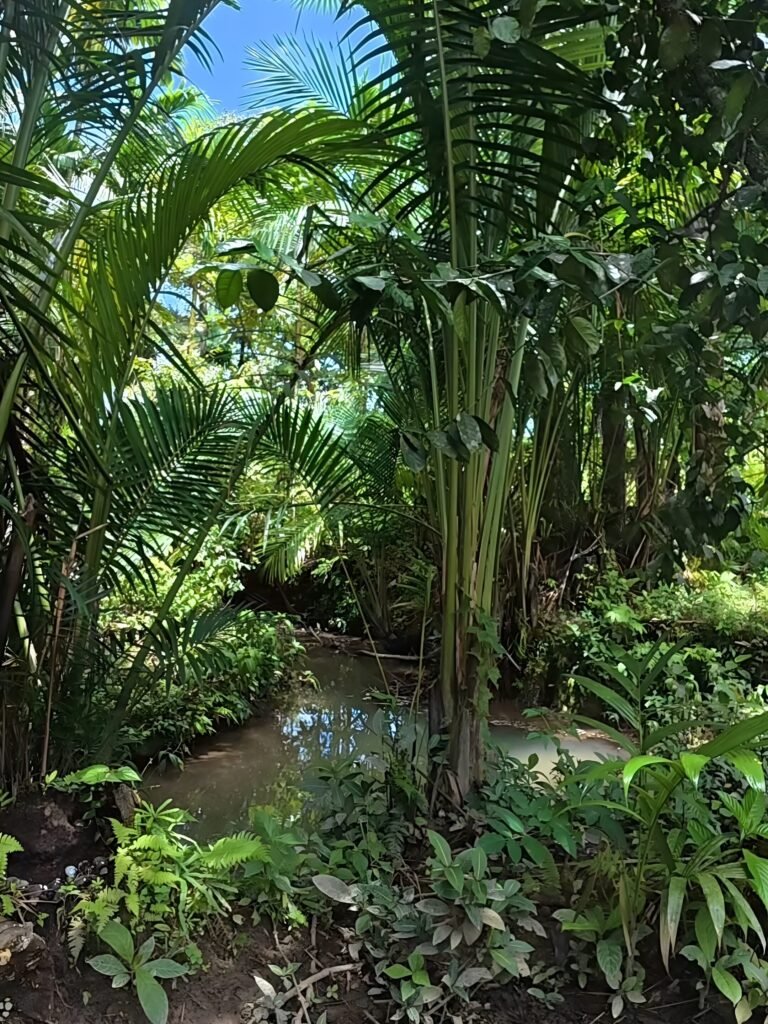
Arrive with the right expectations: This is definitely not a luxury tour! You’ll sleep on a mat on a wooden floor, with pigs living underneath the house and chickens coming and going through the communal room where you sleep. You’ll also wash in a river rather than having access to a proper bathroom. As much as I personally loved the experience, I have to admit that it’s definitely not for everyone, so make sure to read about my experience to be sure you know what you’re signing up for!
Going solo to visit the Mentawai tribe
Most of the people you might have seen online visiting the Mentawai tribes aren’t travelling alone, so you might naturally wonder what this experience would be like if you were to go solo instead of with someone else.
Based on my experience, I can tell you that you can absolutely do it alone, but there are a couple of things I would keep in mind:
- Going solo can be more expensive: If you book through an operator other than Levi, you’ll most likely be quoted a much higher price for going alone rather than with a group. The best way to lower the cost is to check Facebook groups, like the Sumatra Travel Planning & Tips group, and see if you can coordinate with other travellers visiting on the same dates. Or, as I already mentioned… go with Levi!
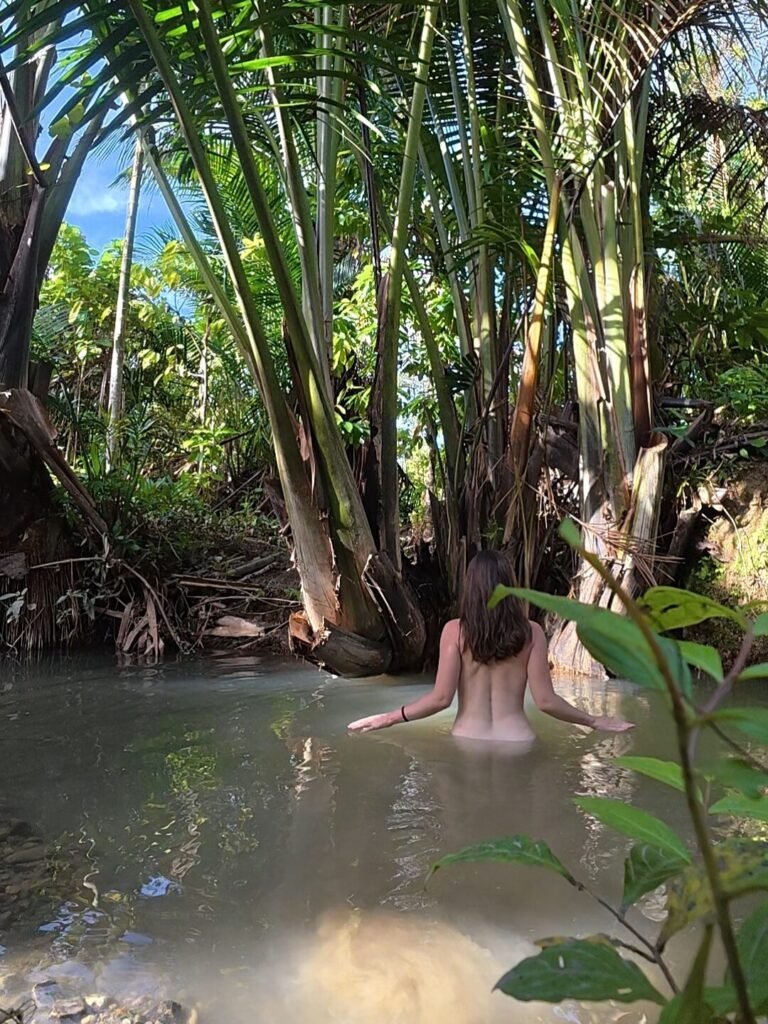
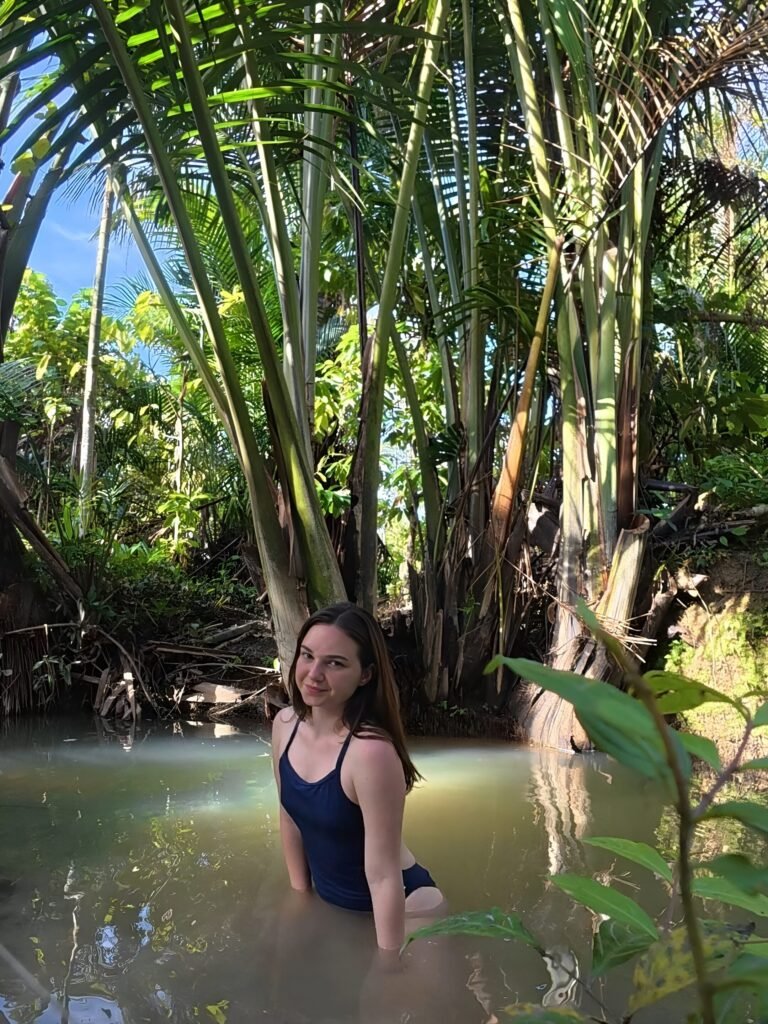
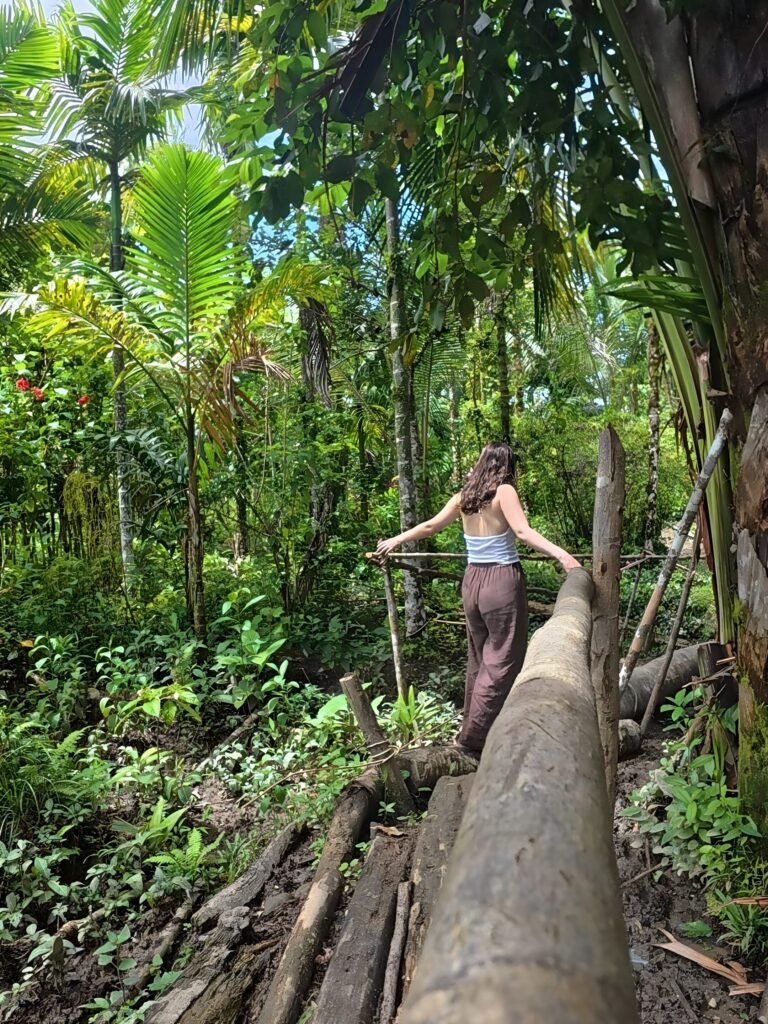
- Be prepared for some downtime: On Instagram, you might see reels packed with activities and exciting moments from visits to the Mentawai tribes, but remember that these are usually spread across several days. In reality, there’s quite a bit of downtime, during which you can hang out with the family (although not many people besides your guide speak English), go swimming in the river, or explore a little on your own. And let me be honest: with no internet connection or electricity, unless you bring a book or you’re particularly good at simply relaxing, you might get a bit bored if you’re travelling alone and expecting an action-packed experience. That’s why going solo is the only case in which I’d recommend staying 2 nights instead of 3, especially if you know you’re not someone who enjoys having a lot of downtime. This way, you can still enjoy the experience while cutting down a bit on the quieter moments.
How to find another guide if the one I recommend is booked
Now you might be wondering: what if I can’t book with Levi? How can I find another reliable guide?
That’s exactly why I created this section: to share my tips and tricks for finding a reputable tour operator, which you can actually apply to tours in other remote destinations too!
Instagram, Google Search and YouTube are great for inspiration, but they’re not always the easiest places to tell a reliable operator from a polished one. So, unless you’ve found a trustworthy source recommending a specific guide or agency, my favourite place to start is good old Google Maps: zoom in on Siberut, search for “tour Mentawai” and look at the options that pop up.
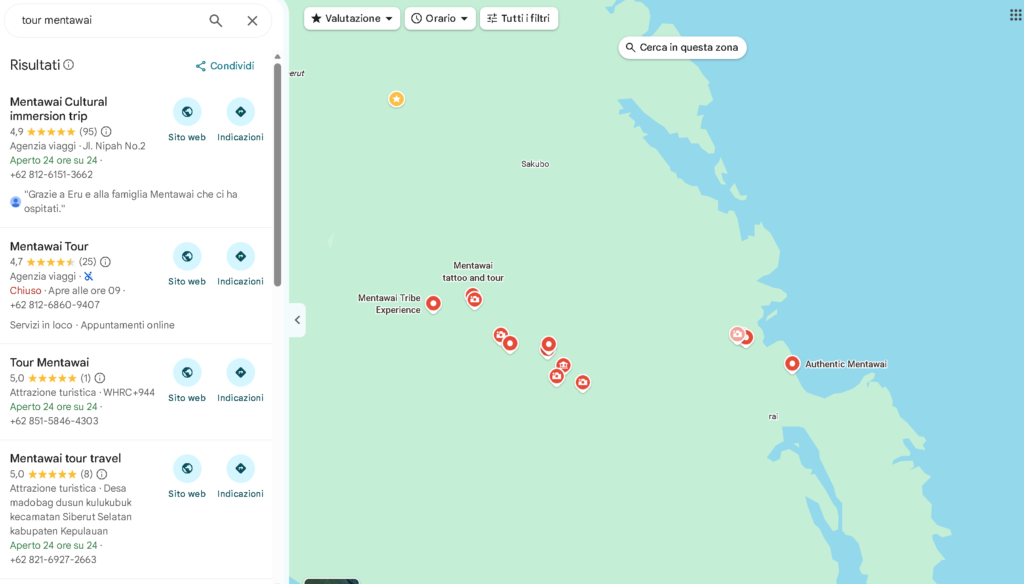
Once you have a shortlist, here is how I check each operator in three steps:
- Look at the number of reviews: I look for a tour operator with at least 20 positive reviews (the more, the better!). But don’t stop at the overall rating: the next step is to check whether those reviews seem authentic.
- Check who wrote the reviews: my favourite trick is to click on the name of the person who left a review and look at their profile. If they’ve written reviews for different places, across multiple countries and over several years, I’m generally more inclined to trust them. Of course, it’s never a guarantee, but it’s less likely to be a fake account created just to leave positive reviews.
- Cross-check on Instagram: if the operator has an Instagram profile linked to their website or Google Maps listing, I look for posts or videos in which they’ve been tagged by previous travellers. I then check those travellers’ profiles to see whether they seem genuine and whether their experiences match what the operator is advertising.
And that’s pretty much the strategy I use whenever I’m looking for a reliable guide in a remote destination: start with Google Maps, verify the reviews, and cross-check with real travellers’ experiences on social media. It takes a little extra time, but it’s worth doing, especially when you’re booking something as remote and unique as a stay with a Mentawai family.
Mentawai Tribe Stay FAQ: Your Questions Answered
Is it safe to stay with a Mentawai tribe?
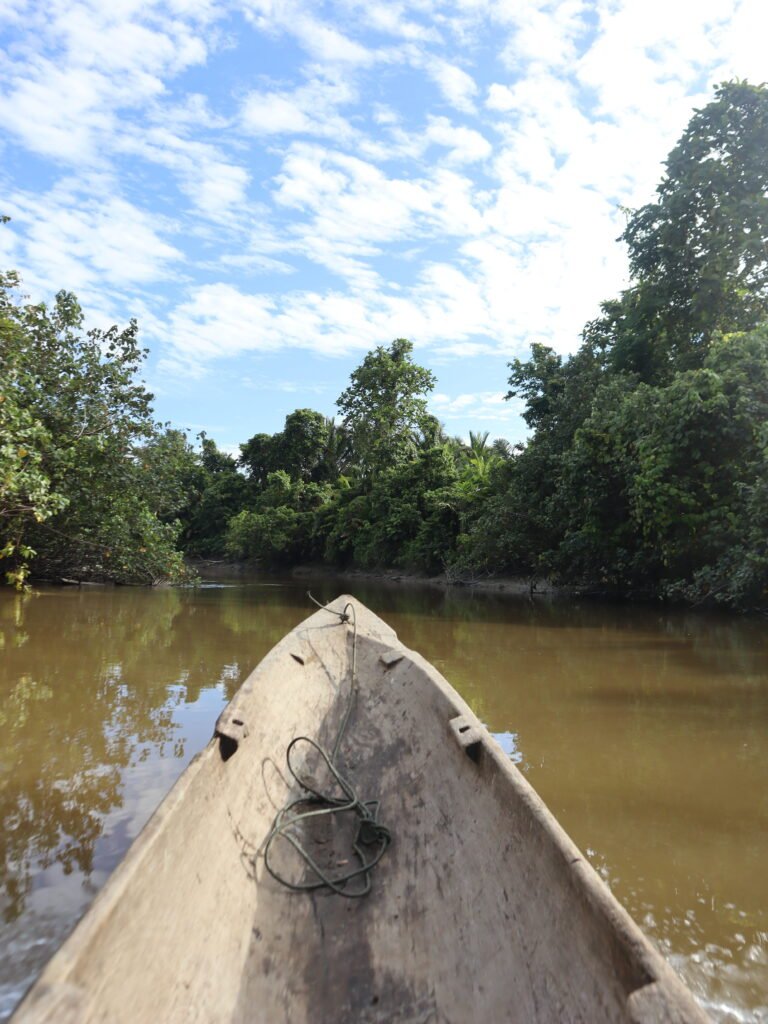
Yes, it’s absolutely safe. Staying with a Mentawai tribe is a normal tourist activity, and the island relies on tourism, so the families and guides are used to welcoming visitors. I did it solo and it was fine: you stay with a family, with a guide who is part of it and speaks English and Mentawai. The main discomforts are practical: a muddy 1-hour jungle trek (2 km after the canoe), no electricity and no internet. Go in the drier months if you can, and check the details with your guide before you book.
Can I stay with a Mentawai tribe with kids?
Yes, and I think it would be an unforgettable experience for kids. I don’t see why not: many of the people I spoke with went with their children. Just plan for two things. First, if your kids are picky eaters, bring some food for them and ask the guide if the family can cook it for you (you can make pasta and tomato sauce even in the jungle). Second, allow a bit more time to reach the uma, because the jungle walk can take longer with children. The guides will always help you with the kids and with carrying your stuff.
How much does a Mentawai tribe tour cost?
I paid IDR 4,200,000 for 4 days/3 nights for one person, with transport from Siberut port, meals, accommodation, the travel permit, boots and an English-speaking guide. It is still the price in November 2026. Many agencies quote around IDR 8,800,000 for 1 person, IDR 6,000,000 for 2 and IDR 5,200,000 for 6 to 7. Gifts for the family cost about IDR 100,000–200,000 extra.
How many days do I need for a Mentawai tribe stay?
I recommend 4 days/3 nights, so you get 2 full days with the family. If you go solo, 2 nights can be enough. One night isn’t worth it, and more than 3 nights is rarely necessary. The ferry days matter: for 3 nights you arrive on Saturday and leave on Tuesday, for 2 nights you can arrive on Tuesday or Thursday.
When is the best time to visit a Mentawai tribe?
From April to September, when it’s relatively dry and better for trekking. November to January is the wettest period, with muddy trails and possible boat disruptions, but if it’s your only option I would still go. I went in the first half of October and had great weather, apart from the first day.
How do I get to Siberut to visit a Mentawai tribe?
Every journey starts in Padang: fly there (from abroad there are plenty of connections through Kuala Lumpur), spend a night, and take the ferry to Siberut the next morning. The ferry from Padang to Siberut leaves only on Tuesday, Thursday and Saturday. I explain the timetable and the rest of the journey in my guide on how to get to the Mentawai Islands.
How do I find a reputable Mentawai guide?
Search for tours in Siberut on Google Maps and look for operators with at least 20 positive reviews, then check that the reviewers look authentic (reviews in several countries over several years) and that the guide’s Instagram profile has videos where other travellers tagged them. I explain it step by step in the section on how to find another guide.
What should I pack for a stay with a Mentawai tribe?
Pack for a muddy jungle trek and a simple life with no electricity or internet, and bring gifts for the family (notebooks, pencils or colouring books for the children, never sweets). I list everything I would bring in my packing list for a Mentawai tribe stay.
Can I get a traditional Mentawai tattoo during my stay?
Yes. You can be tattooed by a sikerei (shaman) in the jungle with traditional methods, or ask your guide to recommend a tattoo artist in Siberut who works in a studio. Agree it with your guide beforehand, as it is an extra cost.
Is it ethical to visit a Mentawai tribe?
It can be, if you choose well. Tourism is one of the ways some families keep their traditional way of life. Book with a guide who belongs to the host family so the money reaches them, ask before filming, bring the customary gifts and remember it is a real stay with a family, not a show. Read the ethics section above for more.
Staying with a Mentawai tribe takes a bit of planning and it isn’t a comfortable holiday, but it’s one of the most special experiences I’ve had in Indonesia. If you want to know what it was really like, read my stay with a Mentawai tribe on Siberut. To plan the journey and decide which other islands to add, check my Mentawai Islands travel guide and, if you are adding Sipora, my Sipora guide. And to make sure you don’t forget anything at home, I made a packing list for a Mentawai tribe stay.
I hope this guide helps you organise your own stay with a Mentawai tribe with a few less doubts, and if you have any questions, leave them in the comments!
Check out my pictures and stories on Instagram for some inspo: