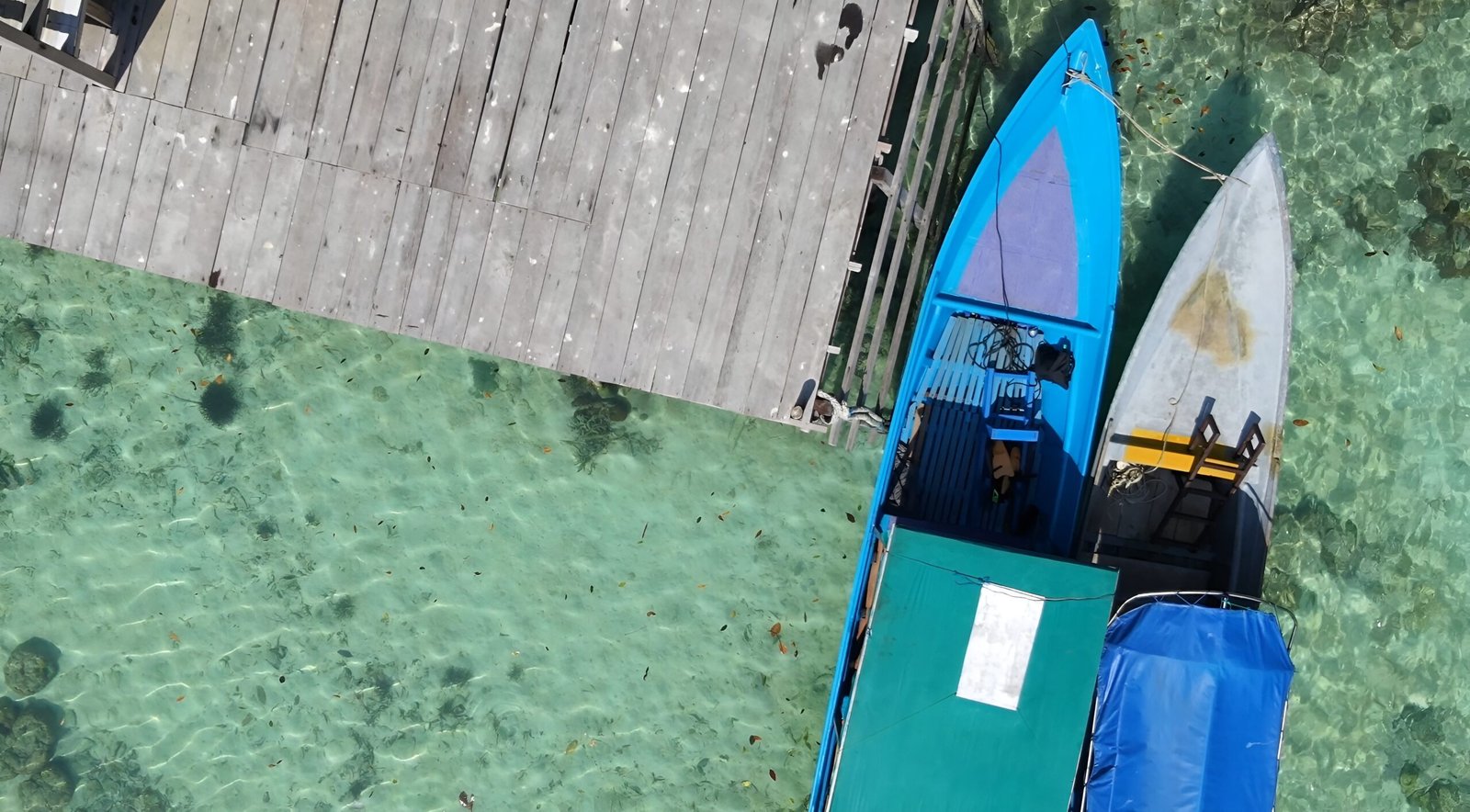
“How many days do I need in Raja Ampat, and how much will it cost?” This was one of the questions I kept asking myself before planning my first trip there. The truth is that you can adapt a Raja Ampat itinerary to the time you have, as long as you’re realistic about what you can do and remember that flights are quite expensive, so the longer you stay, the more you spread those costs over your trip.
Here I share itinerary suggestions for 7, 10 and 14 days. They focus on the Dampier Strait, with an extra stop at my favourite hidden gem, Ayau, in the 14-day version. If you want to know more about Misool, read my Misool guide. Each itinerary comes in two versions: one for snorkelers and one for divers. I also give the total cost of each and suggestions for fewer or more days.
All prices come from my two trips (November 2025 and September 2026) and from quotes I received from homestays and dive centres. Prices change, so always check them. Along the way I link to my other guides, where you’ll find more about each area and the homestays I suggest.
For the full cost picture, read my cost guide. For the best activities and excursions, read my complete guide to the Dampier Strait.

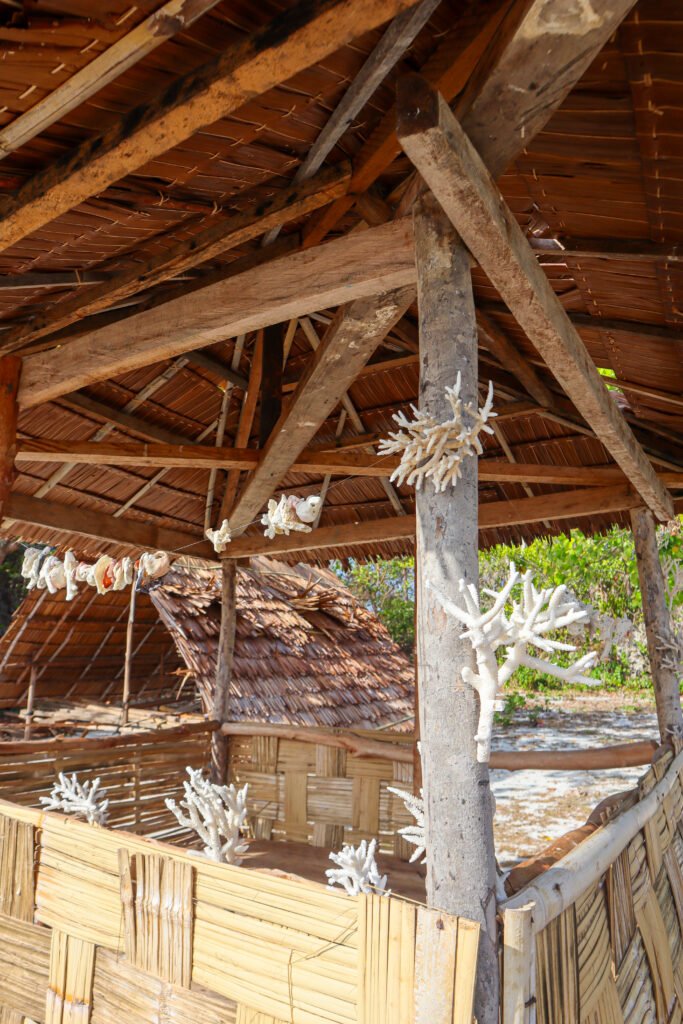
Whether you’re after pristine beaches, history, jungle treks or great diving don’t worry: Raja Ampat has it
Before You Start: How These Itineraries Work
- Choose a base instead of island-hopping: boat transfers between islands are expensive, and you can lose half a day moving between homestays. Each itinerary uses as few bases as possible.
- The first and last days are travel days: the ferry from Sorong to Waisai takes about 2 to 2.5 hours, and then your homestay picks you up by boat. You’ll find all the details in my complete guide to the islands of Raja Ampat.
- Costs are per person, for two people sharing boats: if you travel solo, you may pay the full cost of each boat yourself, so try to find other travellers to share with. You can read more in my cost guide.
- Sundays are different: most families go to church, so trips are limited and the dive centers don’t dive. Homestays still transfer you to another homestay on Sundays, and you can still do activities at the homestay in the afternoon. Plan a rest day or spend the time on the house reef.
- Blue River (Kali Biru) is not in these itineraries as a set day. It’s a day trip you can add when you’re in Waisai or Gam (the price is on the homestay quote, so check it and add it to your budget). I’ll cover it in its own guide, how to visit Blue River.
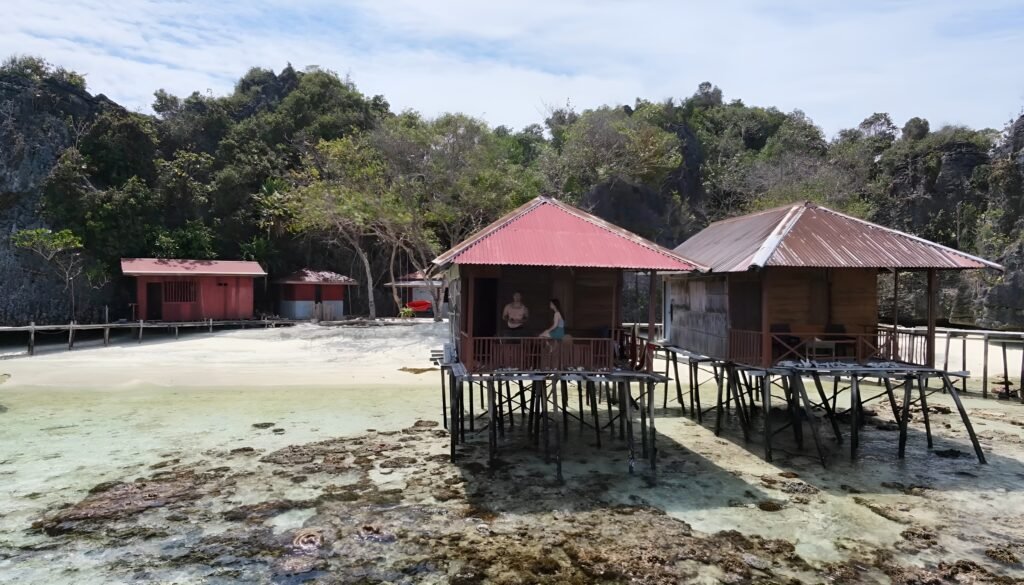

7 Days in Raja Ampat: Pick One Base
If you only have a week, don’t move around too much. Pick one base and organize day trips from there. Every change of island costs a boat transfer and half a day. If you base yourself in the central islands, you can reach all the classics: Piaynemo, the Arborek manta point, Kabui Passage, Citrus Reef and the birds of paradise. If you dive, Tarzan is right there and picks you up from your homestay every morning.
The 7-day itinerary is the same as the first seven days of the 10-day one. On day 7, instead of moving to Batanta, you go back to Waisai and can add a visit to Blue River.
For what a week costs, see my Raja Ampat cost guide. If you can stretch it to 10 days, the itinerary below adds Batanta.
10 Days in Raja Ampat: Gam, Batanta and the Adventure Trips
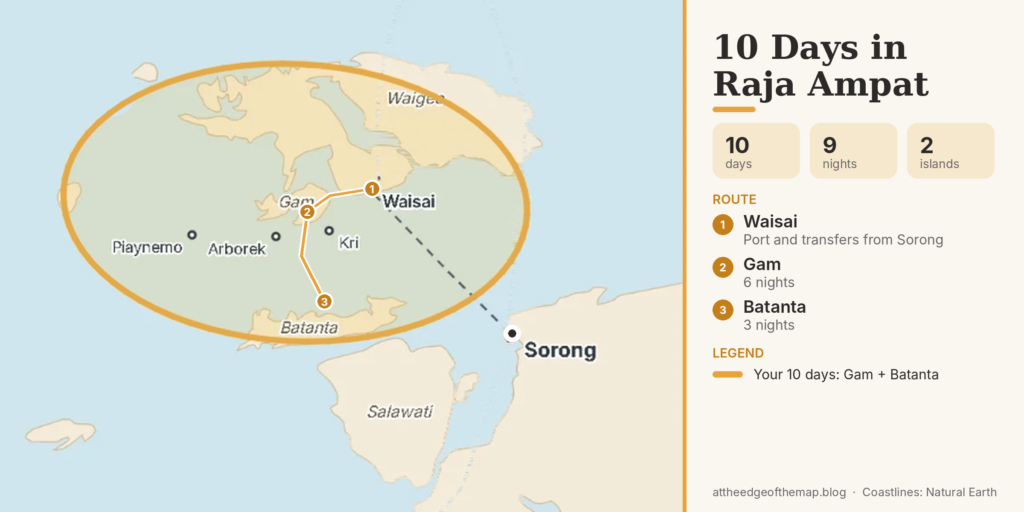
With 10 days you can explore two parts of Raja Ampat. My suggestion is six nights in Gam and three nights in Batanta.
Below you’ll find a day-by-day breakdown of this 10-day itinerary, with a version for snorkelers and one for divers, and the total cost of each. For the full breakdown of prices, read my Raja Ampat cost guide.
10 Days in Raja Ampat for Snorkelers
Day 1: Arriving in Paradise: From Sorong to Gam
Land in Sorong in the morning. Take a taxi to the ferry port in Waisai, buy your ferry ticket and wait with the other passengers for the 2pm ferry. Once you arrive in Waisai, buy your Raja Ampat entry permit (just go straight inside the port when you disembark, you can’t miss it), and when you leave the port, your homestay owner will be waiting for you with a boat to take you to Gam, where you’ll stay at Yenros Homestay.
You’ll arrive around 5pm, just in time for sunset. Go for a quick dip, then have a shower before dinner. Electricity is usually on by then, so the showers have light. If you haven’t already, discuss your plans for the next few days with your host, and if there are other guests, try to organize some activities together.

Tip: charge all your devices before you arrive, and bring a powerful power bank. Electricity usually runs from about 5pm to 5am, but the generator can fail at any time.
Day 2: Raja Ampat’s Greatest Hits: Piaynemo, Star Lagoon and Colourful Reefs
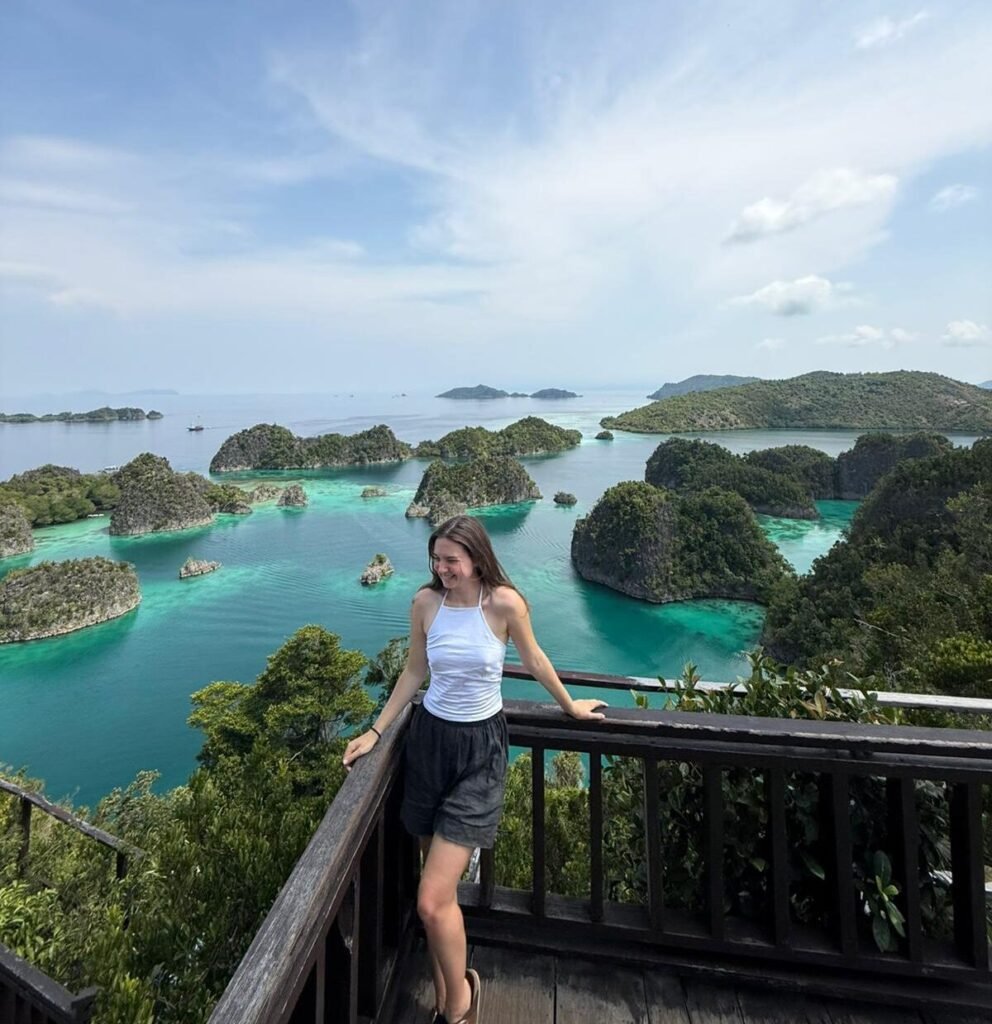
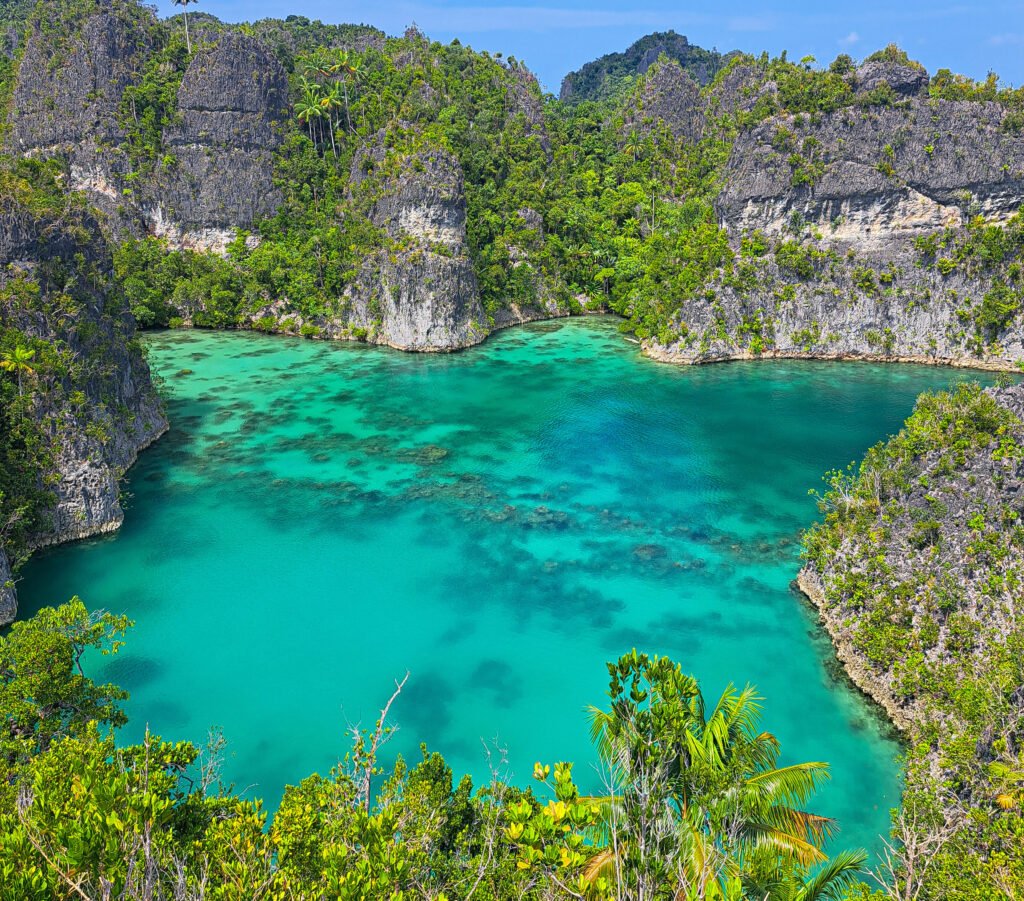
Start strong with a full day of excursions to some of the most famous sites in Raja Ampat: Piaynemo, the Star Lagoon viewpoint, Melissa’s Garden and Rufas. Melissa’s Garden and Rufas are two of the prettiest reefs I’ve seen in Raja Ampat. I was diving there, but it’s so shallow that I spent the entire time playing with some snorkelers. At Rufas you can pay a small fee to see the little lagoon from the viewpoint, and people are often attracted by its unusual shape. Some homestays on the islands have simple overnight stays, but a day trip gives you the same experience without the hassle of changing homestays.
Some sites charge a small entrance fee, so bring cash. The walks up to the viewpoints can be tiring in the heat, so carry water and a rash guard for the sun. At Piaynemo you can buy a coconut and some snacks near the boat landing. Maybe it’s just because I love coconuts, but I think it’s the perfect reward after the climb. It’s a full-day excursion, with lunch on the trip, and you’ll be back at your homestay in time for a shower and dinner.

Tip: if you’re staying at Yenros, look in the trees near the dining room. We managed to spot a cuscus there a couple of times in the evening.
Day 3: Manta Hunting and Birds of Paradise: A Day in the Water and the Jungle
For your second full day, try your luck at the Manta Point. Go in the morning, when sightings are more frequent. If you’re not lucky (I wasn’t, and it happens!), you’ll still have time for some beautiful snorkeling. This is why I’ve included another place to see mantas later in the itinerary. If you have time in Arborek, stop to explore the village: there are a few little shops where you can buy snacks.
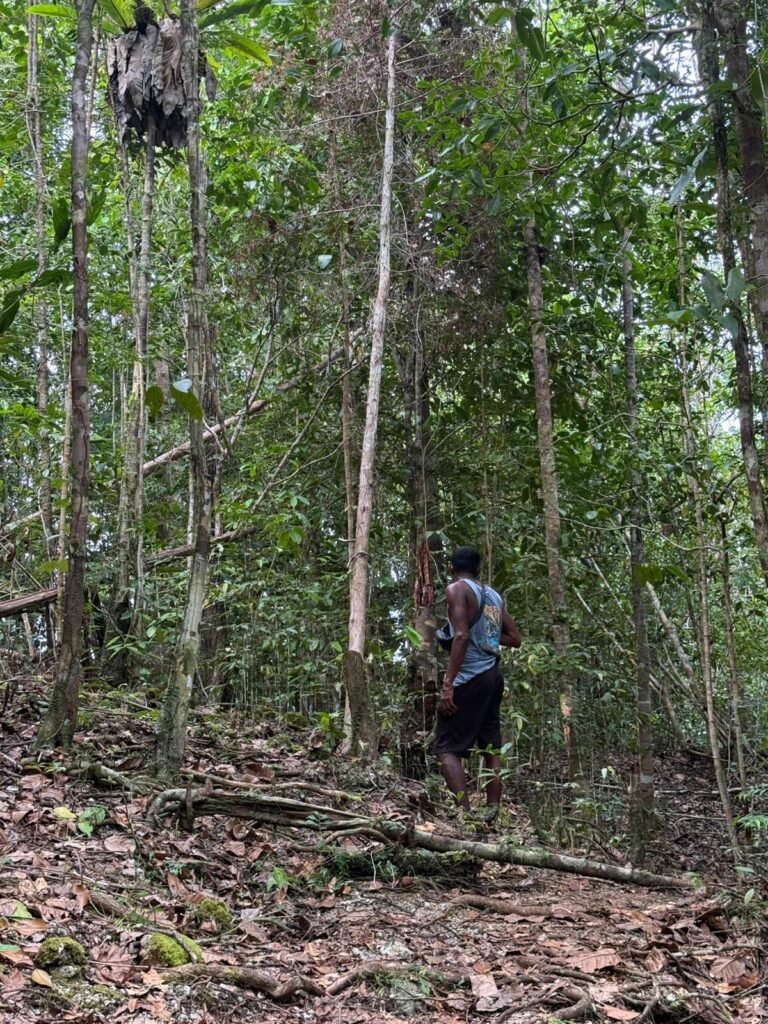
If you want to rest, go back to the homestay for lunch and spend the afternoon on the house reef. Otherwise, ask to see the birds of paradise in the afternoon. The hike is short but intense, so be prepared, and bring binoculars if you have them. It can take a while to find the bird: your guide will imitate its call, and the bird may reply, which is quite funny to watch.

Day 4: Exploring Kabui Passage: Hidden Lagoons, Snorkeling and Crocodiles
Kabui Passage is another impressive part of Raja Ampat. It’s north of Gam, and depending on how many stops you make, the trip can take a full day or you can come back a little earlier. It’s a mix of snorkeling and viewpoints, but there’s one thing to know: crocodiles. Now, hear me out. There are mixed opinions about this. Yes, crocodiles have been spotted in the area, though sightings are relatively uncommon. Personally, a crocodile is the last thing I’d want to meet while snorkeling, and that possibility made me swap this trip for another one. If you feel comfortable with the risk and think the scenery is worth it, go for it. For other activities to fill the day, read my guide to the Dampier Strait.
Day 5: An Explosion of Colours: Citrus Ridge, Wilson’s Bird-of-Paradise and Walking Sharks
Citrus Ridge was, without a doubt, my favourite reef in Raja Ampat. It was literally an explosion of colours and fish! I went there to dive, but the reef is shallow enough that you can enjoy much of the same experience snorkeling.
This is usually a half-day trip. If you skipped the birds of paradise on Day 3, you can add them here. If you still haven’t seen Wilson’s bird-of-paradise, you can arrange another stop: I believe the best time is early in the morning, so double-check the timing with your homestay.
After dinner, ask Melki, the owner of Yenros Homestay, to show you the walking sharks, if you’re not too tired. It’s not a long walk, but you need a headlamp and proper shoes, as you’ll be walking around a small lagoon where stonefish may be. If you’re not lucky enough to spot them, try again the following evening. They are usually around!


Day 6: Slow Down in Paradise: House-Reef Snorkeling and Village Life
Unless you arrived on a Monday, you’ll probably have a Sunday by now. At homestays that usually means no organized activities, or only a few in the afternoon. Homestays still transfer you when you move between them, and you can still do activities at the homestay in the afternoon.
You can move this spare day to cover a Sunday, or simply keep it free to relax, explore the house reef and give your wallet a break. If you want to add another day of activities, check my Dampier Strait guide for what else is available.
If you’re staying at Yenros, explore the second beach: walking down from the little road by the bungalow (the one that was mine) can be a bit tricky, with spiky plants and a couple of spiders, but you can reach it and swim around.
Tip: when local families go to church, ask your hosts if you can join them. It’s a really interesting experience, and religious services here are completely different from what you’re used to. You don’t have to go to church, of course. You could also explore the village, buy some snacks and see how people live in this part of the world. I always find it fascinating. The last time I was in a village in Papua, some children gave me a tour of their school and even tried to teach me a little song in Indonesian.


Day 7: From Gam to Batanta: Snorkeling Adventures Along the Way
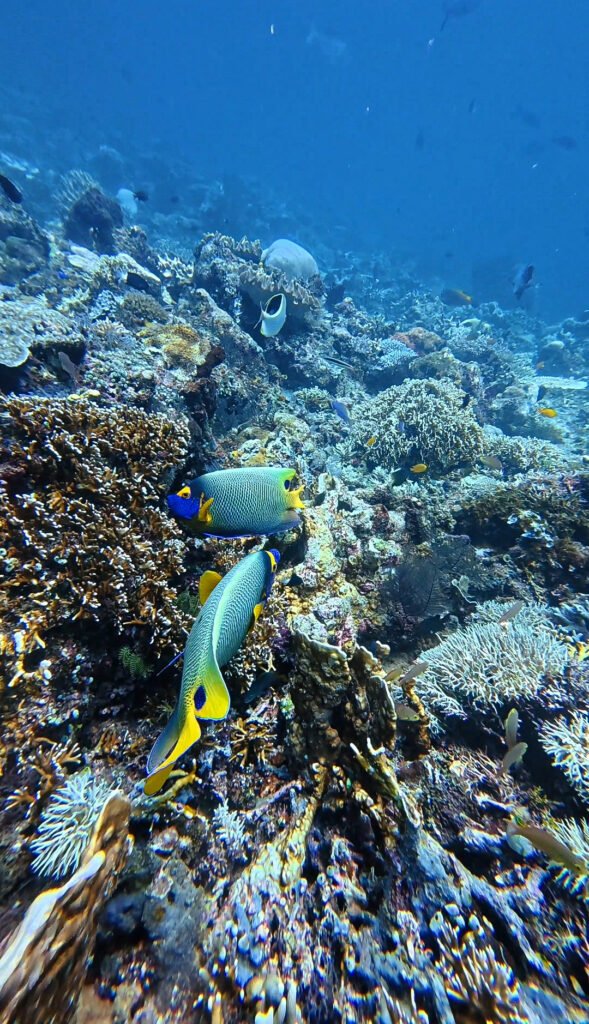
Time to move to your next homestay. I recommend Batanta Diving Homestay, where you can stay with Nikko. If his homestay is full, you can stay at one of the two nearby homestays run by his brothers. Every boat transfer costs money, so turn them into mini-adventures where you can: ask Melki or Nikko to stop for some snorkeling along the way.
I’d suggest stopping around Wai. Keep your eyes open during the crossing too: we saw a small pod of pilot whales jumping out of the water between the islands! When you arrive at Batanta Diving Homestay, talk to Nikko about your plans for the next few days. Be warned: Nikko is quite the adventurer, so if you’re open to it, he’ll probably suggest all sorts of things to do while you’re there.
Day 8: Into the Jungle: Batanta’s Waterfall, Local Villages and Hidden Reefs
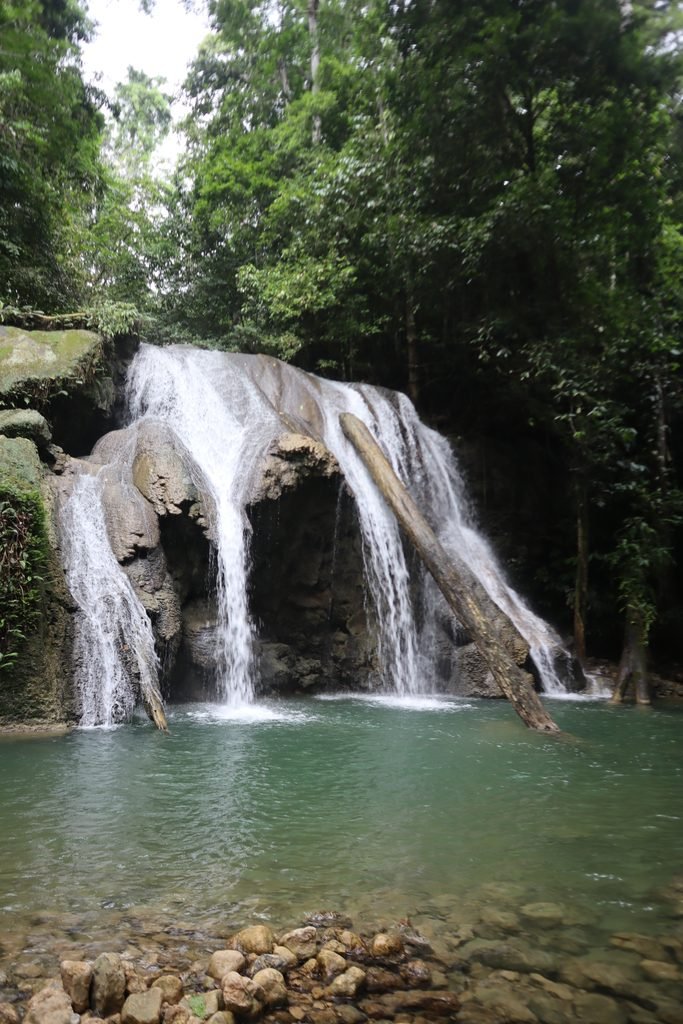
Start your first full day in Batanta with the waterfall. If rain is forecast, consider moving the trip to another day. When I went, it started raining halfway through, and the trail became quite slippery. Wear long clothes to protect yourself from flies and mosquitoes. Nikko’s cousins come along to help you reach the waterfall, so even if you’re as clumsy as I am on rocks, you’ll always have someone ready to help.
When I went, our trip was cut short by the rain. Bring a rain jacket on these excursions, as there’s little shelter on the boats. Usually you’d stop at a village and a couple of snorkeling spots on the way back.
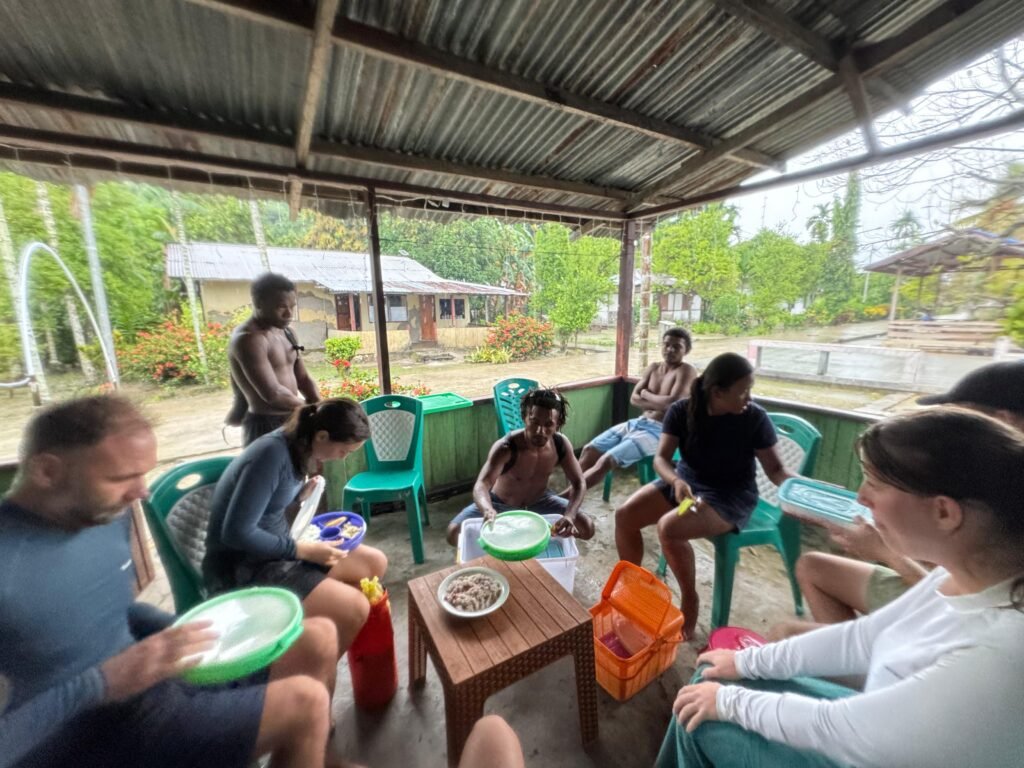
Tip: ask Nikko to make you ceviche. A guest taught him how, and now he loves making it. He’ll go spearfishing for you, and before you know it you’ll be chopping shallots on the boat while he prepares the fish.

Day 9: Mantas and Dugongs: Batanta’s Underwater Wonders
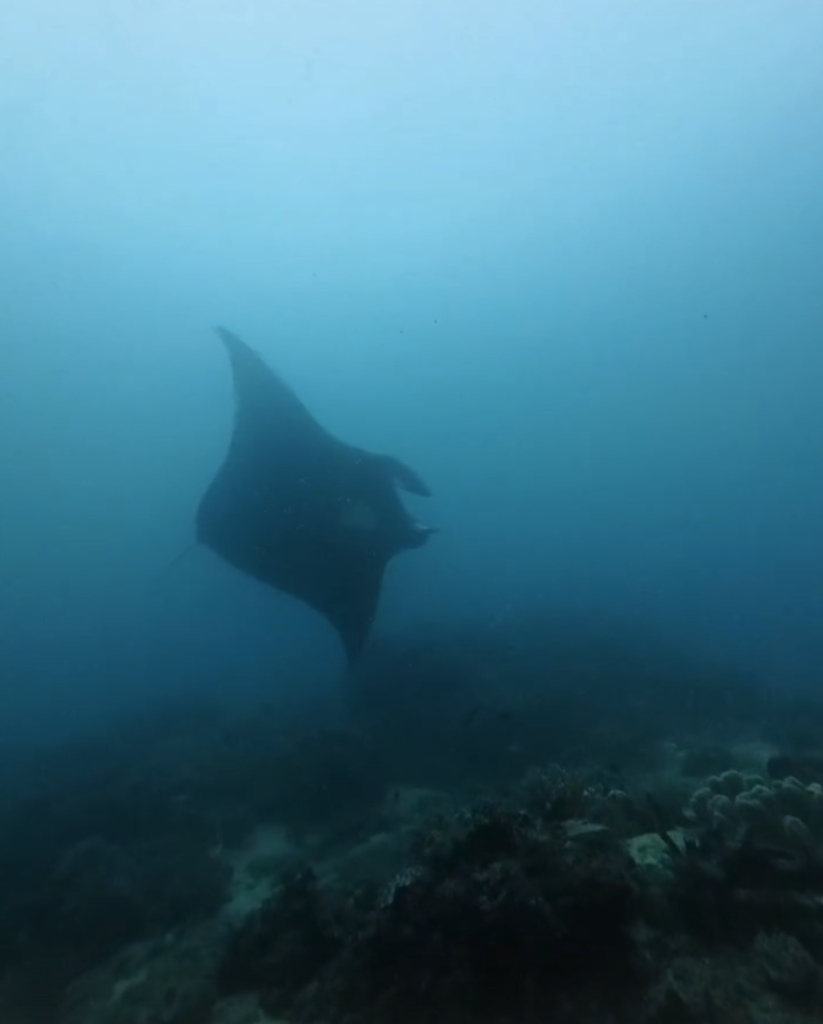
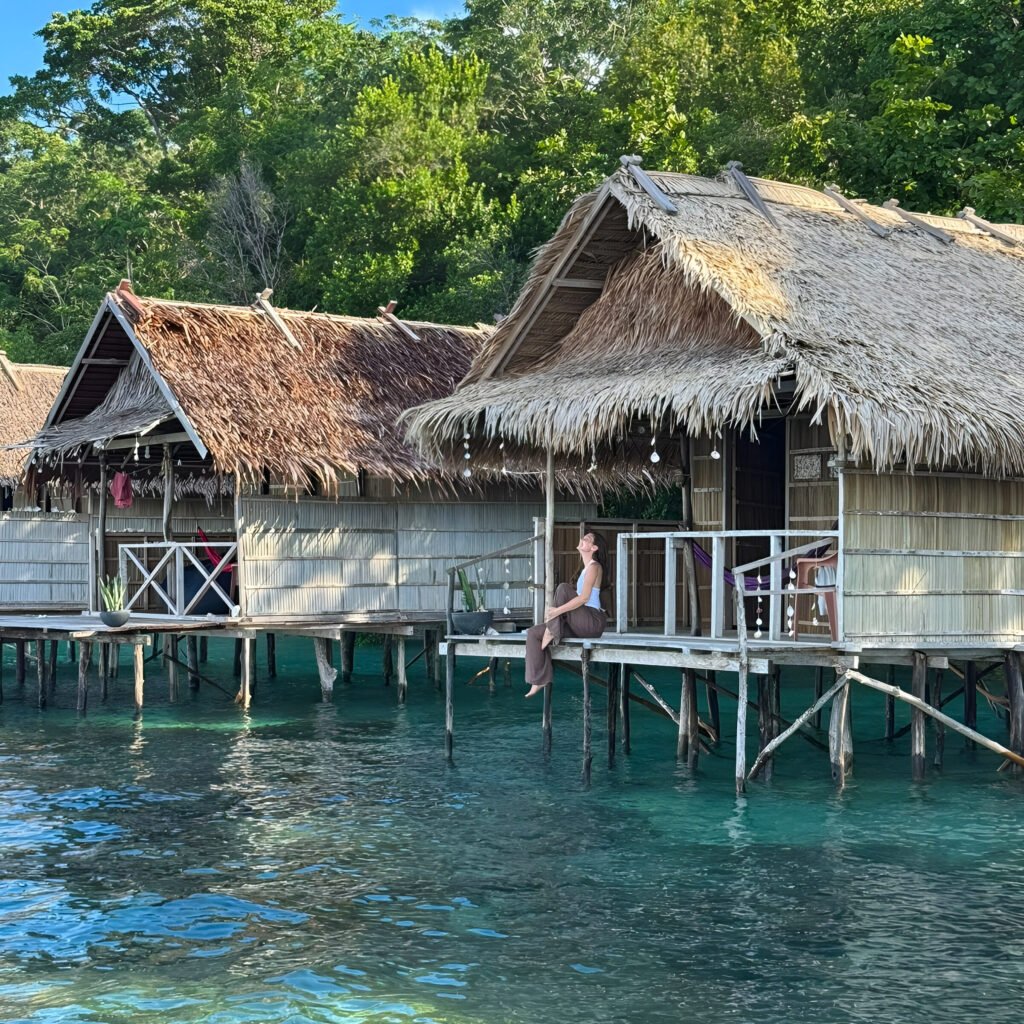
Today you discover the magic of this homestay. Ask Nikko to take you by boat to the manta cleaning station in front of the homestay. You could technically swim there from the bungalows, but the currents can be strong, so I wouldn’t do it unless you have fins and you are a very confident swimmer.
Afterwards, return to the homestay and relax while Nikko goes spearfishing for lunch. Get back in the early afternoon, when the dugong often visits. Nikko always jokes that it’s a dad taking an afternoon break from his family. You can sometimes spot him near the dining room!
Day 10: One Last Blue Paradise and Back to Sorong
Your last day in Raja Ampat starts early. Ask to be taken back to Waisai. If you want to visit Blue River, add it here or on a spare day (see my Blue River guide). Then catch the 2pm ferry back to Sorong.
To be honest, there isn’t much to do at Blue River apart from enjoying the river, but it is so beautiful. The water has an incredibly intense blue colour, and it’s fresh, with a couple of fallen tree trunks in the middle where you can relax in the water. It looks like something straight out of a fairy tale!
How much does this itinerary cost? The Short Answer
The cost of this itinerary per person, sharing with one other person, is about IDR 16,300,000 – flights not included.
For the full breakdown and tips on saving money, read my cost guide.
Have more time? Jump to the 14-day options for snorkelers below.
10 Days in Raja Ampat for Divers
The divers’ itinerary is the same as the snorkelers’ one, with a few changes.
Day 1: Arriving in Paradise: From Sorong to Gam
Same as the snorkelers’ version.
Days 2 to 5: Diving days
Four days of diving with Tarzan. Depending on whether you stay in the homestay I suggest or one of the ones near the dive school, you’ll have a morning pick-up. Adventure trips only run if enough people sign up, so tell the dive centre in advance which trips you want. Even if one is on the first day you dive, you can join and then add your name to the board. My three suggestions are Piaynemo, Citrus and the Arborek manta point. If you have a free afternoon, fit the birds of paradise into one of these days, and use one evening to see the walking sharks.
Try to make sure Sunday is not a diving day, or use it as your rest day, as there’s no diving on Sundays. Remember that if you do a full-day trip, you need to ask your homestay for a lunch box.



Day 6: Slow Down in Paradise: House-Reef Snorkeling and Village Life
If it’s Sunday, same as the snorkelers’ version. If it’s not Sunday, use the day for an adventure trip from the snorkeling itinerary, or from my Dampier Strait guide.
Tip: if you have a free day, give priority to Piaynemo and the Manta Point if you haven’t done them during your diving days.
Day 7: From Gam to Batanta: Snorkeling Adventures Along the Way
Same as the snorkelers’ version.
Days 8 and 9: Into the Jungle, then Mantas and Dugongs
Same as the snorkelers’ version, with one or two morning dives at the manta cleaning station added on day 9. Switch the order if needed, so that if your flight out is on day 10 you get a no-dive day before flying.

Day 10: One Last Blue Paradise and Back to Sorong
Same as the snorkelers’ version.
How much does this itinerary cost? The Short Answer
The cost of this itinerary per person, sharing with one other person, is about IDR 25,444,000 – flights not included.
For the full breakdown, read my cost guide.
14 Days in Raja Ampat: Add West Waigeo or Ayau
With two weeks you can explore three different areas. I’d add West Waigeo if you want to snorkel with mantas and explore pristine reefs, or Ayau if you want remote atolls and an off-the-beaten-path experience.
Both options start with Gam and Batanta, so you get the highlights of the Dampier Strait before heading further out.
14 Days in Raja Ampat for Snorkelers: Option 1, Gam, Batanta and West Waigeo
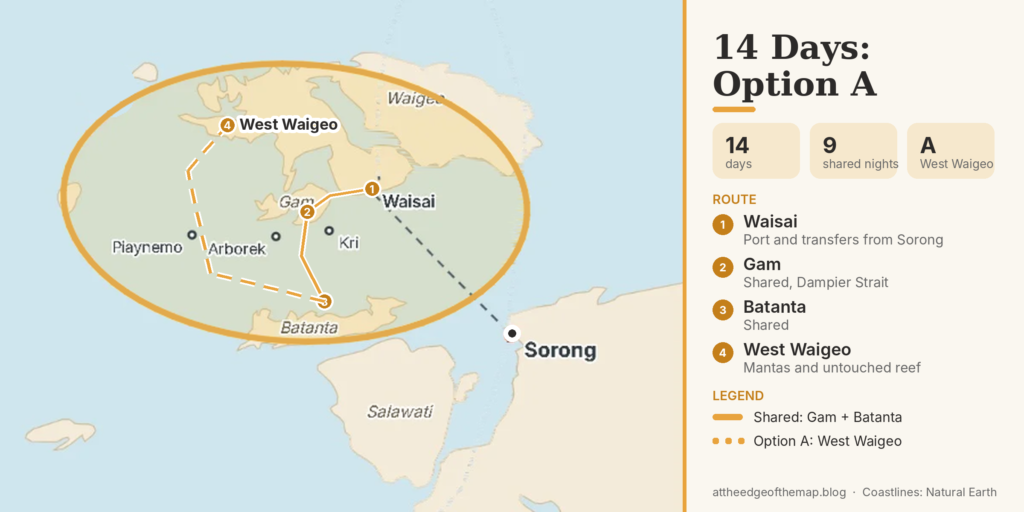
Here below you find the map of this first itinerary option, which covers some more remote and pristine parts of Raja Ampat without leaving the Dampier Strait.
Days 1 to 9: Gam and Batanta
Follow the 10-day snorkelers’ itinerary for the first nine days. You’ll explore the main highlights of the Dampier Strait, then move to Batanta for the waterfall, the village visits, the snorkeling, the mantas and the dugong.
The only variation: the trip back from West Waigeo to Waisai is a long boat ride, so you want to dedicate the last day to transport. If you want to visit Blue River, you can swap it with one of your Gam trips, or do it on your rest day, unless that day is a Sunday (the best time to go is early in the morning).
Day 10: From Batanta to West Waigeo: A Remote Island Escape
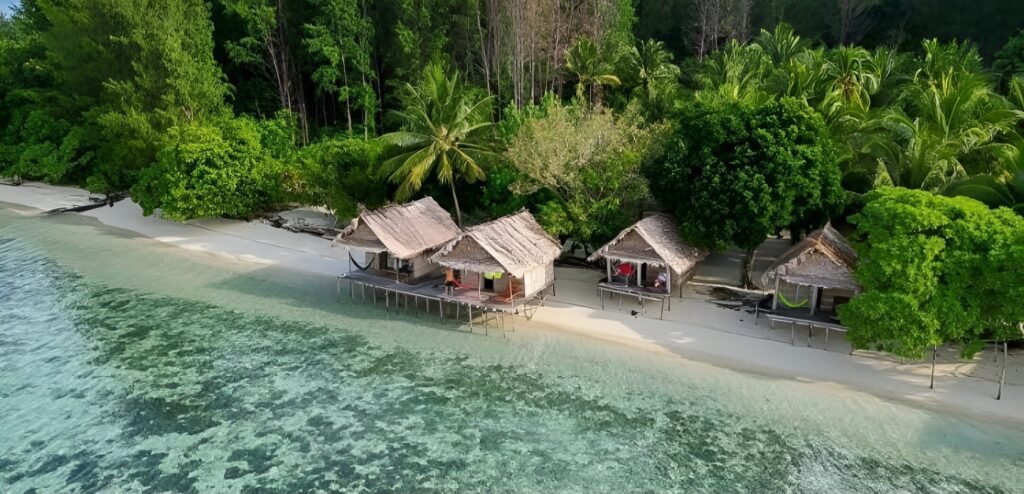
Transfer from Batanta to West Waigeo and settle into Coco Huts Homestay on Yef Kabu. Allow about 3 to 4 hours by private boat, depending on your departure point, sea conditions and route. Speak to the homestay arranging the transport if you want a snorkeling stop on the way. Today is mostly a transit day, so use the afternoon to arrive and talk to your host about your plans. Little English is spoken there, but you can message the owner on WhatsApp in English (Coco Huts Homestay).
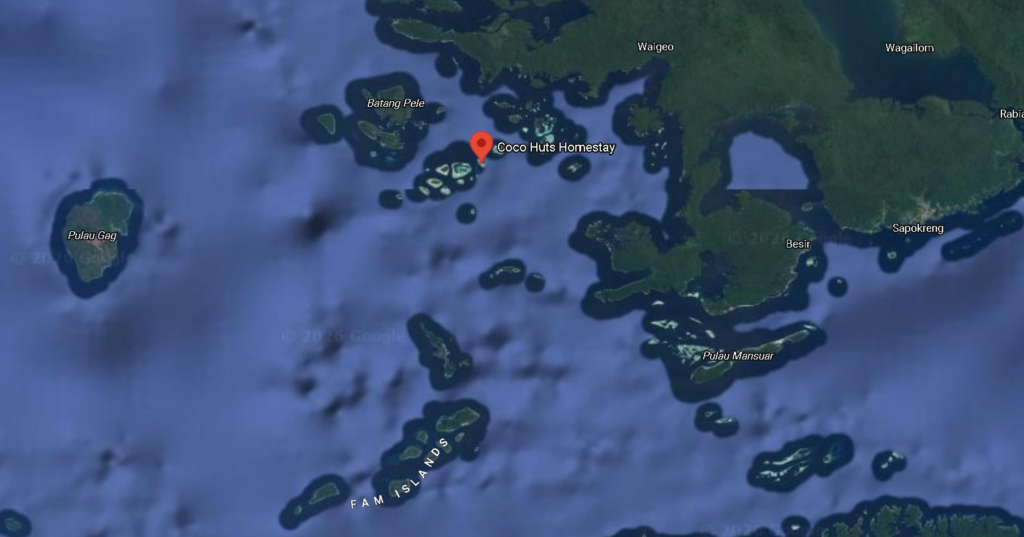
Yef Kabu is a tiny, flat sandy island with a long white beach lined with coconut palms. There are no villages, and fewer boats and visitors than around the central islands, so it feels wonderfully remote and quiet.
Tip: bring your own snorkeling gear so you can snorkel straight off the beach. For the full packing list, read my Raja Ampat packing list.
Day 11: Snorkeling with Mantas and Visiting Pasir Timbul
Spend the first full day exploring the reefs around Yefnabi, Yeftip and Yefmo, where you might find manta rays. If you’ve followed the itinerary this far, this is your third chance to see mantas in the area, so even if luck isn’t usually on your side, the theory of numbers is on yours and you have a good shot at seeing something. This is a good spot if you visit between June and September, when mantas are less often seen at the better-known Manta Point and Manta Sandy in the Dampier Strait. Sightings are never guaranteed, but the reefs are beautiful even without mantas. The trip lasts about 3 and a half hours: you snorkel with the mantas, stop on the Pasir Timbul sandbank and swim over the coral zone.
Did you know there are two species of manta in Raja Ampat? The most common is the reef manta, with a wingspan of 3 to 4 metres. You can also find the giant oceanic manta ray, the largest ray in the world, with a wingspan of up to 7 metres.
Depending on the tide, you can also visit Pasir Timbul, a white sandbank that appears out of the sea at low tide. It’s a lovely place to stop, take photos and enjoy the clear water.
Day 12: Exploring Aljui Bay: Rock Art, Pearl Farms and Hidden Lagoons
Use your second full day in West Waigeo to explore Aljui Bay: dramatic limestone cliffs, hidden beaches and secluded lagoons. Near the entrance of the bay you can visit a pearl farm, but confirm with the homestay in advance (when we tried to visit one in Misool we weren’t allowed in, so they may need to call and arrange your visit ahead of time). Two other possible stops are Selpele village, where there are rock paintings (we saw some in Misool too, and whether they’re authentic is a question I keep coming back to, but they’re worth a photo), and, if you have extra time, Salio village, where local women make virgin coconut oil. That’s only possible on certain days, so ask in advance so your homestay can confirm it’s happening. If you prefer a snorkeling-focused day, Aljui Bay also has Pulau Reef with its prehistoric handprints and a bat cave, and the Hidden Bay trip (about 6 hours) has two snorkeling spots, a boat ride through the mangroves of Hidden Bay, the handprints and Paniki, the bat island.


Day 13: Snorkeling at the House Reef or Visiting Tamaku Reef
After several days of boat trips, take it easy today and prepare for the journey back. Last time I was in Raja Ampat it took me four hours to repack, because I had clothes drying in every corner of the homestay and the rest of my things were full of sand. Snorkel around the house reef, or ask the homestay to take you to nearby reefs such as Tamaku Reef. Trust me, you might think you want to fill every day, but this far out you’ll be more tired than you expect, and the journey home will be long. If you have a Sunday during your stay, you can move this day around.
Day 14: Transfer to Waisai and Sorong
Transfer from West Waigeo to Waisai, then take the ferry to Sorong. Arrange the boat with your homestay in advance and confirm the schedule carefully, as the trip back to Waisai takes 2 to 3 hours. People do jump on the ferry at the last minute, but trust me, you’ll save yourself a lot of stress if you don’t. I have been in that position myself, especially when I had a flight to catch.
How much does this itinerary cost? The Short Answer
About IDR 22,450,000 per person, sharing with one other person, flights not included.
For the full breakdown and tips on saving money, read my cost guide.
14 Days in Raja Ampat for Snorkelers: Option 2, Gam, Batanta and Ayau
This is where it gets interesting: you add something you won’t find in 99% of Raja Ampat itineraries, and I think it should be in all of them. It takes more preparation, and it’s very remote. When we were supposed to go we weren’t feeling well and had to cancel a few days in advance, because the remoteness would make medical help hard to reach if something serious happened. But everything you need to plan it is here.
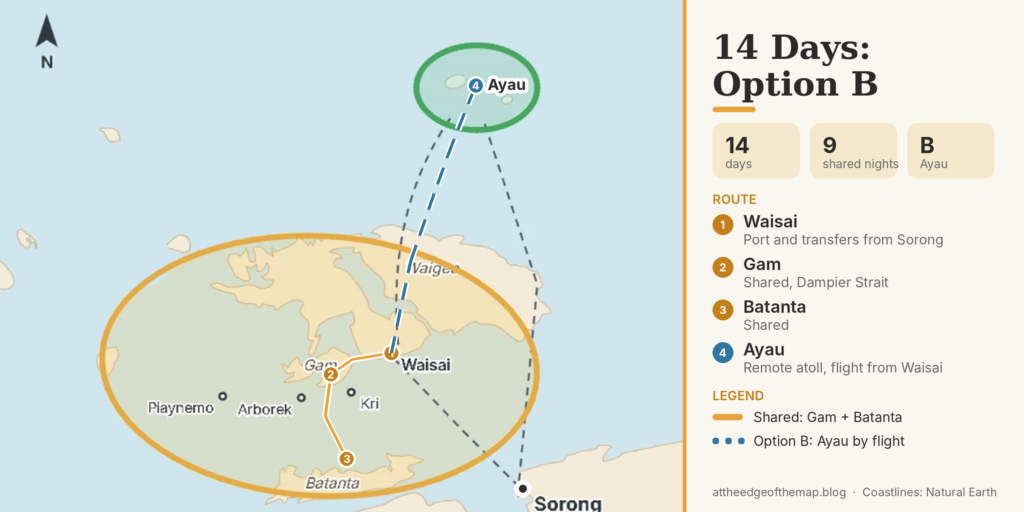
Good to know: flights to Ayau run only on certain days of the week (Sundays, Mondays and Thursdays), so plan to follow this itinerary you should land in Sorong Friday, Saturday or Tuesday. Otherwise you can consider going first to Ayau and then to the Dampier Strait. Read all the details about flights to Ayau in my complete guide.
Days 1 to 8: Gam and Batanta
Same as the 10-day snorkelers’ itinerary, with one change: you cut the spare day in Gam, so day 9 is the day you go back from Batanta to Waisai.
Day 9: Batanta to Waisai, and a night in Waisai
Take the boat from Batanta to Waisai and spend the night there, close to the airport, before your early flight to Kabare. There are good places to stay in Waisai, and I’d suggest starting with the options below. Check the price and availability before you book.
★ Quick picks
Where to sleep in Waisai before your Ayau flight
Raja Ampat Koba-koba Guest House
Waisai · my starting suggestion for the night before your flight
Sandy Guest House
Saonek, near Waisai · check the distance to the airport before you book
Family Guest House
Kabupaten Raja Ampat · check the distance to the airport before you book
Prices shown on Booking.com change daily. Check the total (meals, transport to the airport) before you book.
If you have time in the afternoon, you can visit Blue River from Waisai: it’s close by, but check the price with your homestay and budget for it. The ride there is a memorable one. I went on a motorbike and I was so impressed by the vegetation along the road that I felt like I was inside Jurassic Park. Read my Blue River guide.
Tip: Waisai is the place to stay before the Ayau flight, because the flights leave from there. Keep a bit of cash for the hotel and the transfers. On the Blue River day, don’t swim in the river, as there are crocodiles at times, and don’t wear long trousers for the walk through the water. It was a terrible choice on my part!
Days 10 to 13: Your Ayau Experience
Fly from Waisai to Kabare, on Waigeo, and then take the boat to Ayau. Richard, the owner of the only homestay on Ayau, arranges the flight pick-up and the boat. Ayau is a minimum stay of three nights, so you’ll have three full days on the atoll. Activities can include snorkeling the outer reef, fishing trips, the shipwreck, and the nearby spots. You’ll find Richard’s trip prices in my complete guide to the islands of Raja Ampat. Budget about IDR 4 to 5 million for activities in total.
Book at least two weeks in advance. Supplies are shipped from Sorong and the plane is small, so seats are limited. You’ll need to send your money for the flights in advance: Richard will send the tickets once he has booked them.
Tip: Contact Richard on WhatsApp at +62 821-9973-6924.
On day 13 you leave Ayau by boat and sleep in Kabare, which Richard arranges.

Travelling with more than 15 kg of luggage? The Ayau flight allows 15 kg, then IDR 20,000 for every extra kilo. The other option is to return to Sorong, leave your luggage there and then fly to Ayau from Sorong. In that case you will need to spend a night in Sorong, and you can leave your extra luggage at the hotel in front of the airport and then collect it when you fly back, or ask the hotel to bring it to the airport for you (for a small tip).
Day 14: Morning flight to Sorong
Richard arranges your overnight stay in Kabare and the flight back. You fly from Kabare to Sorong in the morning, in time for an afternoon flight out. If you need to stay in Sorong before flying home, add a hotel night there (the ASTON Sorong Hotel is right in front of the airport).
Ayau is also a possible starting point. If you arrive on a different day, you can change the order: go to Ayau first, fly to Waisai, continue your trip, and finish in Sorong.
How much does this itinerary cost? The Short Answer
About IDR 22,308,000 per person, sharing with one other person, including the flights to Ayau, the nights in Waisai and Kabare, and the Ayau activities.
For the full breakdown and tips on saving money, read my cost guide.
14 Days in Raja Ampat for Divers
These 14-day options start from the 10-day diving itinerary above, and the two options also work for divers, with the same costs for the extra days. In West Waigeo there are no dive centers, so you’ll snorkel. In Ayau you’ll snorkel and freedive. If you choose Ayau, you lose a day in Gam, so you drop one normal day of diving, which leaves you a spare day in case your adventure trips don’t include Piaynemo. If they do, you can always ask Tarzan at the last minute to add you to another boat.
If you want more diving days: spend your last days diving in the Fam Islands, with sites such as Galaxy, Barracuda Point and Keruwo Channel. For a budget option, I’ve priced Gloria Dive Homestay in the costs below. For a more comfortable option, look at Andau Dive Resort. More in my diving guide.
How much do these itineraries cost? The Short Answer
Base itinerary, diving 3 days with Tarzan, plus Ayau: about IDR 28,940,000 per person.
Base itinerary with extra diving days in the Fam Islands: about IDR 32,544,000 per person.
Base itinerary plus West Waigeo: about IDR 31,594,000 per person.
For the full breakdown, read my cost guide.
What to Do After Raja Ampat
If you have more time in Indonesia, Raja Ampat is a great first stop. These are the places I’d add next, depending on what you want to do.
Triton Bay: for divers
Further south in West Papua, in the Kaimana region, Triton Bay is famous among divers for its colourful soft corals and the whale sharks that come to the fishing platforms. If Raja Ampat has got you hooked on diving, this is the next level. Dive operator: Triton Bay Divers (open from October to early June).
Flores and Komodo National Park
Komodo National Park offers diving, snorkeling and land activities, with Komodo dragons and mantas. It’s much easier to reach than Raja Ampat: you can fly from Sorong in one day with one stop in Makassar. The stop is short, but if you book through the airline’s own website, they hold the connecting flight for you and move your luggage with you.
Sumatra
If you want a complete change of scenery after weeks on the water, try the jungle, volcanoes and small surf islands of Sumatra. My guides are coming soon.
Costs in Raja Ampat
The costs I give for these itineraries are approximations. Your actual cost will depend on the activities you choose, the homestays you pick and any price changes. For the final number, check my cost guide.
Raja Ampat Itinerary FAQ
How many days do I need in Raja Ampat?
Seven days is enough for the classics if you stay in one base, as in the 7-day itinerary above. Ten days lets you add Batanta, with its waterfall, village visits and mantas, and 14 days gives you room for West Waigeo or Ayau. Check the totals for each length in my cost guide.
Can I do Raja Ampat in 5 days?
I wouldn’t recommend it. The first and last days are travel days (the ferry from Sorong to Waisai, then the boat to your homestay), which leaves about three days on the water. If that’s all you have, pick one base and focus on Piaynemo and Citrus Reef.
Dampier Strait or Misool?
The itineraries here are built around the Dampier Strait, because it’s the easiest part of Raja Ampat to reach and it has most of the classic day trips. Misool is a different area, and I cover it in my Misool guide. If you want to see both, read that guide before you plan the extra days.
What is the best month to visit?
The best overall window is October to April, with calmer seas, less rain and easier boat trips. For manta rays, November to April in the Dampier Strait gives you the best chance, although sightings are never guaranteed. Don’t go to Misool before October, because the wind can stop the boats for days. Mid-June to mid-September is the windy season, so if you travel then, plan for the worst. June and July are the cheapest months at some resorts. For the full month-by-month breakdown, read my best time to visit guide, and see the islands guide for each area.
Is Raja Ampat expensive?
It can be, mainly because of flights and boat transfers between islands. For the 10-day snorkeling itinerary, the total is about IDR 16,300,000 per person sharing with one other person, flights not included. The full breakdown, with tips for saving money, is in my cost guide.
Do I need to dive to enjoy Raja Ampat?
No. The snorkeling itineraries are designed for people who don’t dive, and they include the best reefs and the manta and dugong sightings. If you do dive, you need to be certified, and the divers’ versions above show how to combine diving with the same highlights. More in my diving guide and snorkeling guide.
How can I visit the Blue River?
Yes. It’s a day trip from Waisai or Gam, and the price is on your homestay quote, so add it to your budget. You’ll find the details in my Blue River guide.
What happens on Sundays?
Most families go to church, so trips are limited and the dive centres don’t dive. Homestays still transfer you, and you can usually do activities at the homestay in the afternoon. Plan a rest day or spend the time on the house reef.
How do I get to Ayau?
You fly from Waisai to Kabare, and the flights only run on certain days of the week. The plane is small and seats are limited, so book at least two weeks ahead. The luggage allowance is 15 kg, with IDR 20,000 for each extra kilo. For the full picture, read my complete guide to the islands of Raja Ampat.
Keep reading
- Is Raja Ampat expensive? My real budget, with and without diving
- Islands of Raja Ampat: the complete guide to plan your holiday
- Kri and the Dampier Strait: where to stay and what to do
- Raja Ampat homestays and resorts: the booking guide
- Diving in Raja Ampat: the complete guide to land-based diving and costs
- Best time to visit Raja Ampat
Check out my pictures and stories on Instagram for some inspo:
If you have any questions, leave a comment below. I’m always happy to help you plan your trip!
Disclosure: some links in this post are affiliate links. If you book through them, I may earn a small commission, at no extra cost to you.